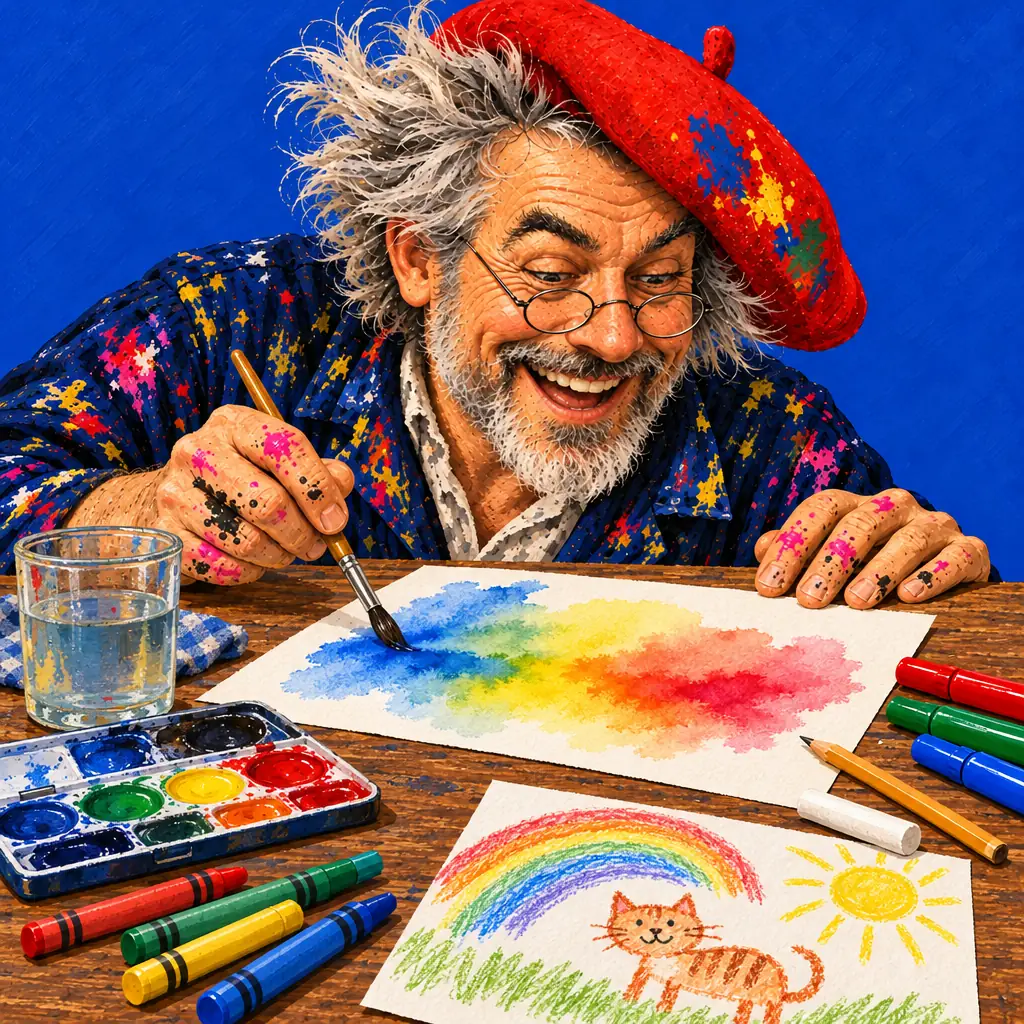
Watercolour for kids
Wet-on-wet blends, crisp edges, blooms, salt stars and blotted clouds.
Game Tailors
Source: Art techniques for kids: 10 to try on screen and paper
The drawing app where the paper is real. No ads, no accounts, no data collected.
Game Tailors · Schieweg 15Y-40, 2627 AN Delft (NL)
KvK 92437702 · VAT NL866044474B01
info@gametailors.com · +31 6 4227 5919
© 2026 Game Tailors
Art techniques
Every technique here works twice: in Extreme Drawing, where the paper behaves like real paper, and at your kitchen table with ordinary materials. Pick one by mess, age or what is already in the cupboard.
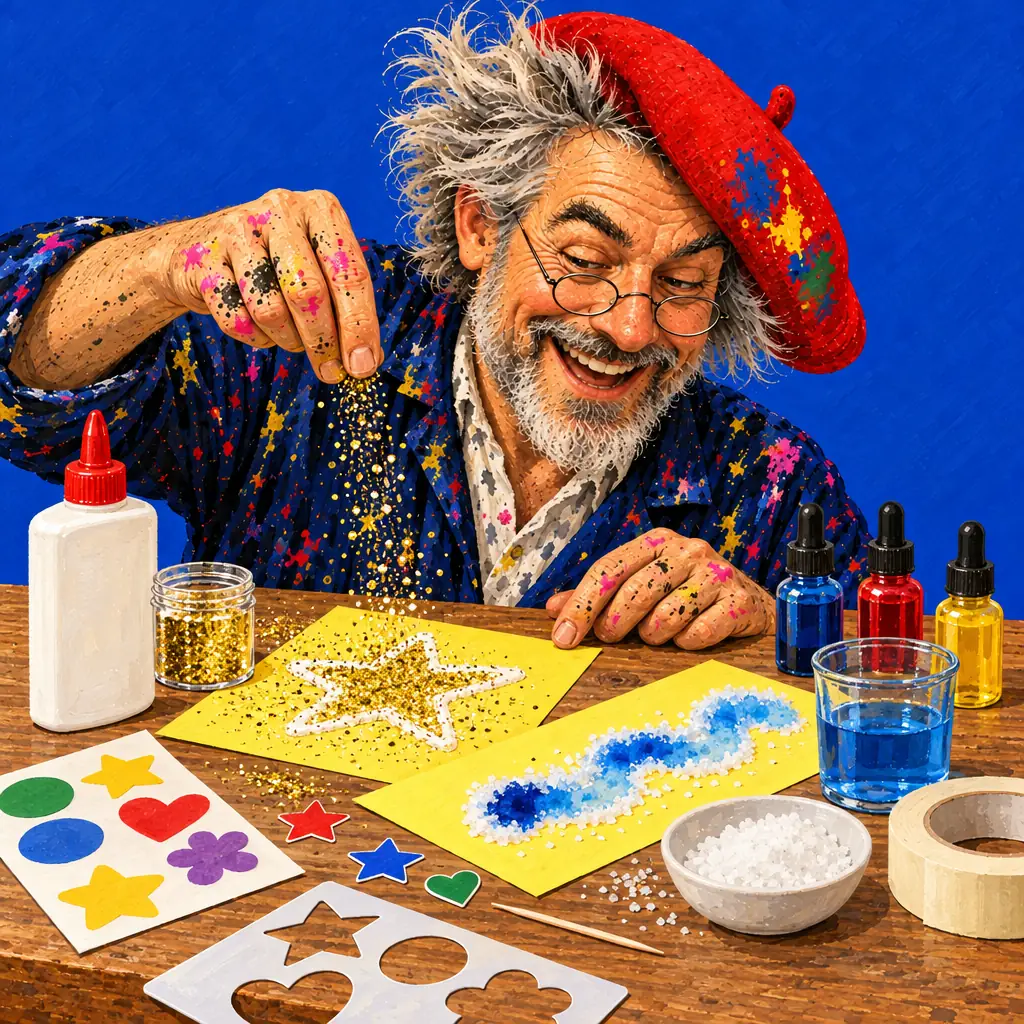
Each page shows one art technique for children aged about 4 to 10: what you’ll make, how it works in Extreme Drawing, how to do it for real with a materials list and steps, seasonal variations, and why it works, in two sentences for kids and a paragraph for grown-ups.
Why do it on screen first? In the app the paper is a real simulation: watercolour bleeds along the fibres, wax pushes paint away, salt soaks up colour. Children can try a technique ten times in five minutes, see what the water does, and then do it once, properly, on paper. Some steps, like burning the edges of a treasure map, stay on the screen.
How to choose. Short on time? Crayon resist takes 20 minutes. Want no mess at all? A sun print. Ready for the big mess? Shaving cream marbling. Every page lists age, time, mess and whether an adult is needed.
Techniques where water carries the colour: it spreads, races, gathers at the edge and leaves tide lines.
Wet-on-wet blends, crisp edges, blooms, salt stars and blotted clouds.
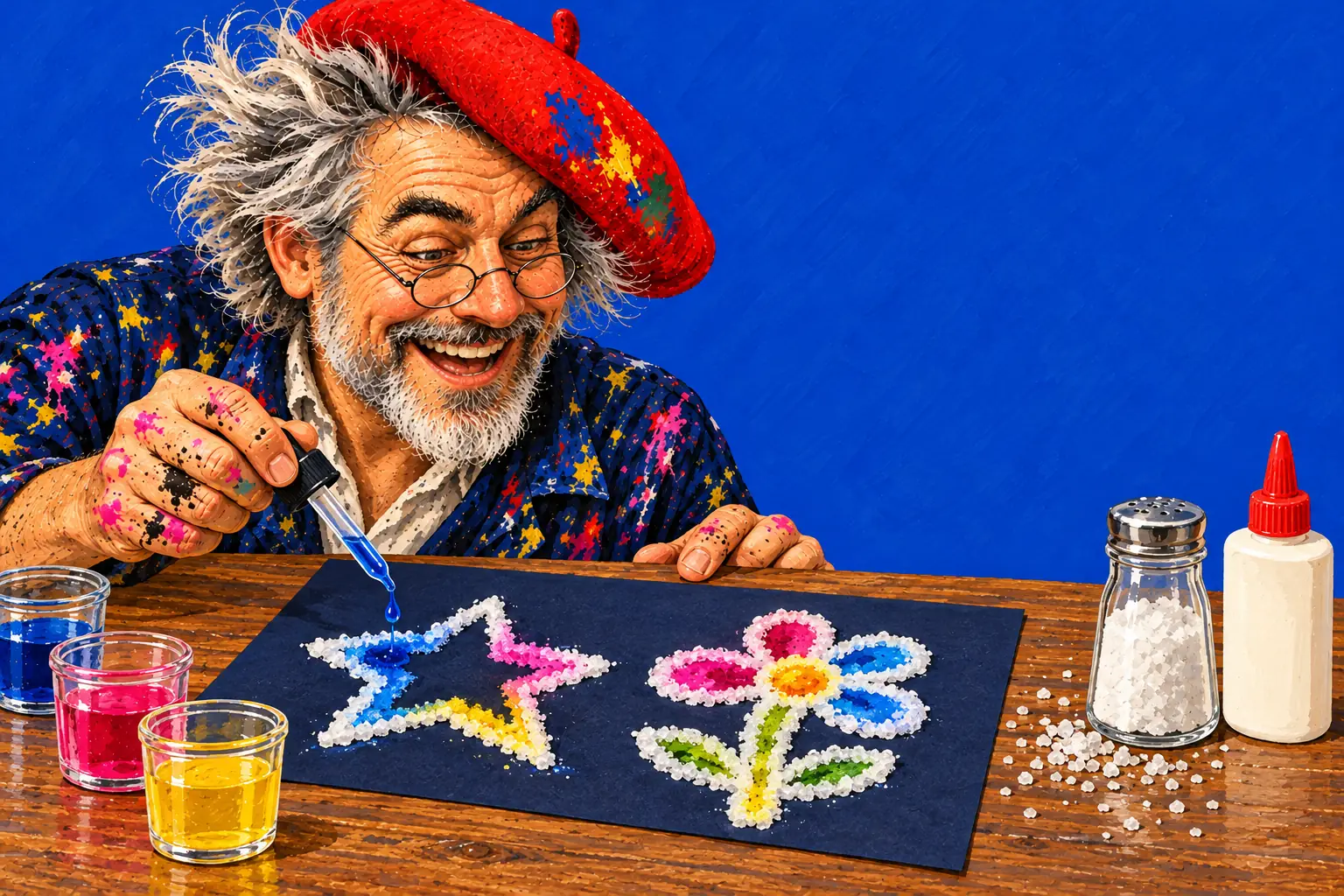
Draw with glue, add salt, and watch colour race along the line.
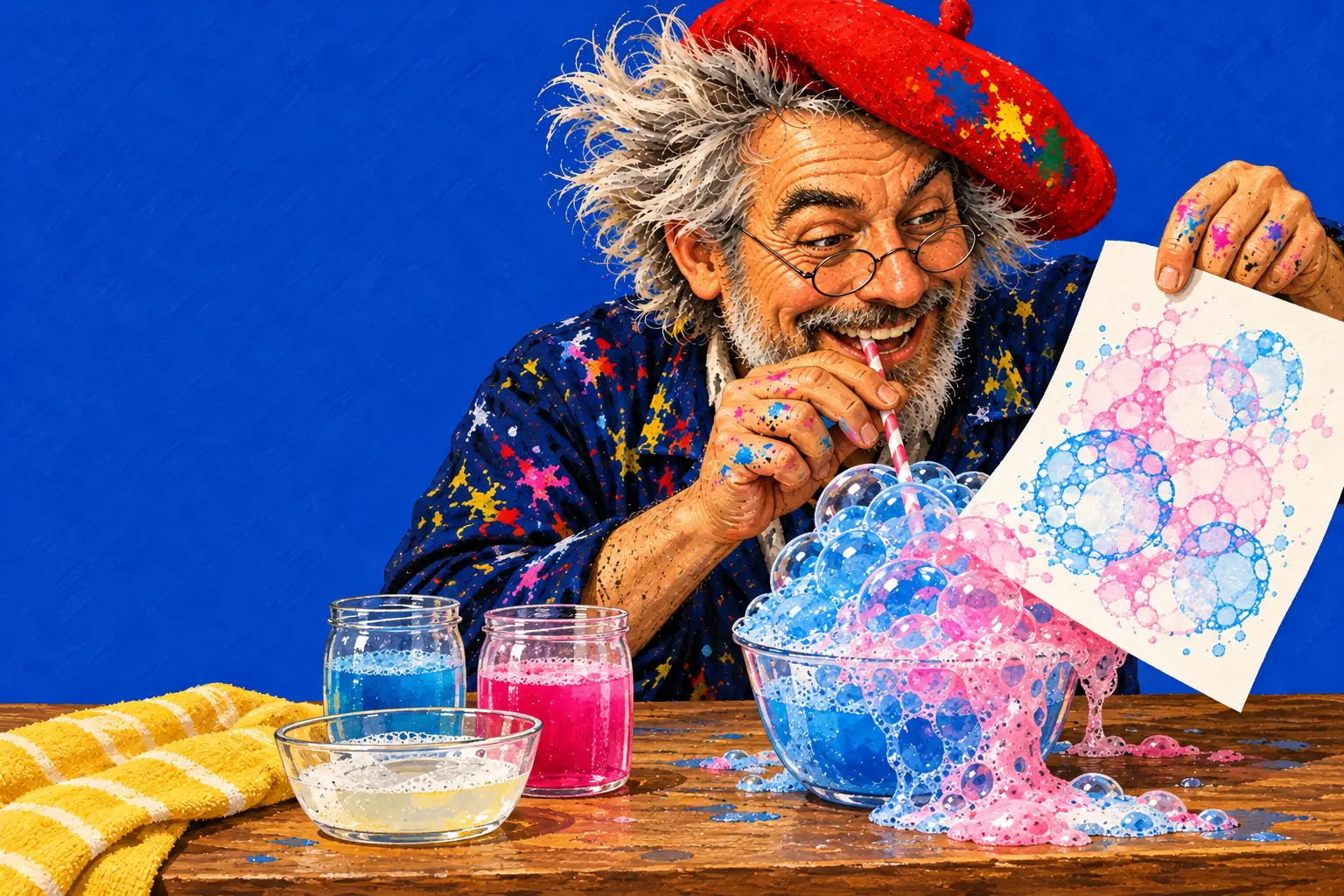
Blow coloured bubbles and print their lacy rings.
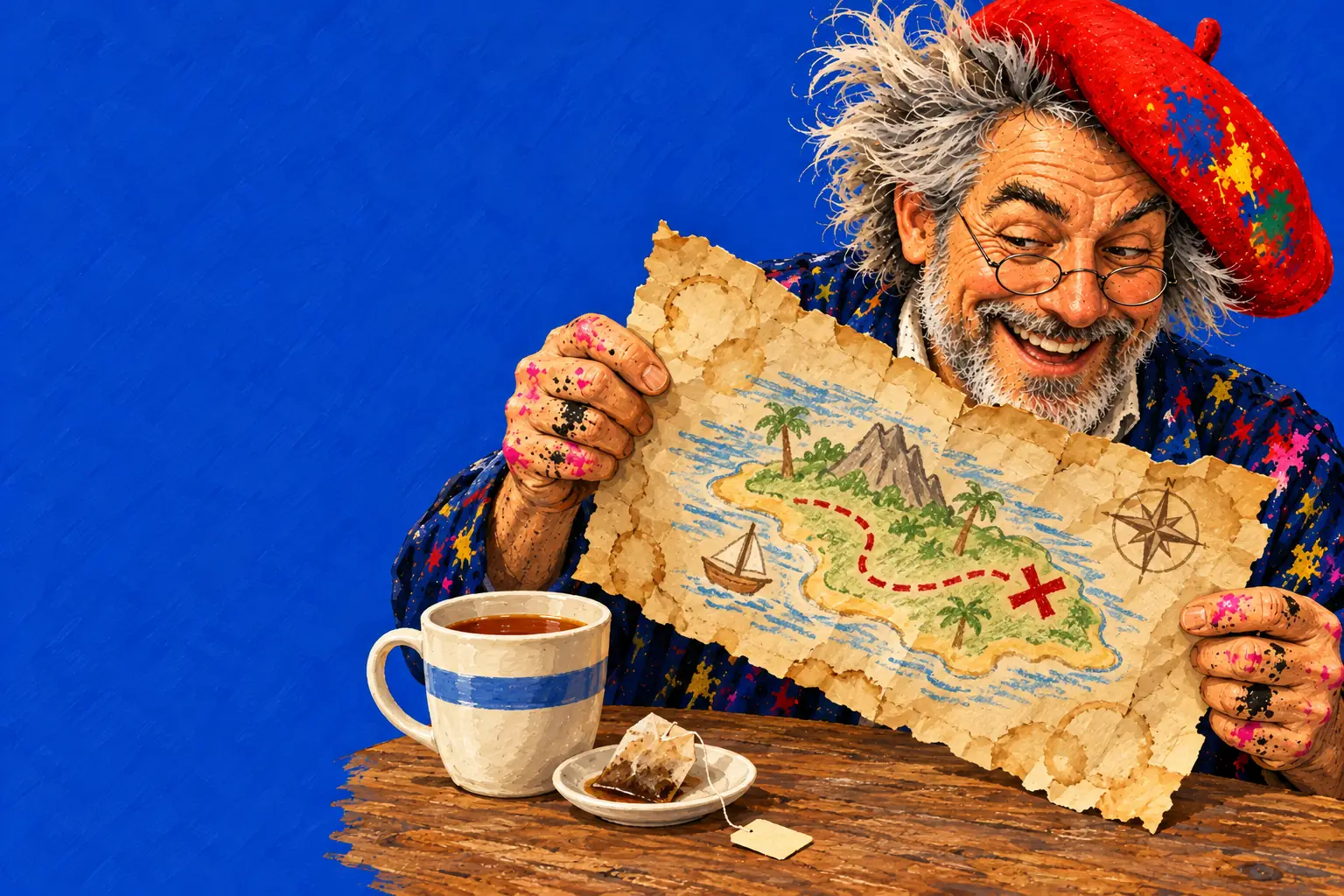
Tea stains with tide lines make paper look a hundred years old.
Techniques where something keeps the colour off: wax, a sticker, or the shadow of a leaf.
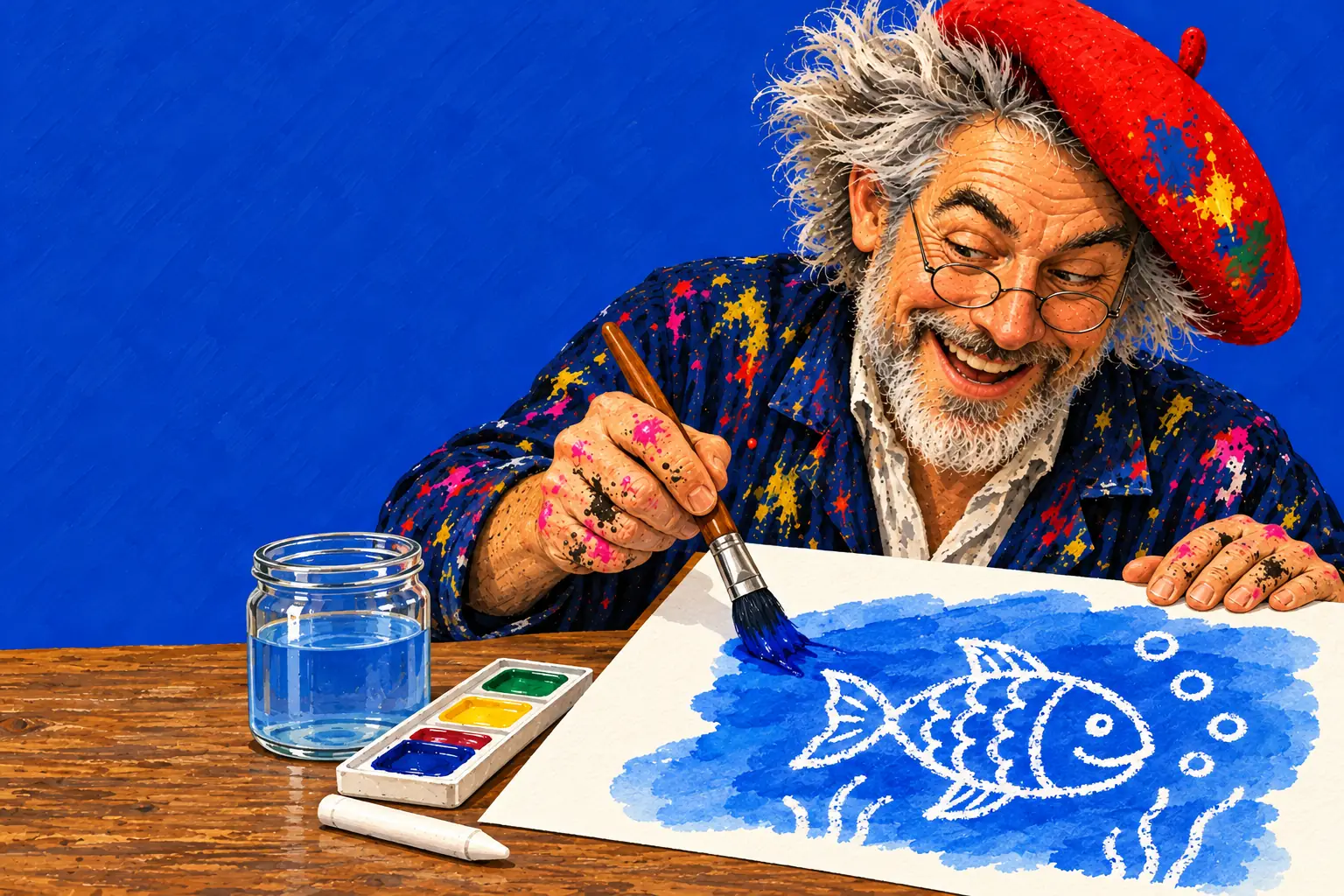
Paint over a crayon drawing and the wax pushes the paint away. Includes the white-crayon secret message.

Bright crayon, black paint on top, then scratch a rainbow out of the dark. No kit needed.
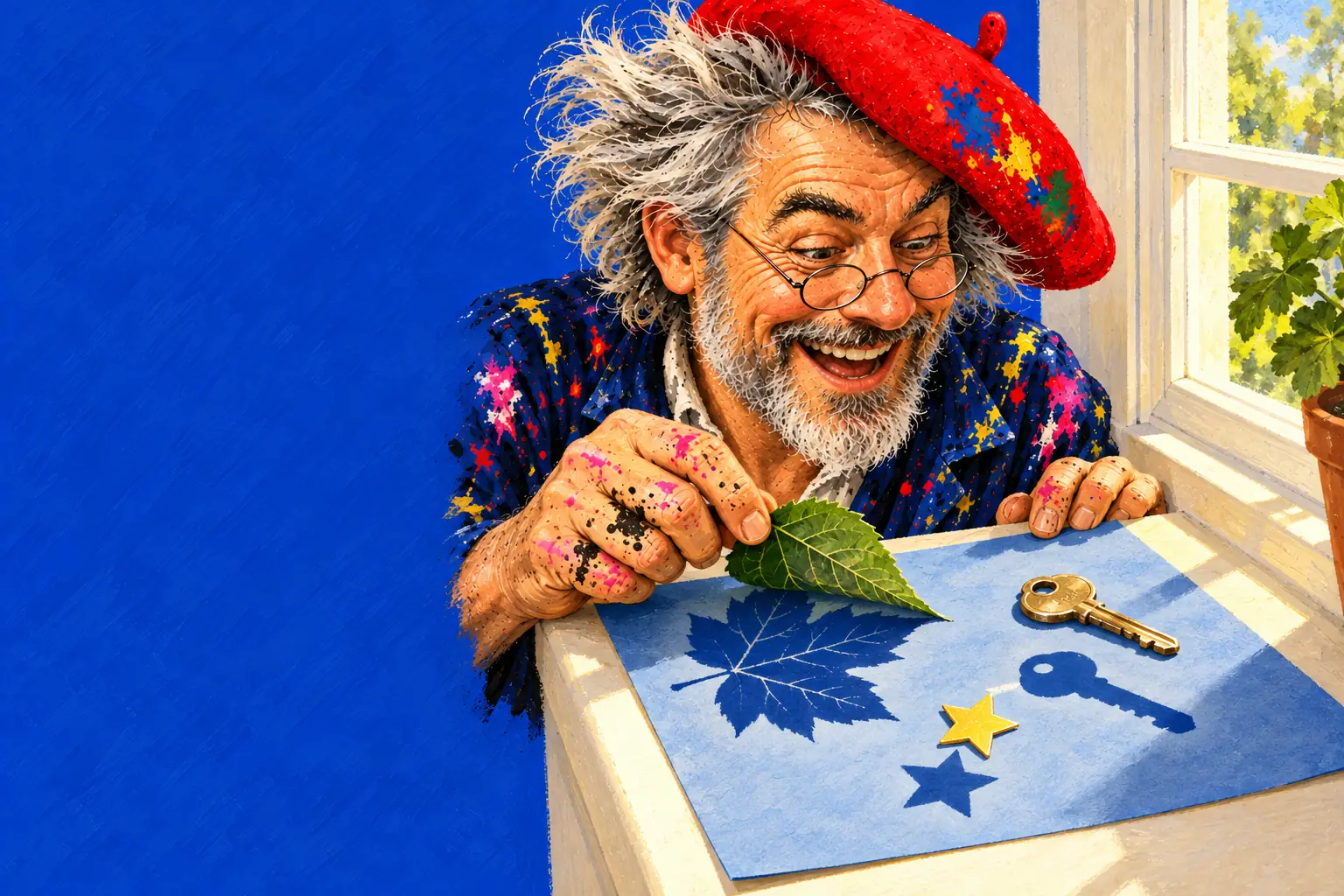
Fade coloured paper in a sunny window and keep the shapes of whatever lay on it.
Techniques where colour is moved onto the paper from something else: a stamp, a bed of foam, a tray of water.
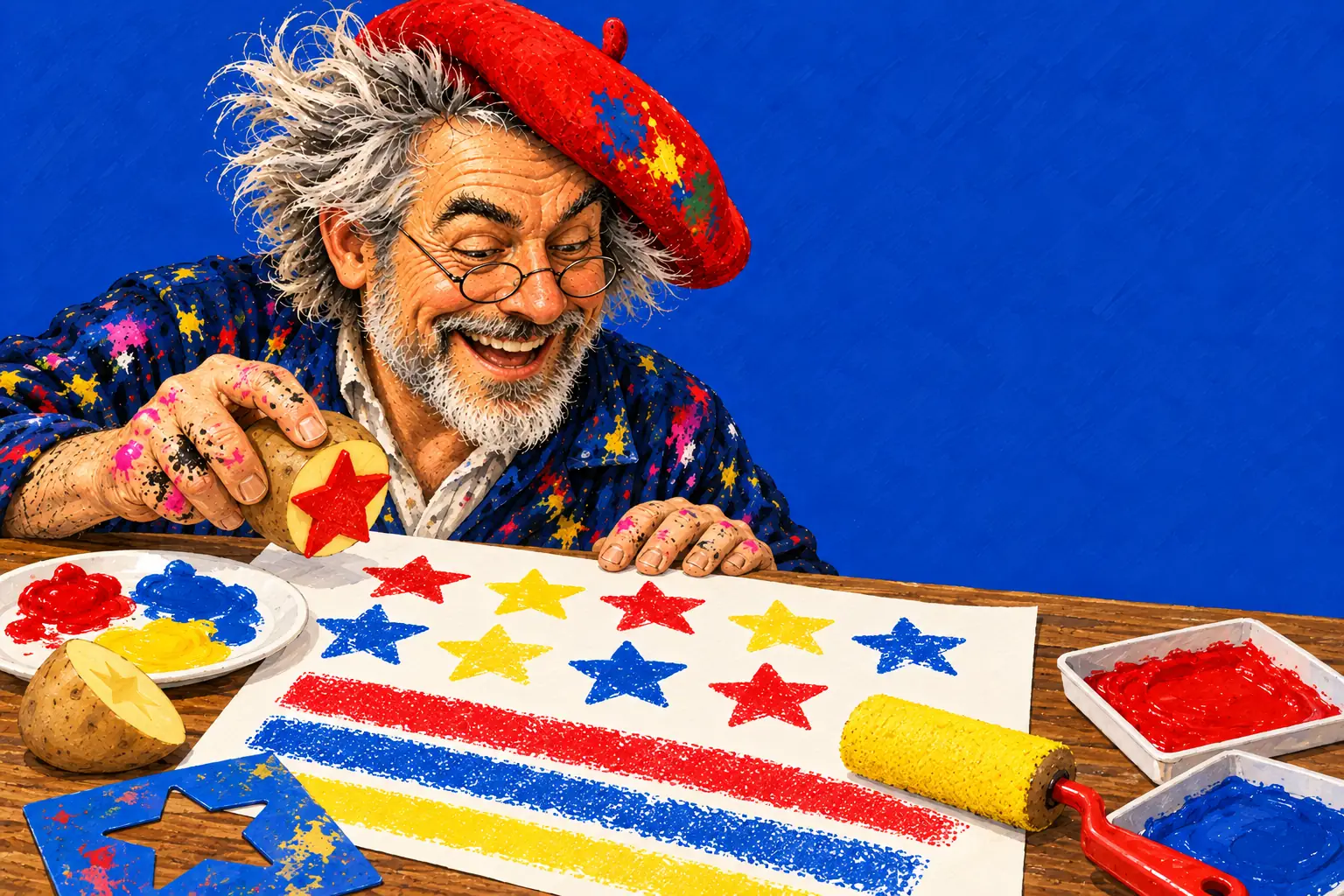
Potato stamps, rolling-pin patterns and home-made stencils.
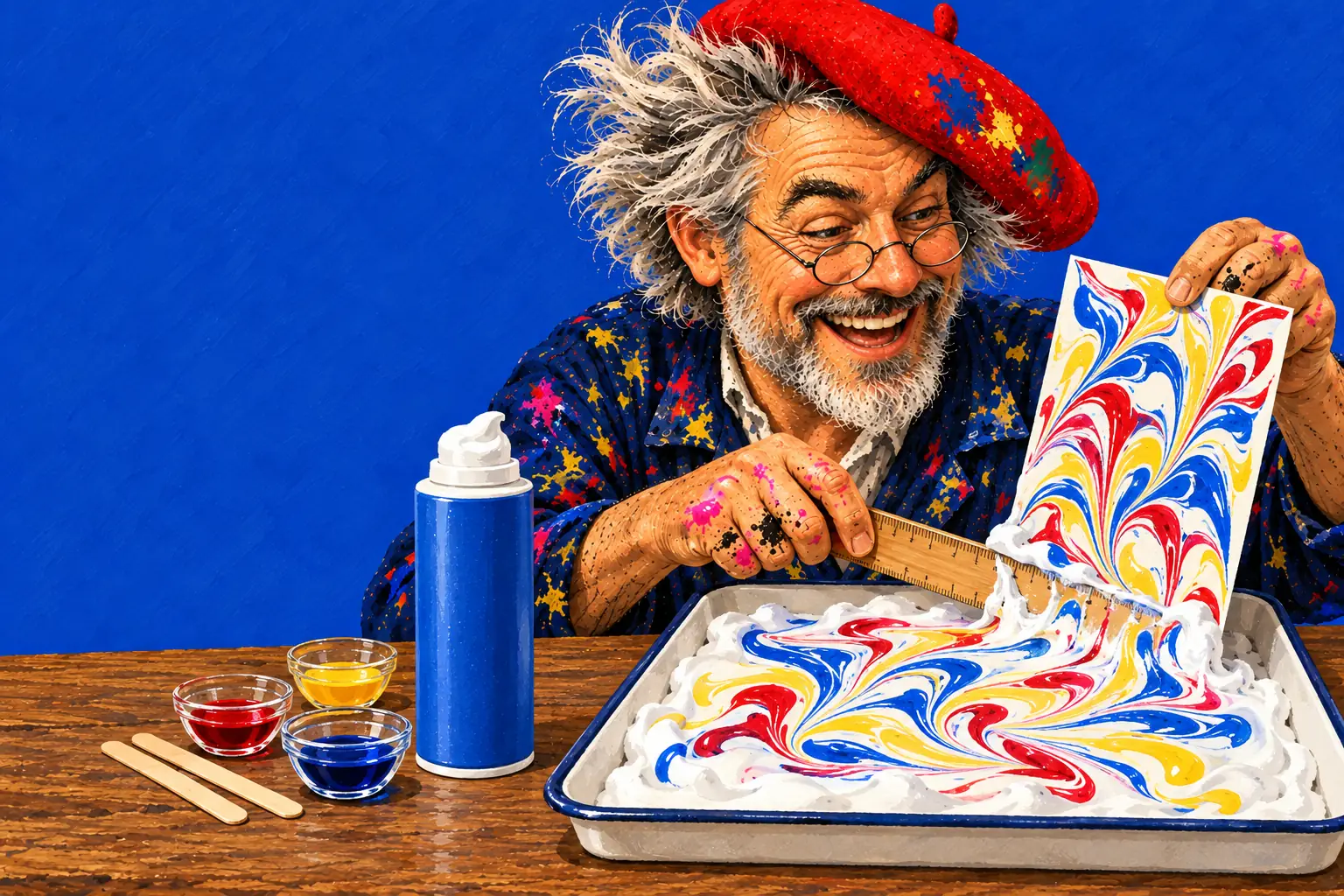
Swirl food colouring on shaving foam, press paper on, scrape.
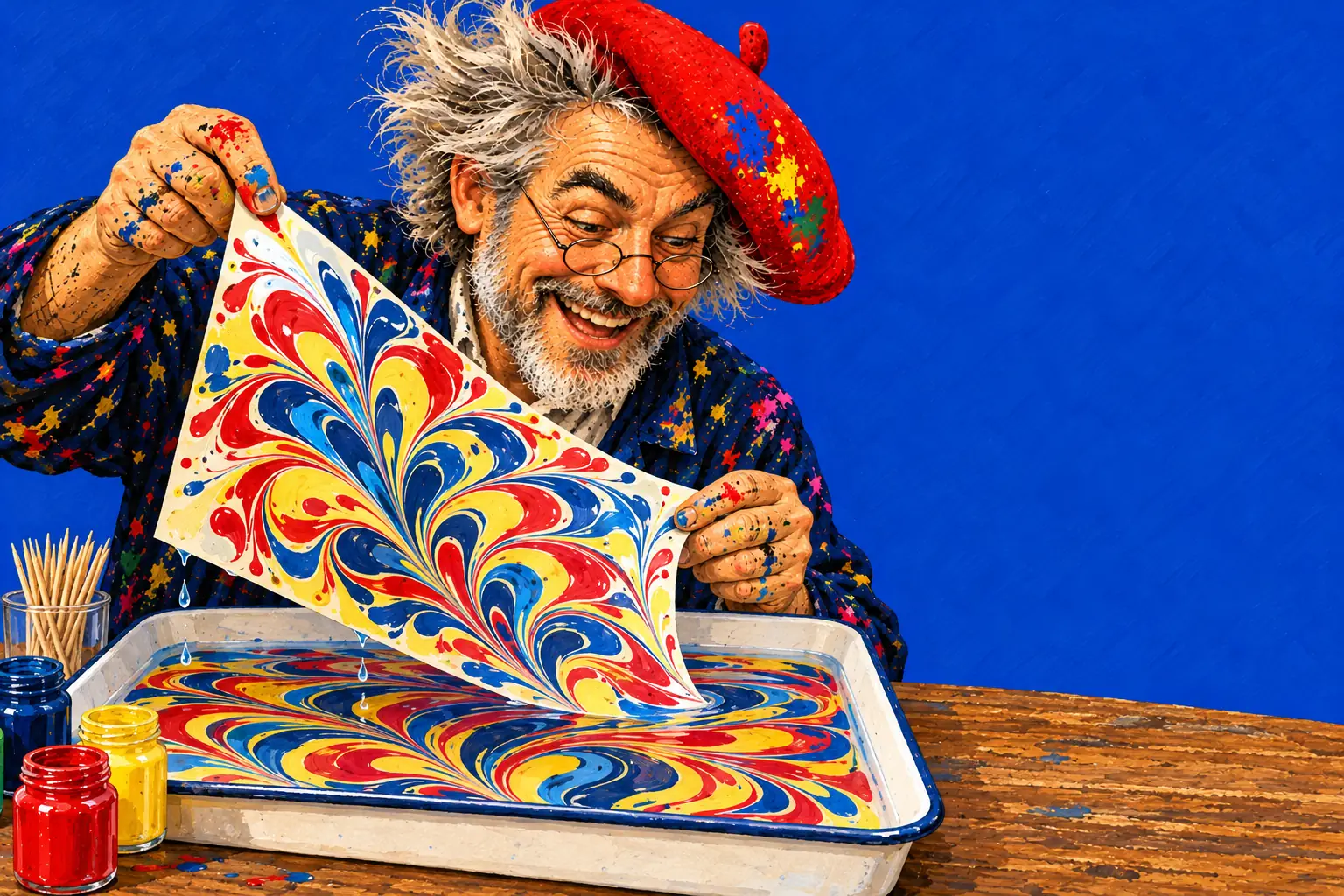
Ink rings floating on water, combed into feathers and printed.
For the youngest (3–4): crayon resist, sun print, stamping (an adult cuts), watercolour with a chunky brush.
Under half an hour: crayon resist, watercolour, bubble painting, stamping.
Over a few days: sun print, salt painting (dries overnight).
Almost no mess: sun print, crayon resist.
Gloriously messy: shaving cream marbling, bubble painting, marbling on water. More ideas on the messy play page.
For a classroom: crayon resist and sun prints fit science topics on materials and light; see the teachers’ pages.
Crayon resist, sun prints, stamping and simple watercolour work well from about 4: short steps, quick results and little that can go wrong. Salt painting and bubble painting work too, with an adult close by.
Crayon resist, tea-stained paper, potato stamps and sun prints use things most homes already have. Marbling on water is the one that needs a kit.
No. Every page has the real version with materials and steps. The app is a way to try a technique first, as often as you like, and to see the parts that stay on the screen.