
Christmas wrapping paper
Star and tree stamps in red, green and gold on brown paper.
Game Tailors
Source: Stamping for kids: potato stamps, rollers and stencils
The drawing app where the paper is real. No ads, no accounts, no data collected.
Game Tailors · Schieweg 15Y-40, 2627 AN Delft (NL)
KvK 92437702 · VAT NL866044474B01
info@gametailors.com · +31 6 4227 5919
© 2026 Game Tailors
Art technique
Stamping is printing: put paint on a raised shape, press it on paper, and the shape appears. Do it again for a pattern. Potato halves, corks and rolling pins all print, and each print comes out paler as the paint runs out.
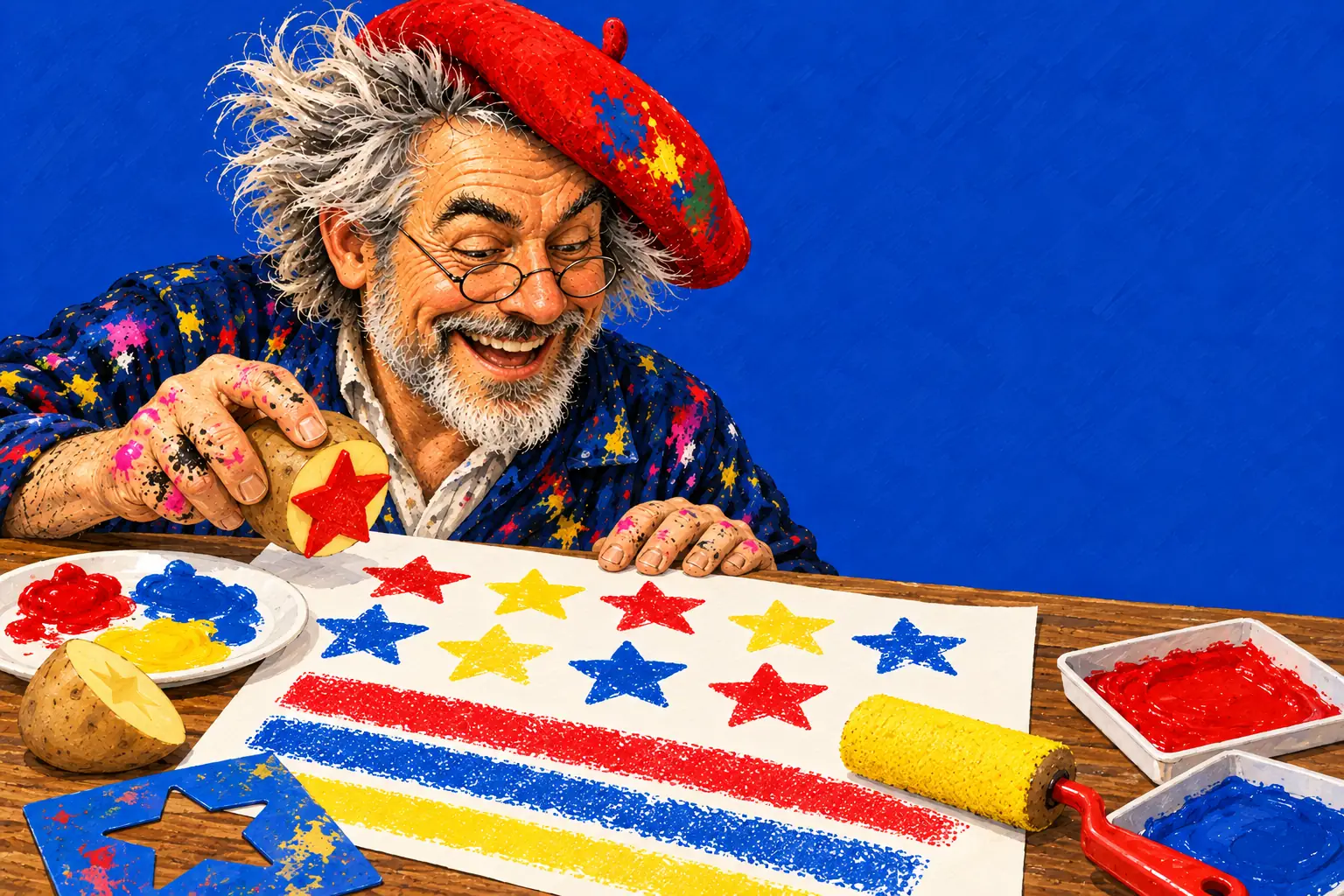
Three ways to print in Extreme Drawing:
Stencils (button above the drawing kit, free): letters A–Z, numbers 0–9 and 12 shapes. Lay one, paint or draw over it, lift it off: colour only where the holes were. Letters get little bridges, so the middle of an O doesn’t fall out. In My stencils you can cut your own from card with scissors on screen.
Stamps (Craft, in the full toolbox): star, heart, paw, flower, smiley and fish, with black, red, blue, green and purple ink pads and a damp cloth. Each print shows the paper’s grain and comes out fainter than the last. Press a stamp into wet paint or ketchup and it prints that on the next go. Every press leaves a faint dent, which a crayon rubbing brings out.
Rollers (Craft, in the full toolbox): dots, zigzags, stars, hearts and paw prints. They ink themselves, run pale after a long stretch and recover when you put them down. Rolled through wet paint, a roller prints that paint again every turn. The Rolling pin (Kitchen, free) does the same through wet paint.
Star and tree stamps in red, green and gold on brown paper.
Wrap string or rubber bands round a rolling pin or a toilet-roll tube, roll it through paint, then across the paper.
Paint the bumpy back of a real leaf and press it onto paper for an autumn print.
Cut letters out of card, then dab paint through the holes with a sponge.
Nothing to carve: six stamps, five rollers and a box of stencils, and you can cut your own stencil with scissors on screen. Prints fade the way real ones do. The stencils and the rolling pin are free; the stamps and rollers are in the full toolbox.
A potato stamp can be any shape you can draw, and it is all yours. Real prints vary with how much paint and how hard you press, which is half the fun.
A stamp only touches the paper with its raised part, so only that part prints. Each press leaves some paint behind on the paper, so the next print has less paint and comes out paler.
For grown-ups. This is relief printing: the raised surface carries the ink and transfers it under pressure, while cut-away areas never touch the paper. Only part of the paint transfers at each contact, so prints fade until the stamp is re-inked. A cut potato’s face is wet with starchy juice, which is why drying it matters. A roller repeats its pattern once per turn, so its repeat length is its circumference (π × diameter).
Cut a potato in half, press a cookie cutter into the cut face and have an adult cut away the potato around it. Pat it dry, dab it in paint and press.
Poster paint or ready-mixed paint, spread thinly on a plate or a sponge. Watery paint slides and blurs.
The potato is wet or there is too much paint. Pat the face dry, dab off the extra paint and press straight down without wiggling.
Corks, bottle caps, building bricks, sponges cut into shapes, halved apples, leaves and their own fingers.
Yes: letters, numbers and 12 shapes are free, and you can cut your own stencil from card on screen.

Print the lacy rings of coloured bubbles.
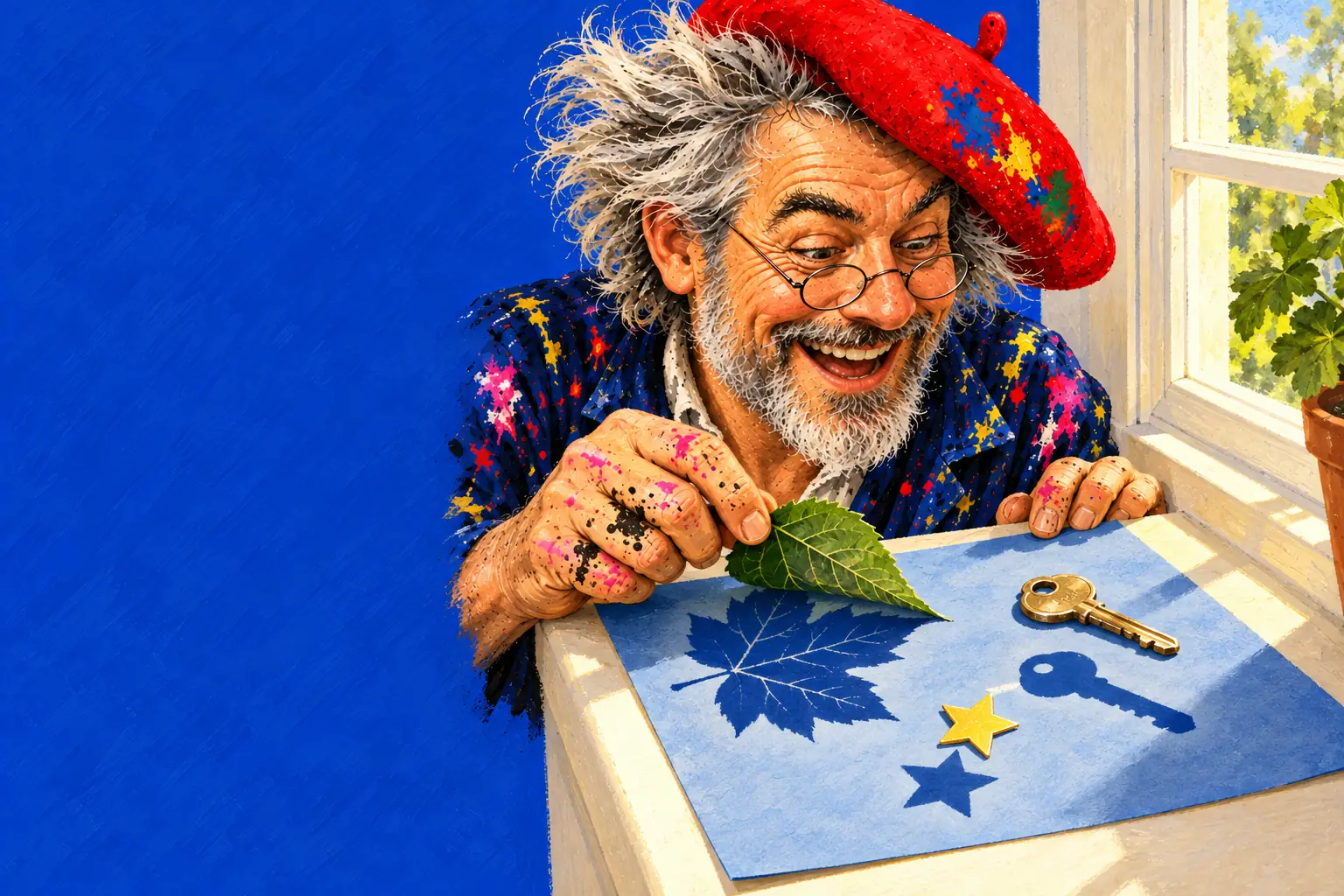
Let the sun print the shapes of things lying on coloured paper.
Snowflakes, a frozen snowman and festive printing ideas.