Shooting stars
Scratch bursts of lines out from a point. Rainbow crayon under black looks just like a night sky full of shooting stars.
Game Tailors
Source: Scratch art for kids: make your own without a kit
The drawing app where the paper is real. No ads, no accounts, no data collected.
Game Tailors · Schieweg 15Y-40, 2627 AN Delft (NL)
KvK 92437702 · VAT NL866044474B01
info@gametailors.com · +31 6 4227 5919
© 2026 Game Tailors
Art technique
Colour a card with bright crayon, paint black over it and let it dry. Scratch with a toothpick and the black breaks off in a thin line, showing the crayon colours. The wax stops the paint soaking in, so it comes away cleanly.
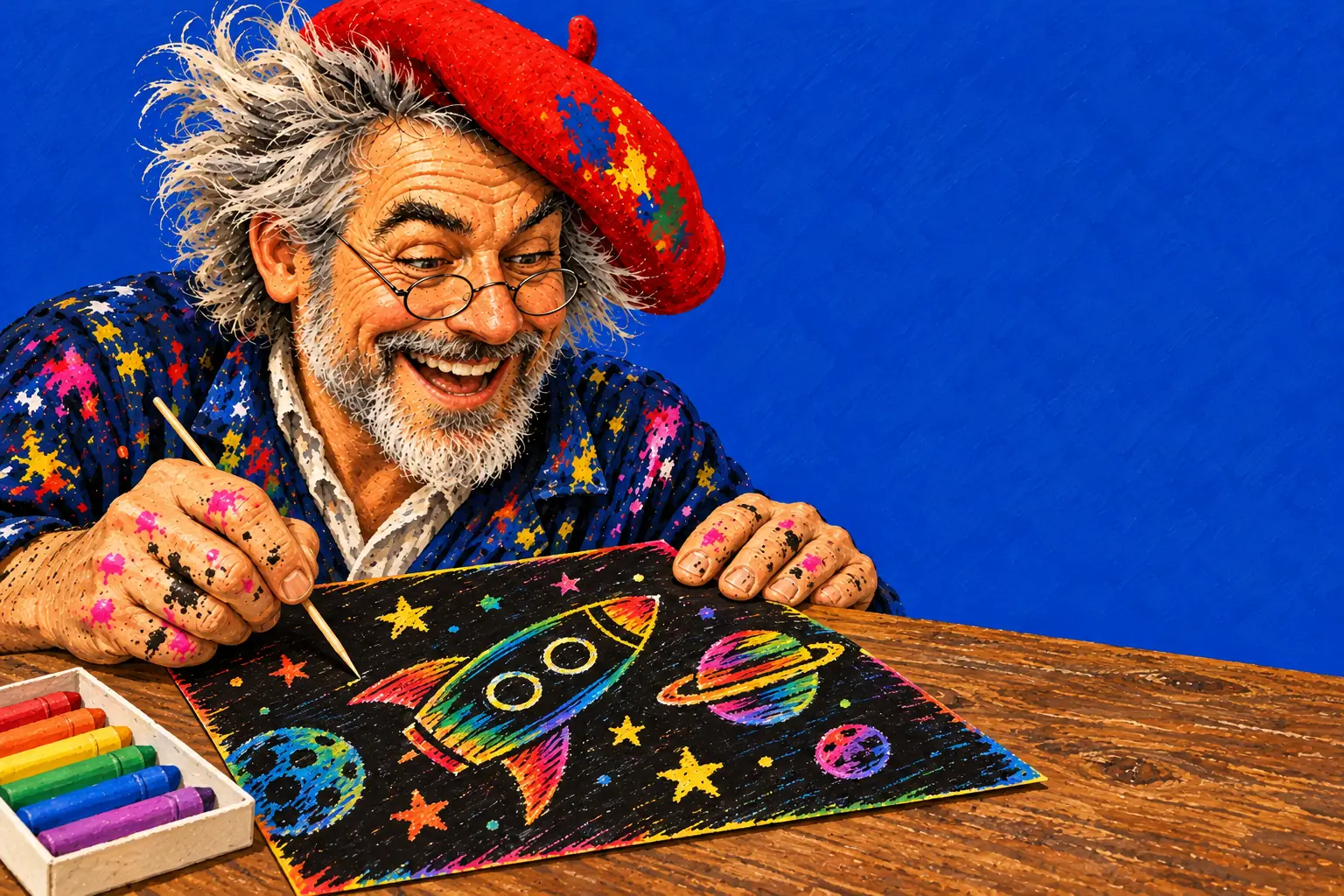
Crayon (drawing bar): colour a patch in bright stripes. The crayon only catches the raised fibres of the paper, so go over it a few times.
Paint (drawing bar): paint black all over the crayon.
Time → Wait 1 hour. Brush paint sets hard in about an hour. (Black poster paint from the Paint bucket, Toolbox, sets in a few minutes.)
Craft tab → Poke → Toothpick or Skewer (in the full toolbox): drag it across the dry black. The point breaks the paint along a fine line, about half a millimetre wide, down to the crayon, and the crumbs land just beside the line.
Also try: dragging the toothpick through the paint while it is still wet. It ploughs a soft furrow instead of a clean line. Compare a scratch over crayon with one over bare paper: without the wax underneath, the black has soaked into the paper.
Scratch bursts of lines out from a point. Rainbow crayon under black looks just like a night sky full of shooting stars.
Orange, purple and green crayon under black: scratch bats, a moon and spider webs.
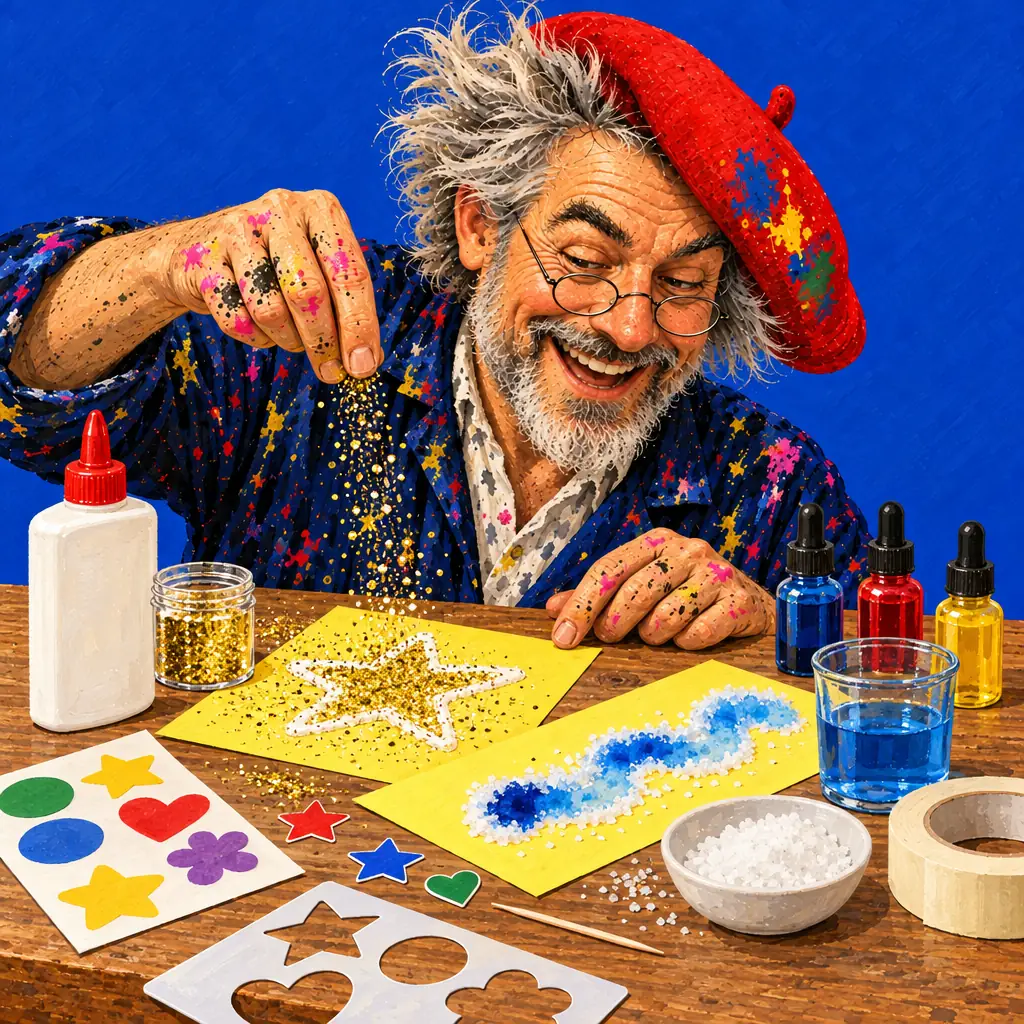
A rocket, planets and stars. Scratch dots for far-away stars and the side of the skewer for comet tails.
Colour bright, then cover it with a thick layer of black crayon or oil pastel and scratch through that. Less mess, but it takes strong arms.
Drying is one tap (Wait 1 hour), and Undo takes back a slip. The scratch is a crisp line, with the crumbs falling beside it. The crayon, the paint and the wait are free; the toothpick and skewer are in the full toolbox.
Real drying takes an hour or a night, and the paint needs a little soap to stick to the wax. But the real card has the scrape you can hear, the shiny wax under the black, and a picture you can hang on the fridge.
Crayon is wax, and wax doesn’t let paint soak in. So the black paint dries as a thin skin lying on top of the wax, and a sharp point can lift it off.
For grown-ups. Wax is hydrophobic: water-based paint can’t wet or soak into a waxed surface, so it dries as a separate film with little grip on the layer below. The dish soap is a surfactant that lowers the paint’s surface tension so it spreads over the wax instead of beading up. Once dry the film is brittle, and a hard point concentrates force on a tiny area, cracking it along the line and exposing the wax. Artists call scratching through one layer to another sgraffito (Italian for “scratched”).
For teachers
Scratch art fits art lessons on line and contrast, and the science behind it (wax keeps water out) fits KS1 everyday materials and NGSS 2-PS1-1 (describing materials by their properties, such as waterproof). Scratch a few lines on the whiteboard to show the idea, then let the class predict what dish soap changes.
Cover thick card with bright crayon, paint it with black poster paint mixed with a few drops of dish soap, and let it dry completely. Then scratch with a toothpick.
Wax pushes water away. Stir a few drops of dish soap into the paint so it spreads, and add a second coat once the first is dry.
A wooden toothpick, a bamboo skewer, an opened paper clip, a used-up ballpoint pen or the end of a paintbrush. Younger children do best with the blunter tools.
Yes: colour with bright crayons, cover them with a heavy layer of black crayon or oil pastel, and scratch through that.
Scratchboard, scraperboard (in the UK) or sgraffito, the artists’ name for scratching through one layer to show another.
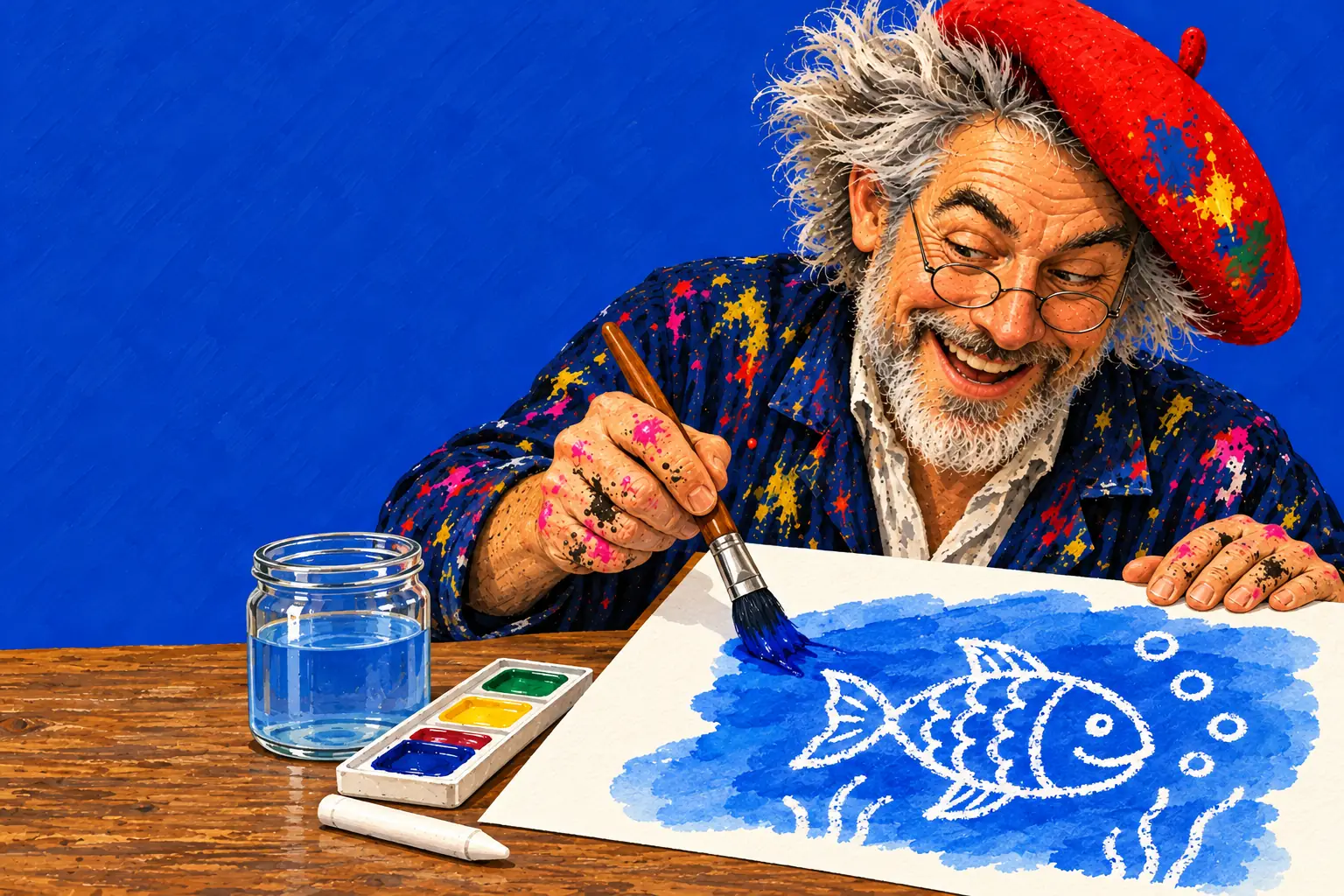
The same wax trick the other way round: paint slides off a crayon drawing.
Spooky but real ideas for October, from mould to foam.
Wet-on-wet, blooms and salt: what watercolour does on paper.