Secret messages
Write a note in white crayon and hand it to a friend with a brush. The words appear as they paint.
Game Tailors
Source: Crayon resist for kids: the wax and watercolour trick
The drawing app where the paper is real. No ads, no accounts, no data collected.
Game Tailors · Schieweg 15Y-40, 2627 AN Delft (NL)
KvK 92437702 · VAT NL866044474B01
info@gametailors.com · +31 6 4227 5919
© 2026 Game Tailors
Art technique
Draw with crayon, then paint watercolour over the top. The paint soaks into the bare paper but beads up on the crayon, because wax repels water. A white crayon drawing stays invisible until the paint reveals it, like a secret message.
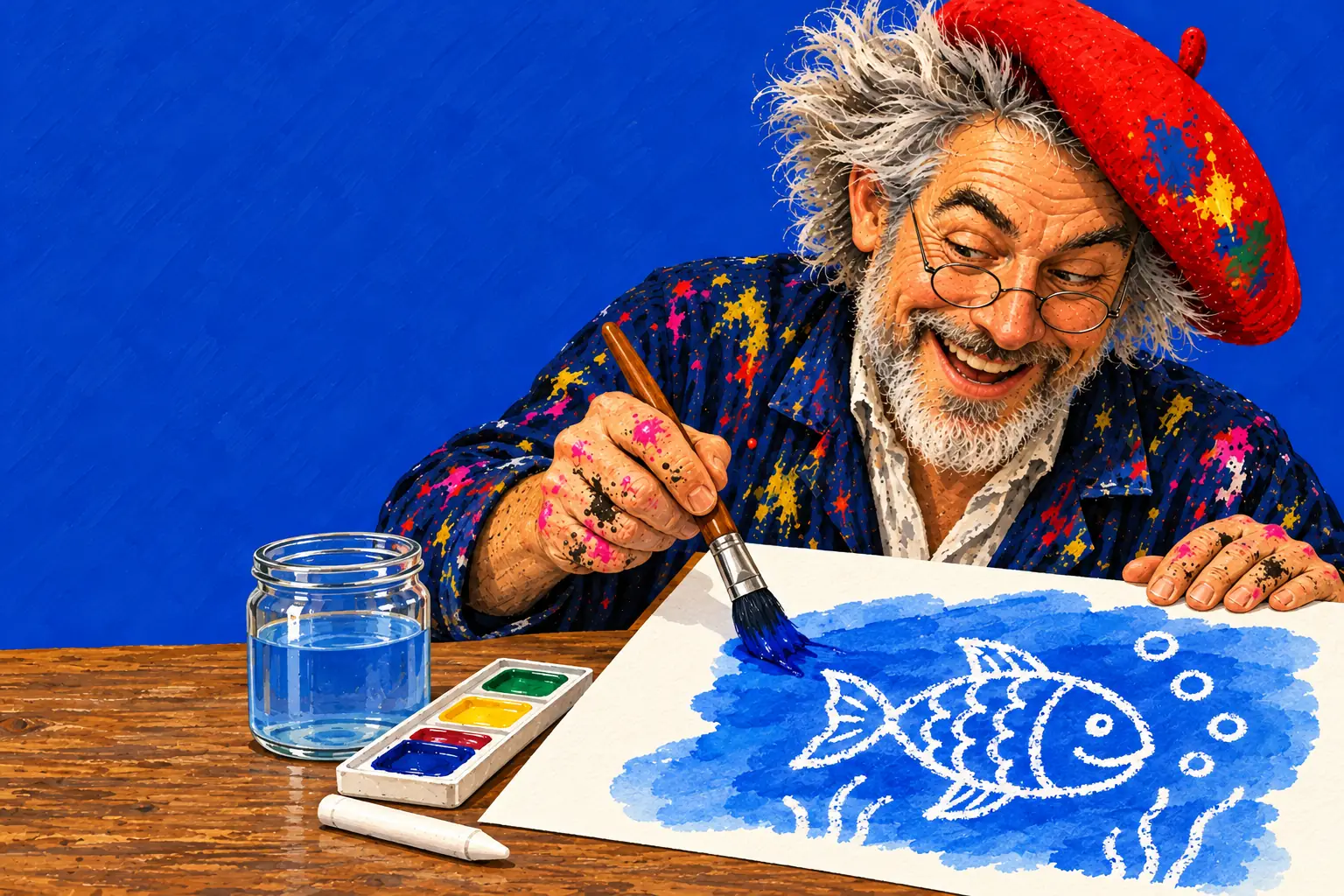
A painting with crayon lines that shine through the paint: fish under a blue sea, a spider’s web on a dark night, or a secret message that only appears when someone paints over it. It is the same technique as wax resist, and Dutch and Flemish classrooms know it as wasco en ecoline, after a wax crayon and a liquid watercolour.
Crayon (drawing bar): draw with any colour. The White crayon is there for exactly this: a nearly invisible wax drawing.
Watercolour (drawing bar): paint over it. The paint beads up on the wax and hardly takes, so the crayon lines show through and the white drawing appears.
Other wet things over crayon: Ink drops (Craft) are held off the wax too; Water drops are turned away by the waxed fibres; and Bleach drops (Bathroom) fade the colour around a crayon line but not under it.
Time → Bake in the oven. The crayon melts into the paper in smooth, deep colour, and the paper goes slightly see-through where the wax soaked in.
Also try: soap resist. A drop of Dish soap (Science) leaves soap in the paper that watercolour avoids, just like wax. Coloured pencils hold a little wax too, so they resist a little. All of this is free; the bar of soap (Bathroom) is in the full toolbox.

Write a note in white crayon and hand it to a friend with a brush. The words appear as they paint.
White-crayon webs and leaves under a dark wash: the autumn classic in Dutch schools, often made into paper lanterns.
Ghosts, bats and a moon in white and yellow crayon, then a deep purple or black wash.
Fish, shells and bubbles in bright crayon under a blue-green wash.
The paint beads up on every crayon fibre, every time. You can also show what water and bleach do to crayon, and bake the page to melt the wax into the paper. Everything for this technique is free.
How well it resists depends on how hard you pressed and how watery the paint is. Beads of paint sit on the wax and need dabbing off. Very wet paper buckles, and a heavy sheet helps.
Crayons are made of wax, and wax and water don’t mix. The watery paint slides off the wax and soaks into the paper around it, so the drawing stays bright.
For grown-ups. Paraffin wax is hydrophobic (water-repelling): water’s surface tension stops it wetting the waxed fibres, so watercolour beads up and runs off onto the bare, absorbent paper. A heavy wax layer seals the fibres; light strokes only coat the raised tooth of the paper, so paint gets into the valleys between. The same principle is behind batik (hot wax on fabric) and decorated pysanky eggs, and soap in the paper resists for a similar reason.
Press harder with the crayon and use runnier paint. Thin crayon lines and thick paint are the usual reasons the drawing disappears.
There isn’t one: crayons are wax, so crayon resist is a kind of wax resist. Candles, oil pastels and white wax crayons all work.
Watercolour, liquid watercolour or very watery poster paint. Thick paint covers the wax instead of sliding off it.
It is what Dutch and Flemish schools call this technique: drawing with wax crayon and painting over it with liquid watercolour, named after two well-known products. It is the same wax resist.
Write it on white paper with a white crayon, pressing hard. Give it to a friend with a brush and some watercolour: when they paint over it, the words appear.
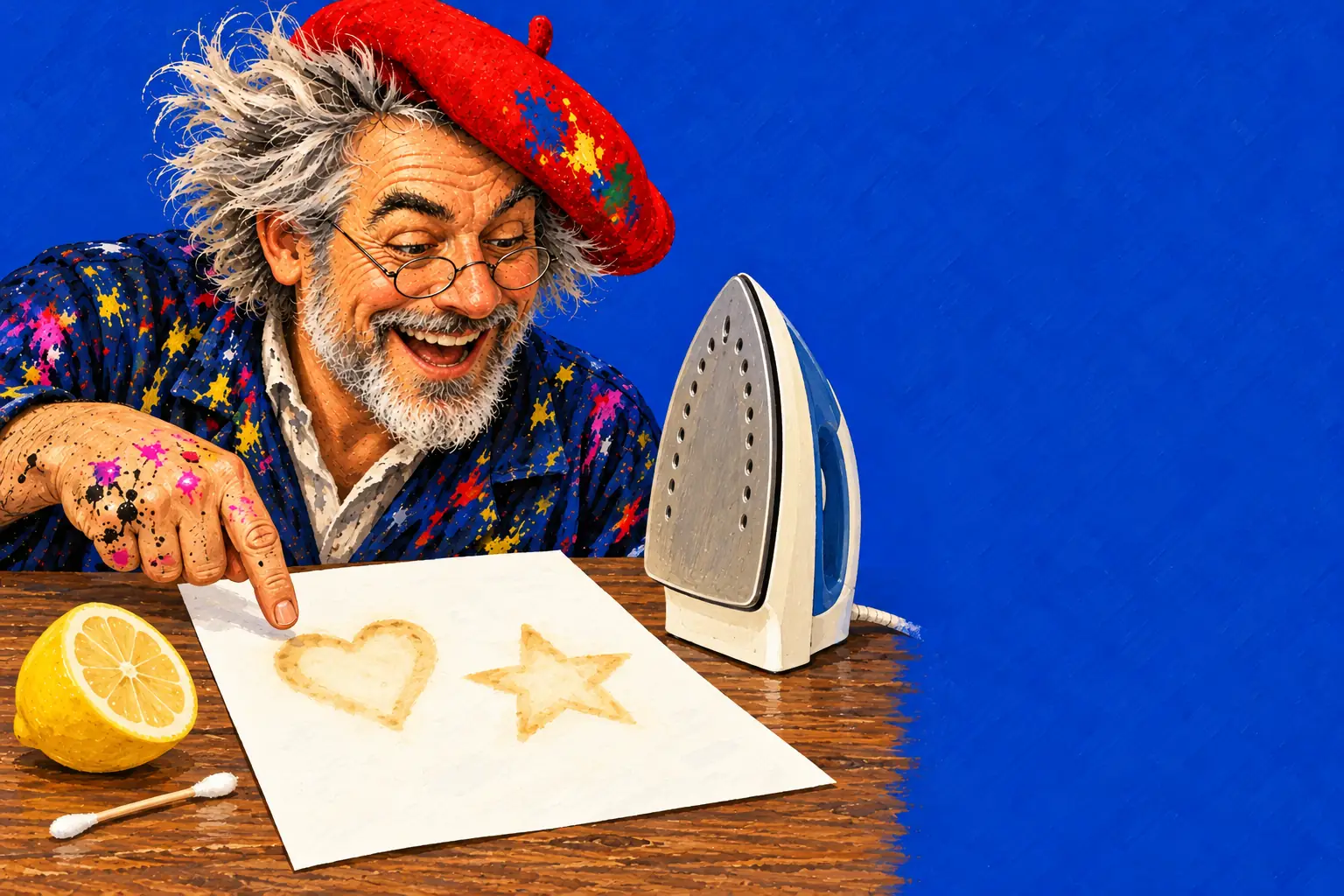
Secret writing in lemon juice that turns brown with heat.

The same wax under black paint, scratched with a toothpick.
Wet-on-wet, blooms and salt starbursts.