
Autumn leaves
Flat, dry leaves of different shapes on red or orange paper.
Game Tailors
Source: Sun print for kids: fade paper in a sunny window
The drawing app where the paper is real. No ads, no accounts, no data collected.
Game Tailors · Schieweg 15Y-40, 2627 AN Delft (NL)
KvK 92437702 · VAT NL866044474B01
info@gametailors.com · +31 6 4227 5919
© 2026 Game Tailors
Art technique
Lay leaves, keys or stickers on coloured paper in a sunny window and wait. Sunlight slowly fades the dye everywhere except under the objects, so when you lift them, crisp darker shapes are left behind. No special chemicals: just sun and patience.
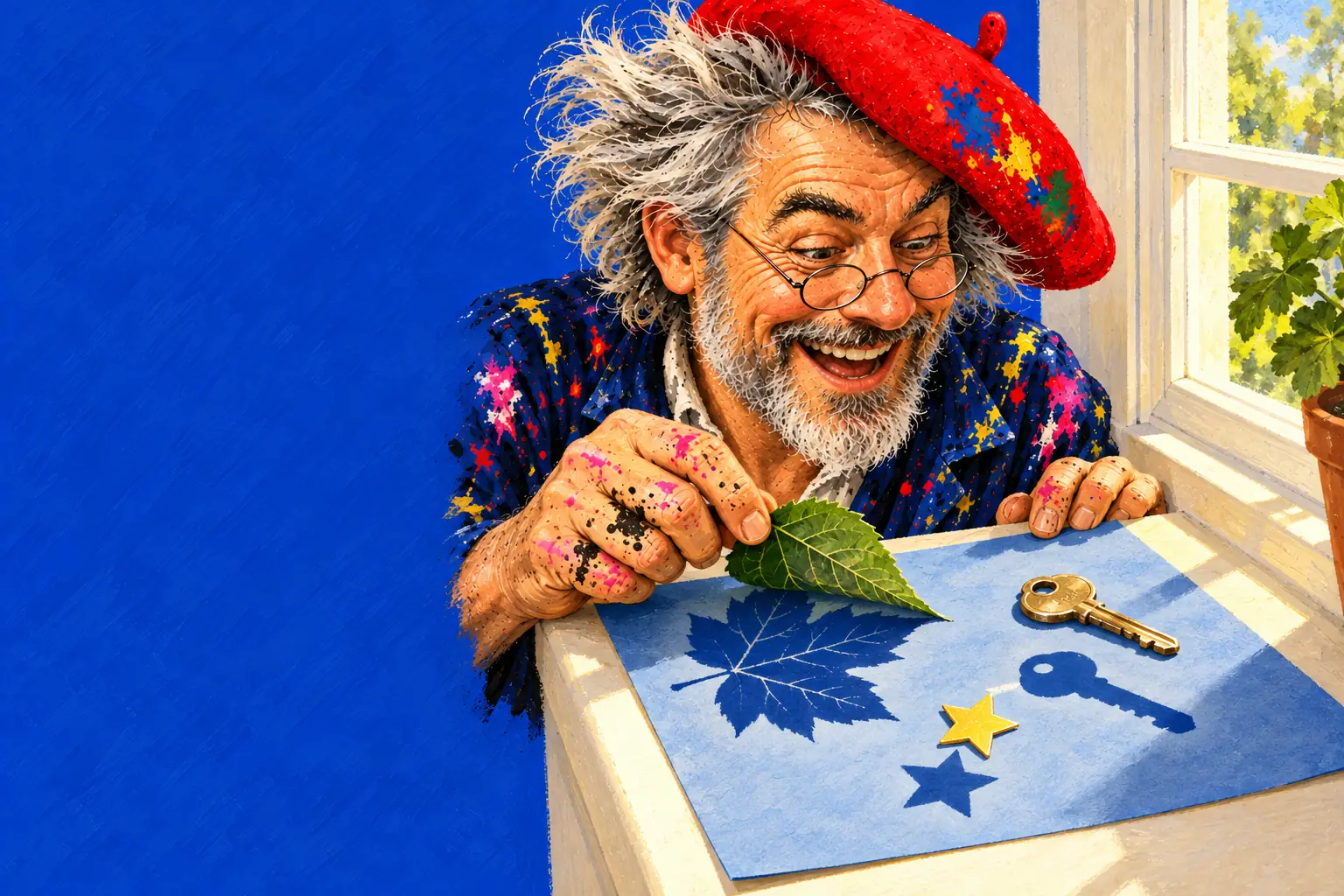
Time → A week in the sun (free): the page spends a week on a sunny windowsill in a few seconds.
Colours in the paper fade to roughly half their strength: reds and pinks lose the most, then yellows, while blues hold best, as real dyes do.
Wherever something was lying on the paper, the colour stays: a crisp sun print. Stencils (free) work, and so does anything thick lying on top, like a blob of ketchup. Stickers, tape, leaves and confetti (in the full toolbox) print too.
The paper yellows a little, and everything on it dries.
Try first: colour a sheet with Marker or Watercolour in several colours, lay a heart stencil and a star stencil on it, and send it into the sun. Lift the stencils and compare the colours.
Stickers and tape keep paint off, too (in the full toolbox). Stick them down first, paint over the top, peel them off: the paper underneath is clean, because whatever lies flat on the paper covers it.

Flat, dry leaves of different shapes on red or orange paper.
Fold and cut a paper snowflake and use it as the shape: a winter window project for the Christmas holidays (slow in winter sun, so start early).
Set one up before you go away and see what the sun has done when you come back.
Stick stickers or tape on white paper, paint over the top, and peel them off for clean white shapes.
A week passes in seconds, and the fading is always the same: reds and pinks most, blues least. Anything lying on the paper prints, even a blob of ketchup. The week in the sun, the stencils and the Kitchen are free; stickers, tape and leaves are in the full toolbox.
It takes days or weeks, and depends on the weather, the window and the paper: some papers barely fade. Objects that aren’t flat leave fuzzy edges, because the sun moves across the sky during the day.
Sunlight carries energy. Day after day, it breaks up the colour in the paper’s dye, bit by bit. Where something blocks the light, the dye is safe in the shade, so it stays darker.
For grown-ups. This is photodegradation: ultraviolet and visible light break bonds in dye molecules so they stop absorbing colour. Some dyes are far more lightfast than others; in Extreme Drawing’s model the dyes that make reds and pinks are the least lightfast and blues the most, which matches many everyday dyes. An opaque object casts a shadow, so the paper under it gets no light at all. It is the same process that fades posters in shop windows. A cyanotype sun print works the other way round: light turns the coating blue where it falls.
For teachers
Sun prints fit NGSS 1-PS4-3 (placing objects made of different materials in the path of light) and KS2 Year 3 light (shadows form when an opaque object blocks the light, and sunlight can be dangerous). It makes a good long-running class experiment: start on Monday, check on Friday, and show the instant version on the whiteboard first.
Coloured construction (sugar) paper fades in sunlight on its own, with no chemicals. Sun-print paper kits work in minutes but need rinsing in water.
A few sunny days for a faint print, one to two weeks for a strong one. Cloudy or winter weather slows it down.
Some papers have lightfast colours that hardly fade, or the window gets little direct sun. Try cheaper, brighter paper, a sunnier window, and more time.
Often reds and pinks, while many blues last longest; that is how Extreme Drawing fades them. Real papers vary, so test a few.
No. A cyanotype uses paper coated with chemicals that turn blue in light. A construction-paper sun print works by fading dye, so the shaded shapes stay darker.
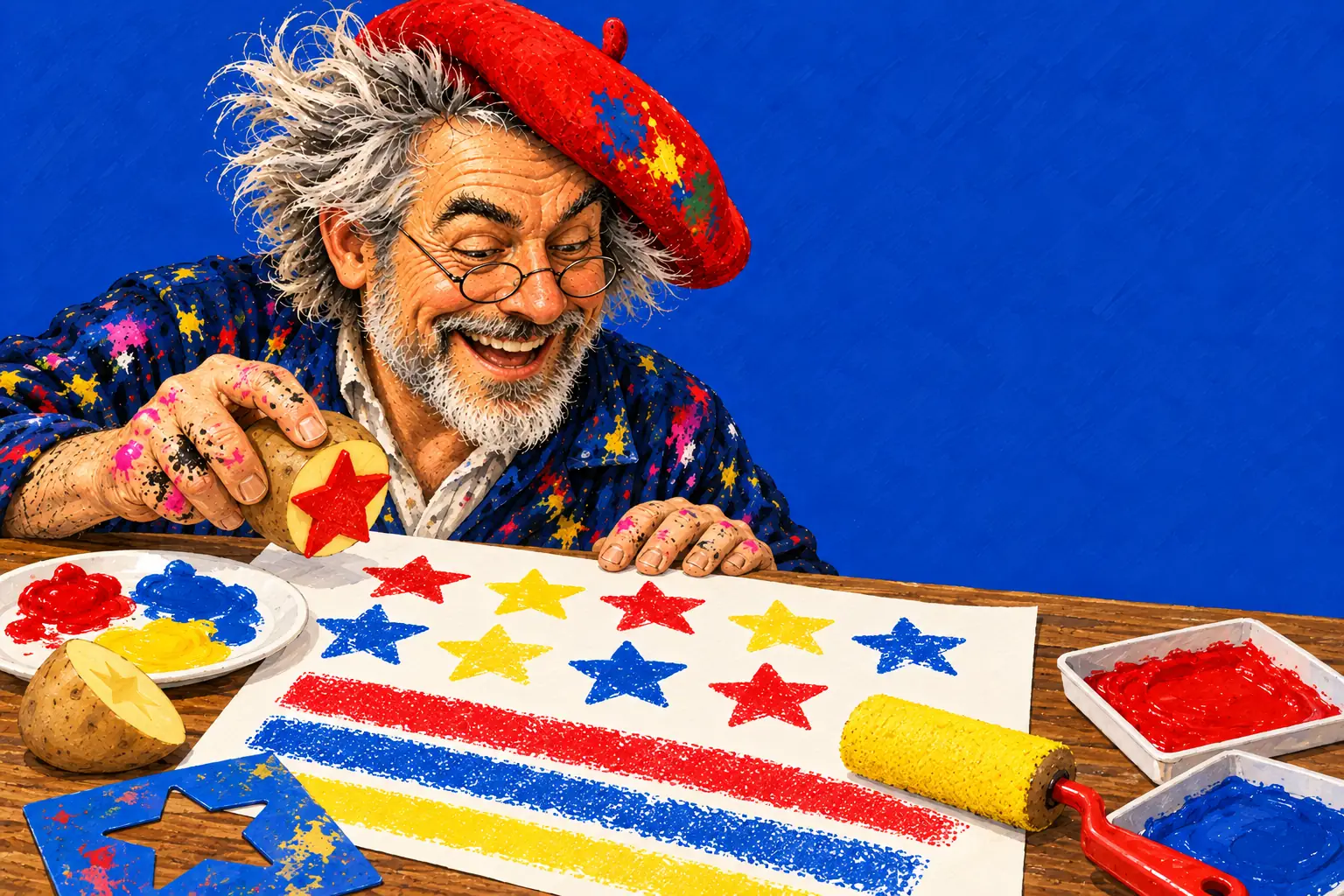
Cut your own stencil, then print with it or let the sun do it.

Another way to keep colour off: wax.

A natural dye that changes colour with acids and bases, and fades in the sun too.