No mess to clear up
Freeze a page, bake it, leave it three days, then press undo. The whole demonstration fits in five minutes and needs no sink.
Game Tailors
Source: Science lessons for KS1, KS2 and NGSS with Extreme Drawing
The drawing app where the paper is real. No ads, no accounts, no data collected.
Game Tailors · Schieweg 15Y-40, 2627 AN Delft (NL)
KvK 92437702 · VAT NL866044474B01
info@gametailors.com · +31 6 4227 5919
© 2026 Game Tailors
For teachers
Extreme Drawing lets a class watch real science on screen first (ice cream melting, an egg setting in the oven, red cabbage turning pink) and then do it for real. Free in the browser, no pupil accounts, no data collected. Below: how it fits NGSS, KS1/KS2, the Dutch kerndoelen and the Flemish minimumdoelen.
Extreme Drawing is a drawing and painting app in which the paper behaves like the real thing. For a classroom that means a free, open sandbox where materials do what they really do: water soaks in and spreads, chocolate melts and sets again, egg white turns white in the oven and never goes back, mould grows on food left for three days.
It isn't a quiz or a course. You lead, the app shows. Each lesson page below gives a 30 to 45 minute plan: a hook, a prediction, a try on the whiteboard, the real experiment, and the explanation.
For each framework below, we list the topics where an experiment in the app genuinely fits, and only those. "Fits" means the app shows the phenomenon the standard is about, so you can use it as a demonstration or a starting point. It doesn't replace the hands-on investigation the standard asks for, which is why every lesson ends with the real thing.
Where a page doesn't exist yet, the experiment is still in the app; we just haven't written the lesson.
United States
2-PS1-1 (classify materials by their observable properties; many can be solid or liquid depending on temperature): ice cream, chocolate and butter melting and setting, paper soaking up paint while the varnished paint board doesn't. Lesson: states of matter.
2-PS1-4 (some changes caused by heating or cooling can be reversed and some cannot): the freezer against the oven; chocolate that melts and sets again against an egg that sets for good. Lesson: reversible changes.
2-LS2-1 (do plants need sunlight and water to grow?): cress and grass seeds come up only where the paper is damp. The app shows the water half; test the light half for real. Page: growing cress.
5-PS1-1 (matter is made of particles too small to be seen): wet paper drying faster near heat; the gas hidden in cola bursting out at a mint. Page: cola and mints.
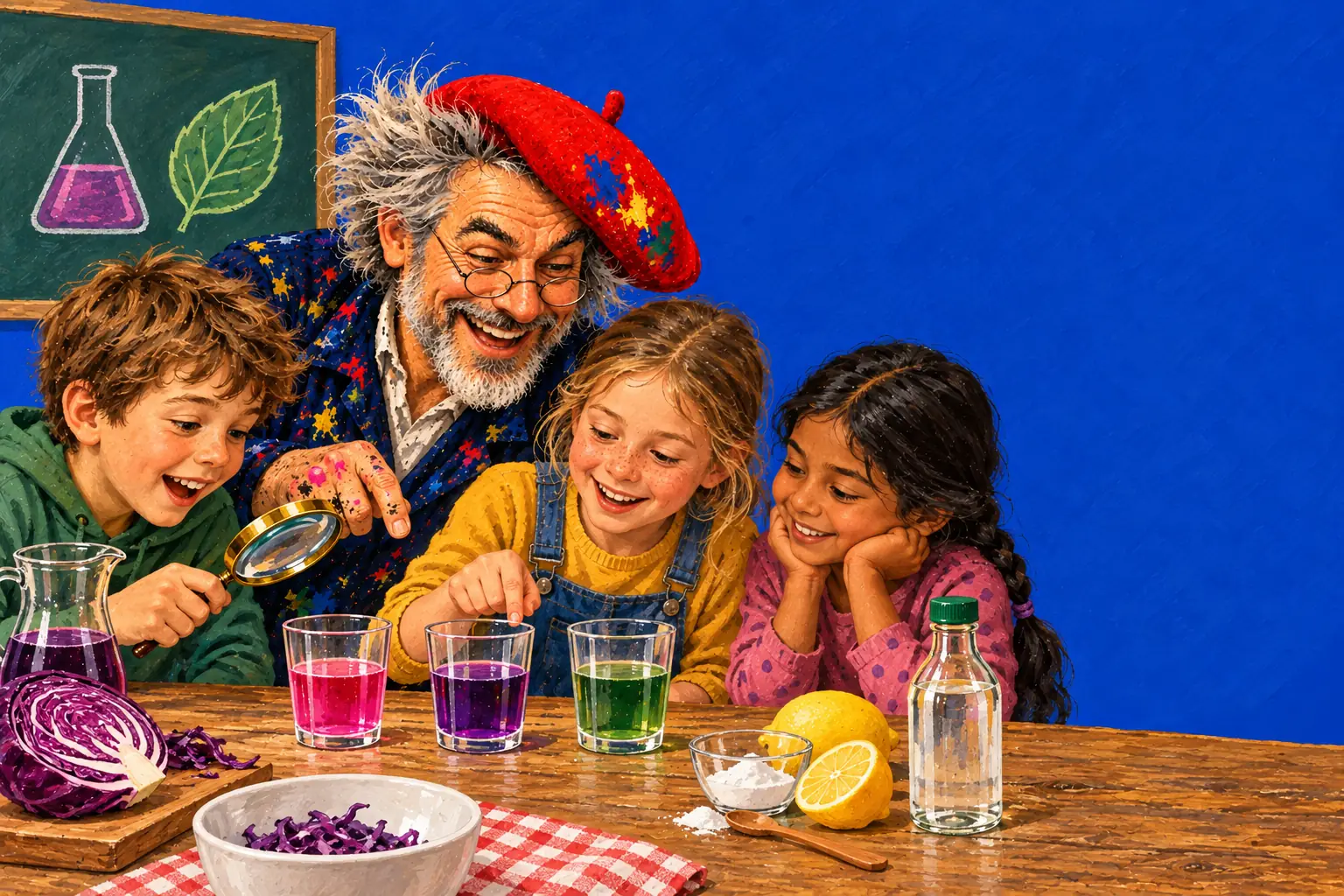
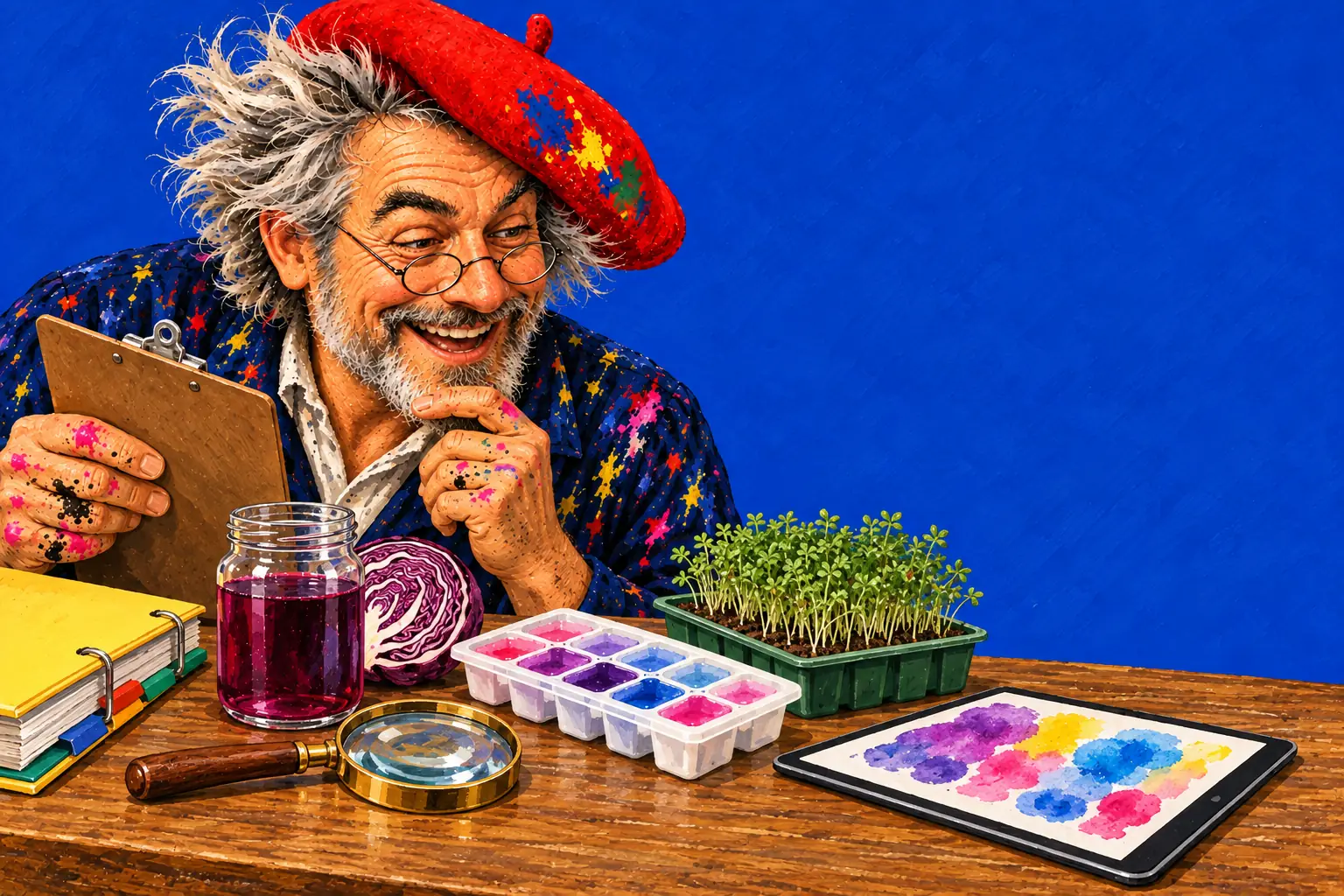
5-PS1-3 (identify materials by their properties): red cabbage juice telling acids from bases; a black marker splitting into colours. Pages: red cabbage indicator, paper chromatography.
5-PS1-4 (does mixing substances make a new substance?): vinegar on baking soda fizzing into foam; elephant toothpaste. Pages: baking soda and vinegar, elephant toothpaste.
5-LS2-1 (matter moving among plants, animals, decomposers and the environment): mould growing on food left out, and stopping where there's salt or vinegar. Page: mould in 3 days.
England
Year 1, Everyday materials: describing simple physical properties. The same paint on absorbent paper and on the waterproof paint board.
Year 2, Plants: plants need water, light and a suitable temperature. Cress sprouts only where it's damp. Page: growing cress.
Year 4, States of matter: solids, liquids and gases; materials changing state when heated or cooled; evaporation and temperature. Lesson: states of matter.
Year 4, Sound: sounds are made by something vibrating. The speaker in the Science tab shakes the sheet, and sprinkled salt gathers on the lines that stay still.
Year 5, Properties and changes of materials: reversible changes (melting, freezing) and changes that make new materials and usually can't be reversed, including burning and the action of acid on bicarbonate of soda. Lesson: reversible changes; pages: baking soda and vinegar, invisible ink.
Year 6, Living things and their habitats: micro-organisms. Mould on food, and what keeps it away. Page: mould in 3 days.
Art and design, KS1 and KS2: a range of techniques with colour, pattern and texture. Salt painting, crayon resist, marbling. Hub: art techniques.
Computing, KS1: using technology purposefully to create digital content. Lesson: digital creativity.
The Netherlands
Under the current core objectives (2006):
Kerndoel 42, investigating materials and physical phenomena such as light, sound, force and temperature: melting and freezing, the oven and the freezer, the speaker with salt, wet paper that won't burn.
Kerndoel 40, recognising common plants and animals in your own surroundings and how they live there: cress that only grows when damp, ants that follow a trail and turn back at vinegar.
The new kerndoelen. The Netherlands is replacing the 2006 core objectives. Schools may start working with the new ones from 2026, and by 1 August 2031 all schools use them for every learning area. In the new set, science falls under the learning area mens en natuur, and digitale geletterdheid (digital literacy) becomes a learning area of its own. We will map our lessons to the new objectives once they are fixed in law. Lesson: digital creativity.
Flanders
Flanders is bringing in new minimum goals (minimumdoelen) for primary school, starting with Dutch, maths and wetenschap en techniek. They are compulsory for nursery classes and the first three years of primary school from 2026–2027, for the fourth and fifth years from 2027–2028, and for the sixth year from 2028–2029.
The experiments fit the science and technology goals on materials and their changes (melting, freezing, heating), living things (plants, small animals, mould) and safety. We're matching each lesson to individual minimumdoelen; until then, use the topic lists above.
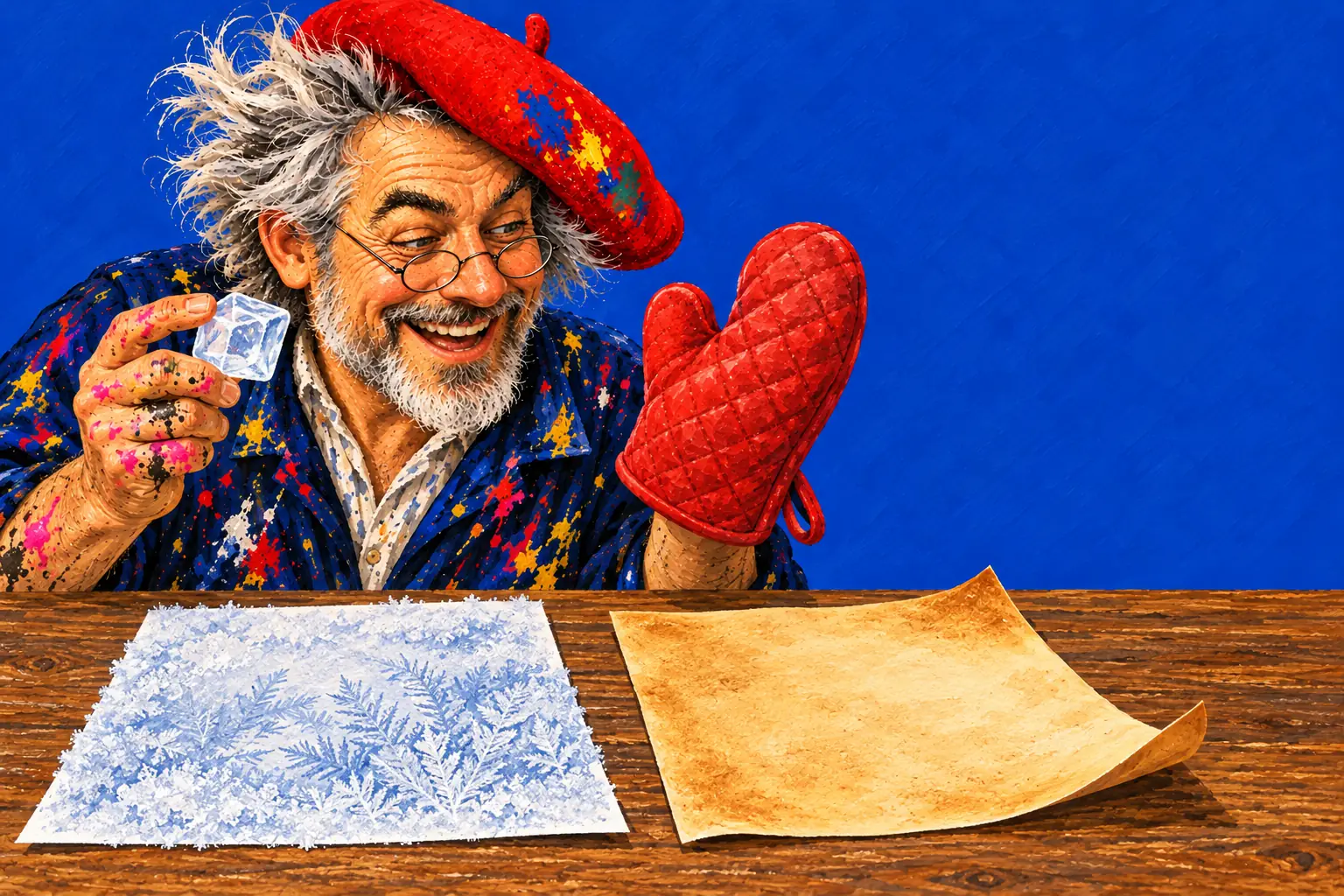
Freezer against oven: melt it back, or not? Year 5 and NGSS 2-PS1-4.
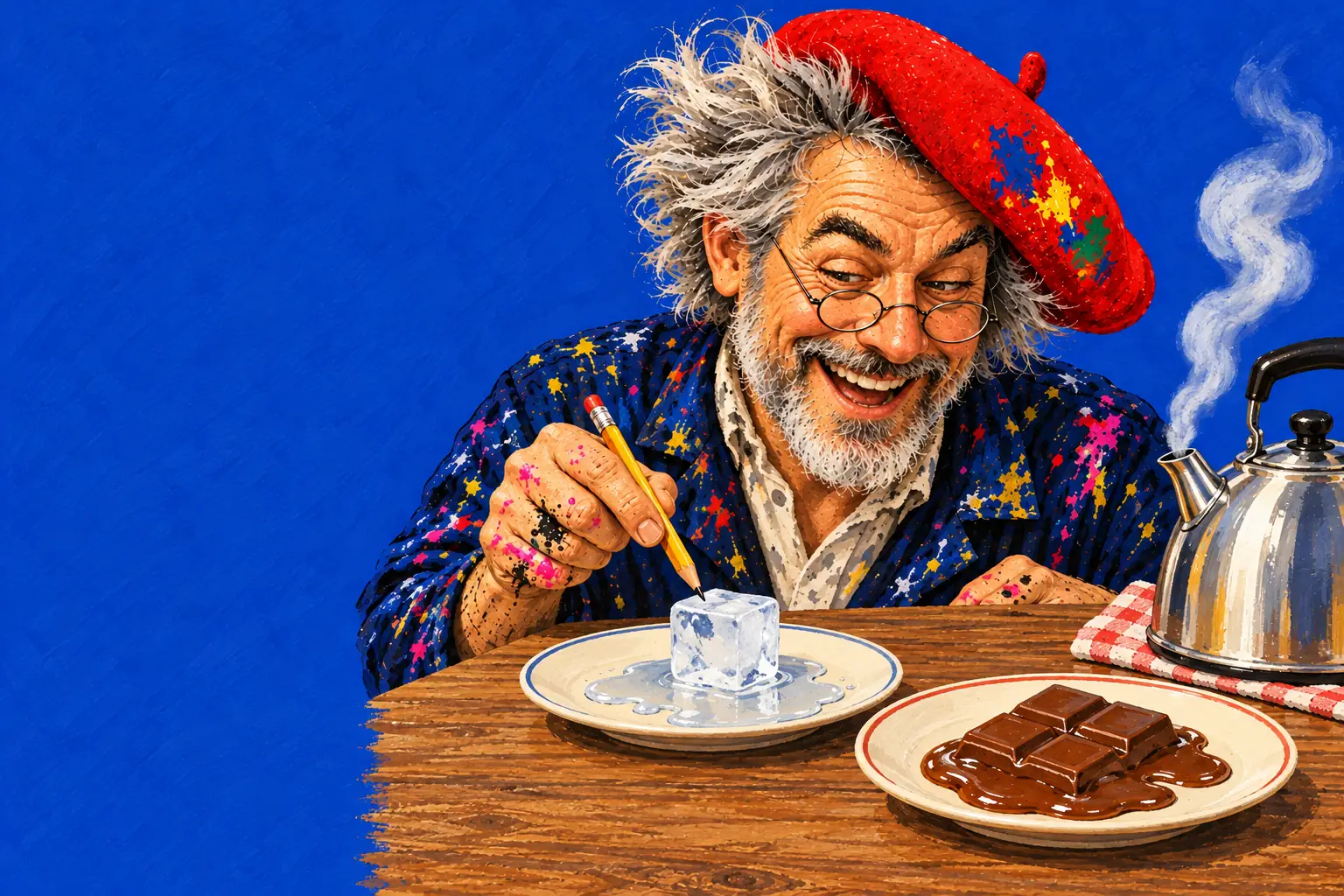
Ice cream, chocolate, steam and frost: solids, liquids and gases. Year 4 and NGSS 2-PS1-1.
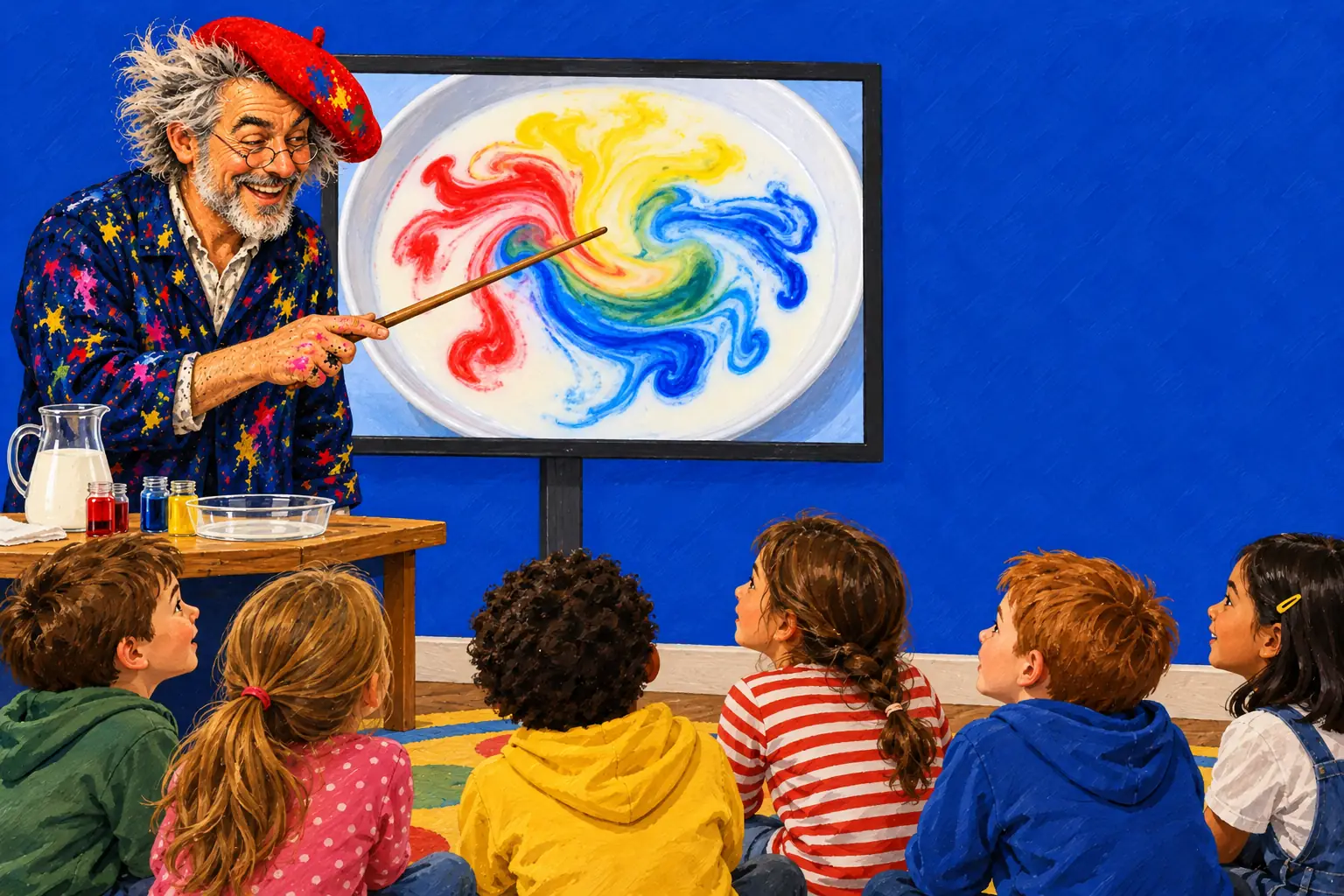
Predict, try, explain: how to run the browser version on a classroom board.
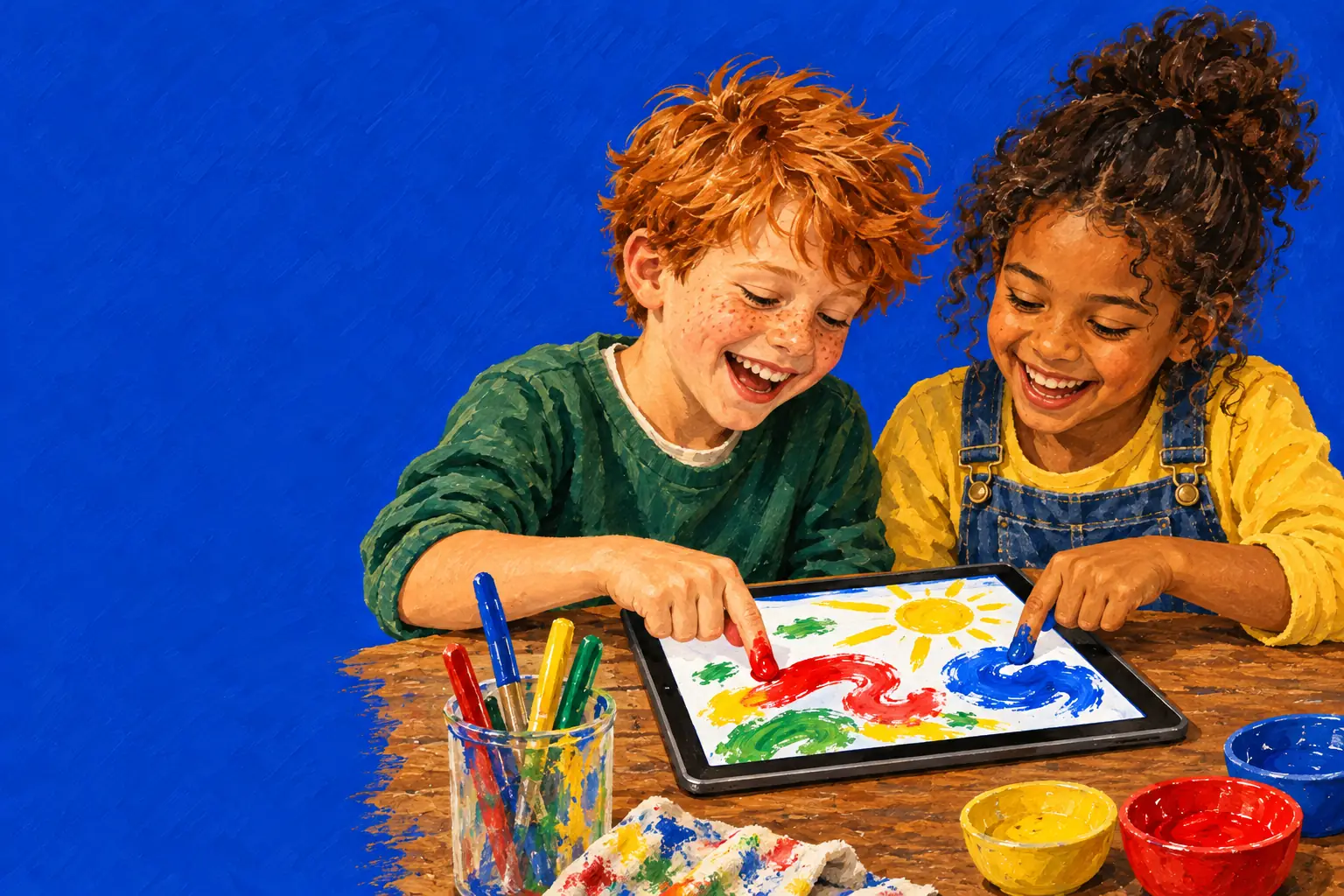
Making instead of consuming, with no accounts or data. Digital literacy, the hands-on way.
The browser version is free to use in class, with no time limit: the drawing tools, the Kitchen, Science and Toolbox tabs and every time skip, which covers every lesson on these pages. One optional unlock adds the rest of the tools.
No. Nobody logs in, the app collects no personal data and there are no ads. Drawings stay on the device they were made on.
Children of about 4 to 10: roughly Reception to Year 5 or 6 in England, kindergarten to grade 5 in the US, groep 1 to 7 in the Netherlands. Each lesson page says which year it suits.
No, and it isn't meant to. It's the demonstration and the prediction; every lesson plan ends with the real thing, with safety notes, and the dangerous ones stay on the screen.