
Salted or not?
Two blobs of ketchup, one shaken with salt. Which one goes mouldy?
Game Tailors
Source: Bread mold experiment: mould in 3 days, then for real
The drawing app where the paper is real. No ads, no accounts, no data collected.
Game Tailors · Schieweg 15Y-40, 2627 AN Delft (NL)
KvK 92437702 · VAT NL866044474B01
info@gametailors.com · +31 6 4227 5919
© 2026 Game Tailors
Living things experiment
Mould is a living thing that grows on food. Its spores float in the air everywhere, and when one lands on damp food it sends out threads and, after a day or two, a fuzzy spot appears. Warmth and damp speed it up; salt, vinegar, freezing and baking hold it back.
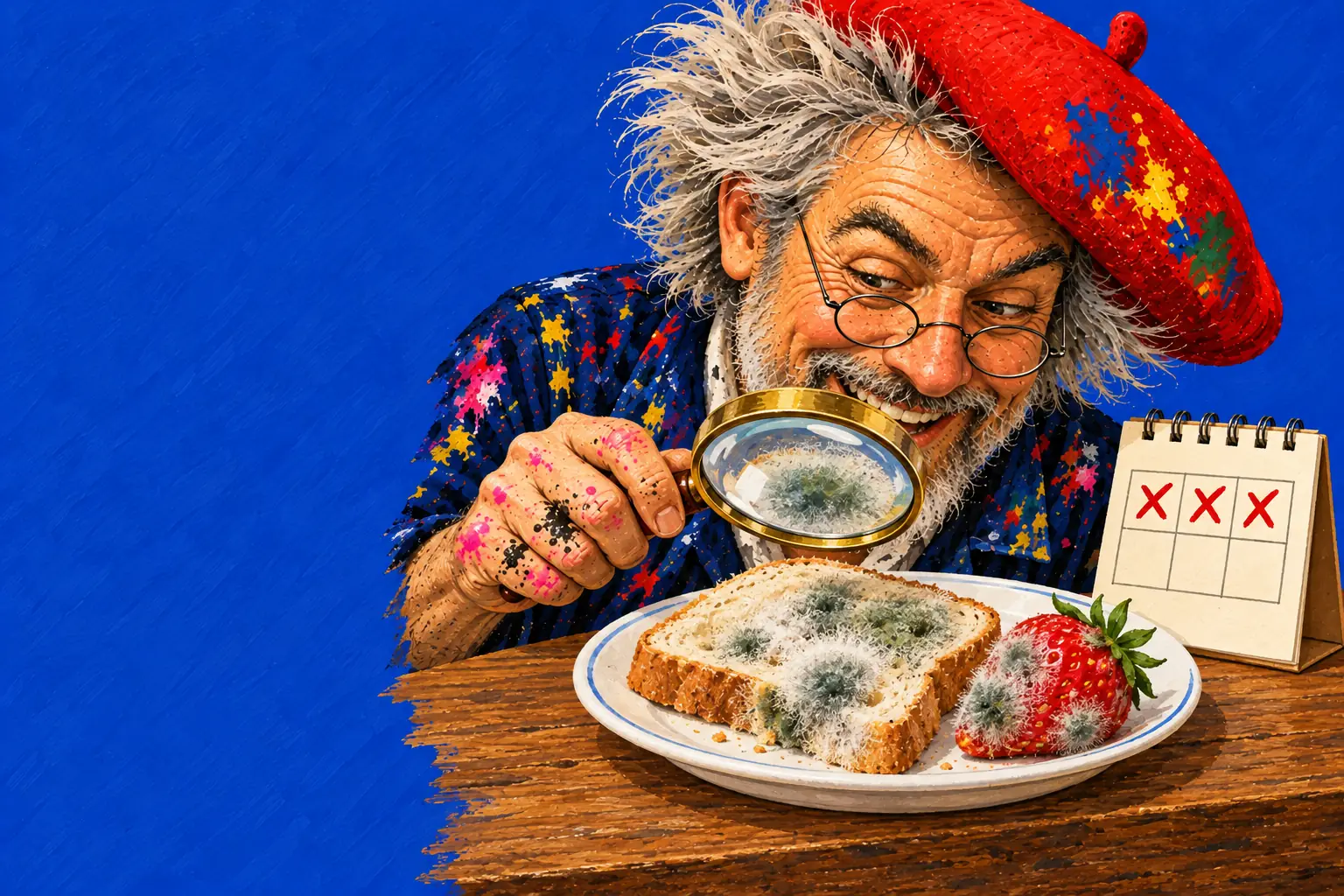
Put some food on the paper: a squeeze of ketchup, a scoop of ice cream, a few banana or tomato slices, a slice of cheese or a puddle of milk (all in the free Kitchen and Science tabs). Then open the Time tab and tap Wait 3 days. The sun and moon race across the sky, and when the days are up, mould colonies have bloomed on the food in four kinds: blue-green, white fuzz, black spots and orange.
It follows the same rules as real mould:
It only grows where there's food. Bare paper, paint and crayon get at most a faint halo.
Damp helps. Food on wet paper goes mouldy faster.
It takes time. Like real mould, it takes about a day to show, so a Wait 1 hour shows nothing yet.
Salt stops it. Shake Salt from the Sieve onto one blob of food and leave another bare: the salted one stays clean for weeks.
Vinegar kills it. Drip Vinegar on a colony and the fuzz dies into a flat, darker stain. Bleach drops kill it and wipe the stain away. Bake in the oven kills it too; the freezer only pauses it.
Close the app and come back days later: the page has aged too.
You need
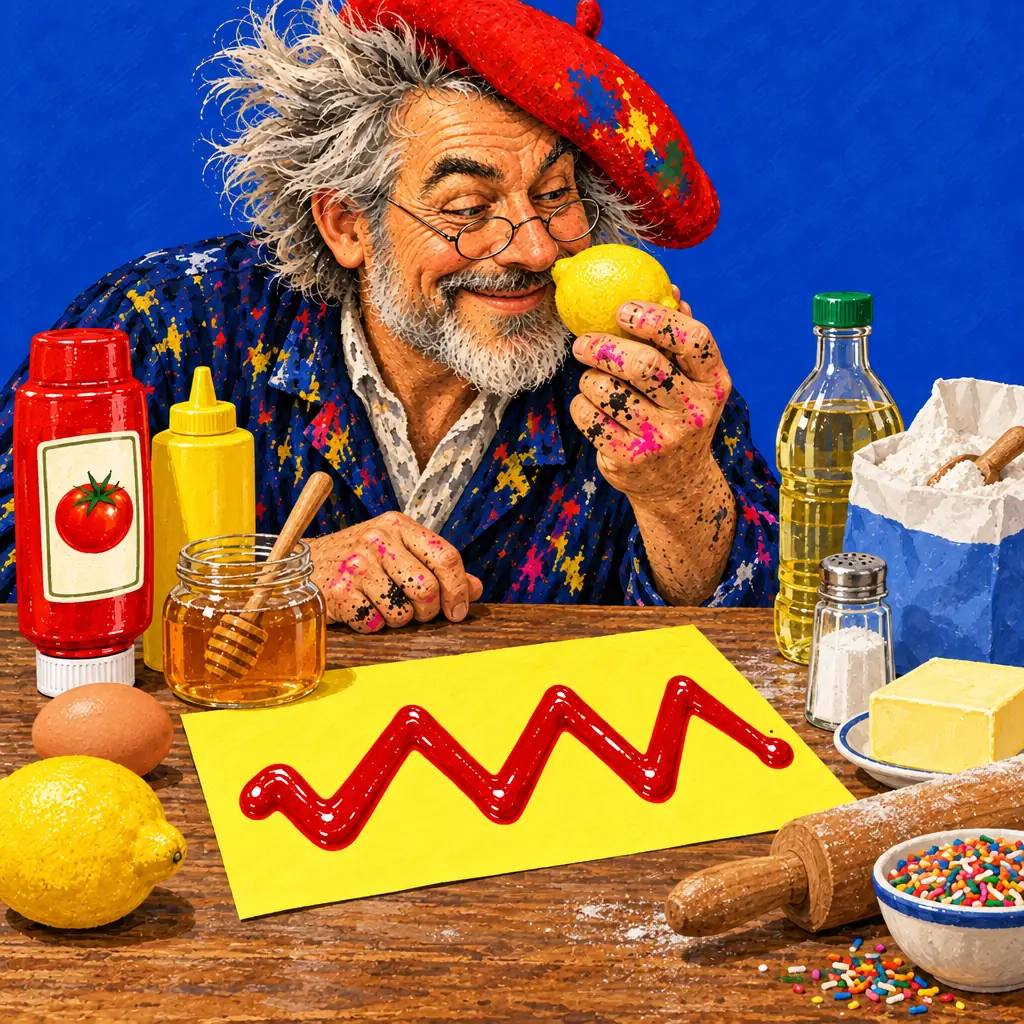
Three slices of the same bread (bakery bread goes mouldy faster than packaged bread with preservatives)
Three zip-lock bags and sticky tape
A permanent marker
A few drops of water, and a little vinegar for slice three
A notebook for drawings, or a phone to take a photo through the bag each day
Important: once a bag is sealed, it is never opened again. At the end it goes into the bin still closed.
Write on them: dry, damp and vinegar, plus today's date.
Slice one stays as it is. Sprinkle slice two with a few drops of water. Brush slice three with a little vinegar.
An adult slides each slice into its bag, presses out most of the air, zips it shut and tapes over the seal.
Which slice will go mouldy first? Which last? Write your guess down before you put the bags away.
Put the bags side by side in a warm cupboard, away from food you're going to eat.
Draw or photograph what you see. Count the spots and note the colours: white fuzz, blue-green, black dots.
After one or two weeks, an adult puts the closed bags straight in the outside bin. Wash hands after handling them.
Some moulds are useful: they make the blue in blue cheese and the medicine penicillin. Others make poisons, and their spores can set off allergies and asthma. You can't tell which is which by looking, so treat all mould on food as look, don't touch.
What if you eat a bit by accident? Most people are fine after a bite of mouldy bread. Don't eat any more, though, and throw the rest of the loaf away: the fuzz you see is only the top of the mould, and its threads reach further into soft food than you can see. If someone feels unwell afterwards, call your doctor.
Bread: white fuzz that grows black dots (black bread mould), and blue-green patches
Fruit: grey-green or white fuzz, often starting where the skin is bruised
Cheese: blue-green or white spots
Honey and jam: hardly ever: they're so sugary that mould can't get the water it needs. In the app, honey doesn't go mouldy either.
Mould is a tiny living thing that eats food. Its seeds, called spores, fly around in the air, and when one lands on damp food it starts to grow, until you can see a fuzzy spot.
For grown-ups. Moulds are fungi, a kind of micro-organism. They spread by spores so small and light that they're in almost all air. A spore that settles on food with enough water germinates and grows a network of fine threads (hyphae) through it, digesting it as it goes. Only when the colony is big enough, usually after a day or two, do you see it, and then it makes new spores, which is the coloured, fuzzy part. Moulds are decomposers: they break dead material down and return it to the soil. They need food, water and a suitable temperature, so anything that removes one of those slows them: salt and sugar pull the water away (salted fish, jam), vinegar makes food too acidic, the freezer stops growth without killing it, and cooking kills it.
For teachers
Fits KS2 Year 6 living things and their habitats (micro-organisms) and NGSS 5-LS2-1 (decomposers in the movement of matter). The real bread bags need a week or more; the app gives the class a result in the same lesson, so pupils can test salt, damp and cold on the whiteboard while the real bags sit sealed on the windowsill.
Fresh bakery bread kept warm and slightly damp often shows mould in three to seven days. Packaged bread with preservatives can take one to two weeks, and bread kept in the fridge or freezer much longer.
Mould needs water to grow and to digest its food. A damp slice gives spores everything they need, while a very dry slice slows them right down.
A lot of salt does: it pulls out the water that mould needs, which is why salted fish and ham keep. The little salt in ordinary bread only slows it a bit. In the app, salt shaken on food keeps mould away for weeks.
A bite by accident usually does no harm, but some moulds make poisons and spores can trigger allergies, so never eat mouldy food on purpose. Throw the whole loaf away, and call a doctor if someone feels unwell.
Both are right. Mold is the American spelling and mould the British one; it's the same fuzzy fungus.
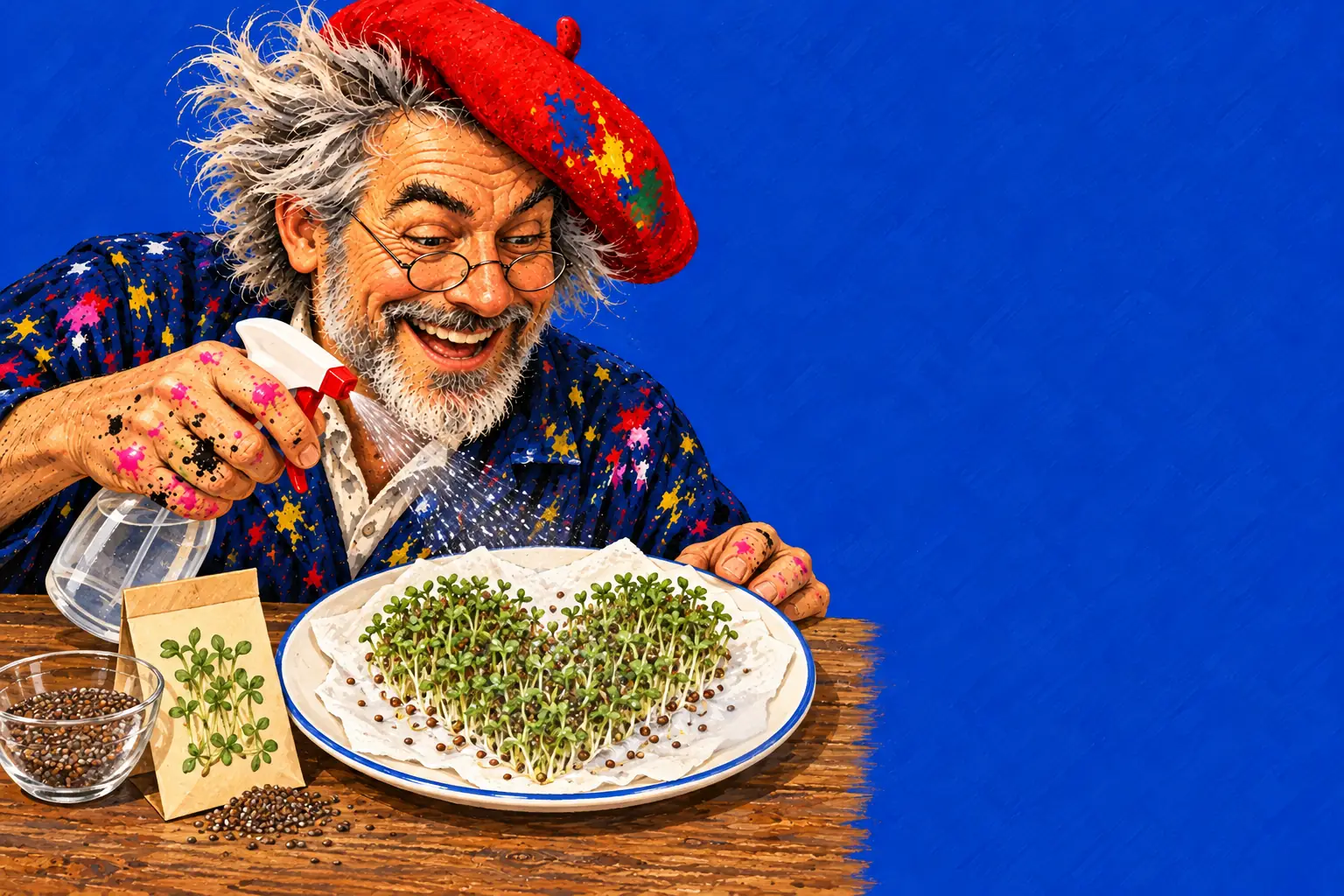
Seeds that only sprout while they're damp, and wilt when they dry out.

Yeast is a living fungus too: watch dough rise when it's warm.

Short answers to kids' own questions, from freezing paint to leaving food out.