
Light or dark?
Grow one saucer on the windowsill and one in a dark cupboard. Which grows taller? Which is greener?
Game Tailors
Source: Growing cress with kids: seeds that sprout in days
The drawing app where the paper is real. No ads, no accounts, no data collected.
Game Tailors · Schieweg 15Y-40, 2627 AN Delft (NL)
KvK 92437702 · VAT NL866044474B01
info@gametailors.com · +31 6 4227 5919
© 2026 Game Tailors
Kitchen science experiment
Cress seeds sprout in a day or two, as long as they stay damp. Water switches them on, and once they have started, drying out can kill them. In about a week you have a small green lawn you can snip and eat.
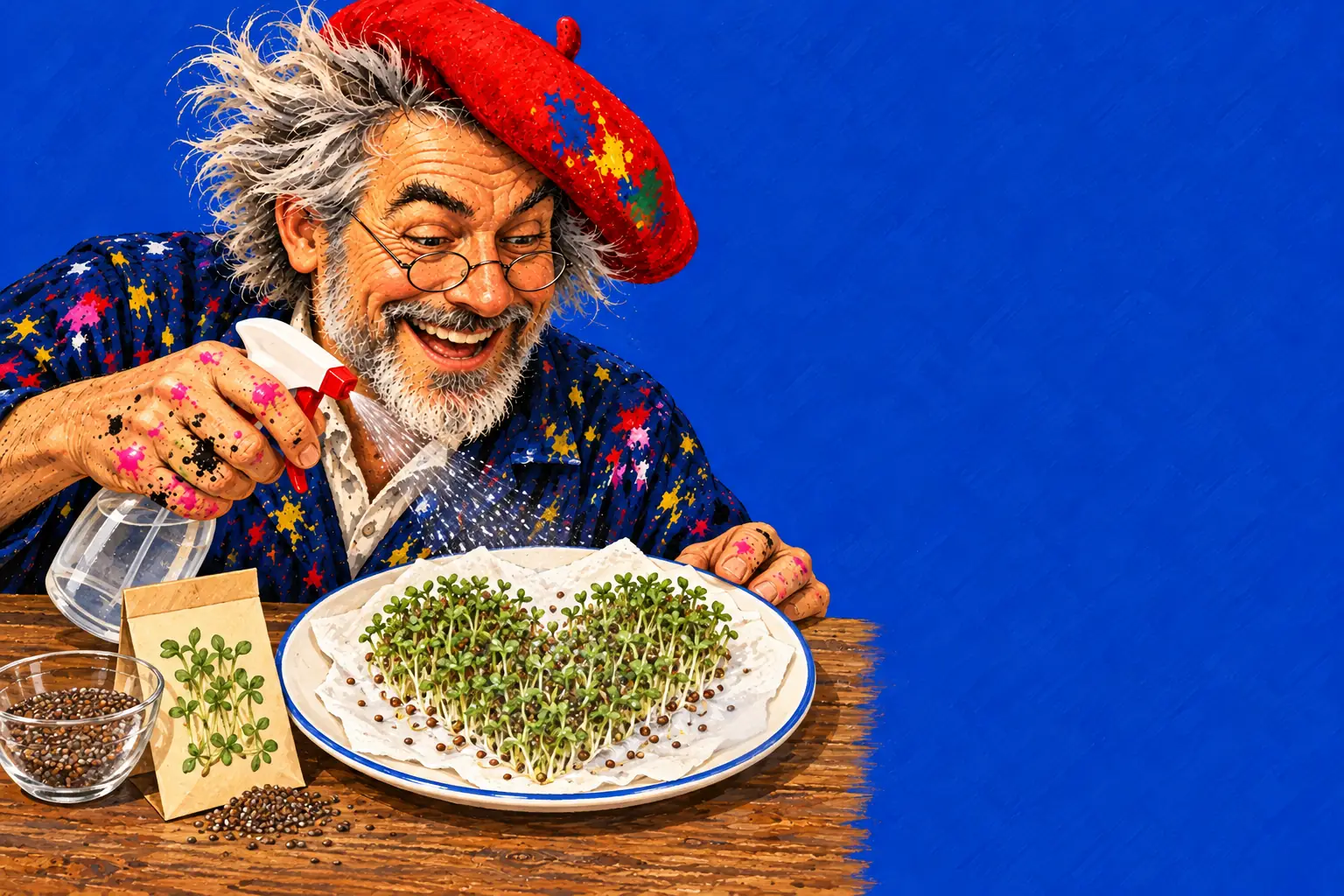
Two ways to sow on screen:
Chia seeds or Flax seeds from the sieve on the Kitchen tab. Sprinkle them into water or onto wet paper: they drink, swell into their gel and then come up as cress, after about a day kept damp.
Seeds on the Garden tab (in the full toolbox), with Cress, Grass seed and Moss. Cress is the quickest to come up.
Seeds only count time while they're damp: on wet paper, in a puddle, in mud or in gel. On dry paper they just wait. The game's clock runs about an hour for every real minute, and Wait 3 days on the Time tab jumps ahead so you can see the lawn.
Dry spells matter. While you play, a seed that started to drink and then dries out waits for the next watering. But over a time skip, a seed left dry for a day dies, and sprouts that dry out go yellow and flop (water them soon and they perk up again). Heat over 60 °C or the oven kills seeds, and ground flax doesn't sprout at all.
Try this: sow half your seeds on wet paper and half on dry, then tap Wait 3 days.

You need
Cress seeds (or mustard and cress, or chia seeds), sold for eating or sprouting
Kitchen paper, cotton wool or a clean sponge
A saucer, a clean half eggshell or a yoghurt pot
Water, and a spray bottle if you have one
Felt-tips to draw a face on the eggshell or pot
Scissors (for a grown-up)
Fold kitchen paper into the saucer (or press cotton wool into the eggshell). Wet it until it is soaked, then tip away the extra water.
For a cress head, draw a face on the eggshell or pot. The cress will be its hair.
Scatter the seeds thinly over the damp bed. Don't bury them: cress sprouts on top.
Put a few seeds on dry kitchen paper in a second saucer. This is your test: will they grow?
Put both on a light windowsill. Spray or dribble a little water on the damp one once or twice a day: damp, never dry, never a puddle.
After a day or two you see tiny white roots with fuzzy root hairs, then pale stalks, then two green seed leaves.
After about a week, when the cress is a few centimetres tall, a grown-up snips it with scissors. Try it in an egg sandwich.
For kids: a seed is a tiny baby plant with a packed lunch. When water soaks in, the seed swells and the baby plant wakes up. It pushes out a root to drink and a shoot to reach the light, and uses its lunch until its green leaves can make food from sunlight.
For grown-ups: germination starts with imbibition: the dry seed takes up water, swells and switches its metabolism back on, using the food stored in the seed. It needs water, oxygen and a suitable temperature. Light isn't needed to sprout, but it is needed to grow green leaves: cress kept in the dark grows tall, thin and pale (etiolation). Once a seed has started to germinate it loses much of its tolerance to drying, which is why a dry spell after sowing can kill it. Chia and flax seed coats make mucilage, the gel you see when they're wet.
The game models the water and the heat, not the light. So the dark-cupboard test is one to do for real.
Roots show in one or two days and green leaves in three or four. It is ready to snip in about a week.
It sprouts without light, but it needs light to turn green. In a dark cupboard it grows long, thin and yellowish.
Yes. Cotton wool, kitchen paper, a sponge or soil all work, as long as they stay damp.
Most often it dried out. Seeds that have started to sprout and then dry out for a day usually don't recover, so keep the bed damp every day.
In the first days it is usually root hairs, which help the root drink. Mould looks like fluffy cobweb on the seeds themselves and smells musty.
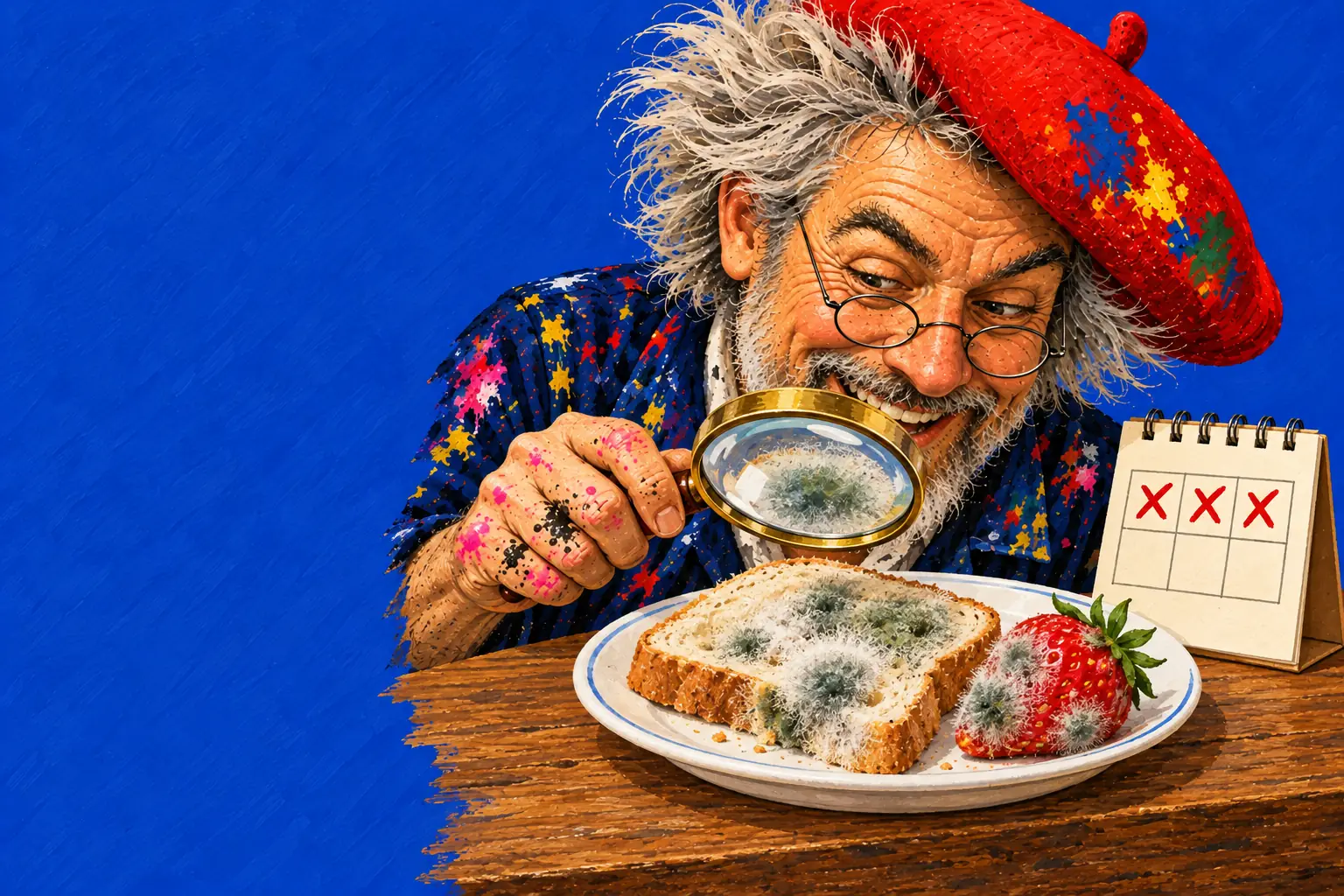
What grows on bread you forget about, and what stops it.

Water creeping through paper splits black ink into colours.

Ideas for a wet afternoon: half on screen, half at the kitchen table.