Support
Sort, don't write
Give picture cards (ice cube, chocolate, egg, toast, ash) to sort into two hoops. Younger pupils (grade 2) can stop here: that's the NGSS argument with evidence.
Game Tailors
Source: Reversible and irreversible changes: freezer vs oven
The drawing app where the paper is real. No ads, no accounts, no data collected.
Game Tailors · Schieweg 15Y-40, 2627 AN Delft (NL)
KvK 92437702 · VAT NL866044474B01
info@gametailors.com · +31 6 4227 5919
© 2026 Game Tailors
Lesson plan
A reversible change can be undone: melted chocolate sets again and frozen paint thaws. An irreversible change makes something new that won't go back, like a cooked egg, caramel or burnt paper. In 40 minutes pupils predict, test it with the freezer and the oven on the whiteboard, then melt chocolate for real.
Objective: pupils can sort everyday changes into ones that can be reversed and ones that can't, and give evidence for their choice.
Success criteria
I can predict whether a change can be undone.
I can test my prediction and say what I saw.
I can explain that some changes make a new material that won't turn back.
England, Year 5, Properties and changes of materials: changes of state are reversible; some changes form new materials and are not usually reversible, including burning.
NGSS 2-PS1-4: construct an argument with evidence that some changes caused by heating or cooling can be reversed and some cannot.
Netherlands, kerndoel 42: investigating materials and physical phenomena such as temperature.
Flanders: the minimumdoelen wetenschap en techniek on materials and their changes.
Everything for this lesson is in the free part of the app.
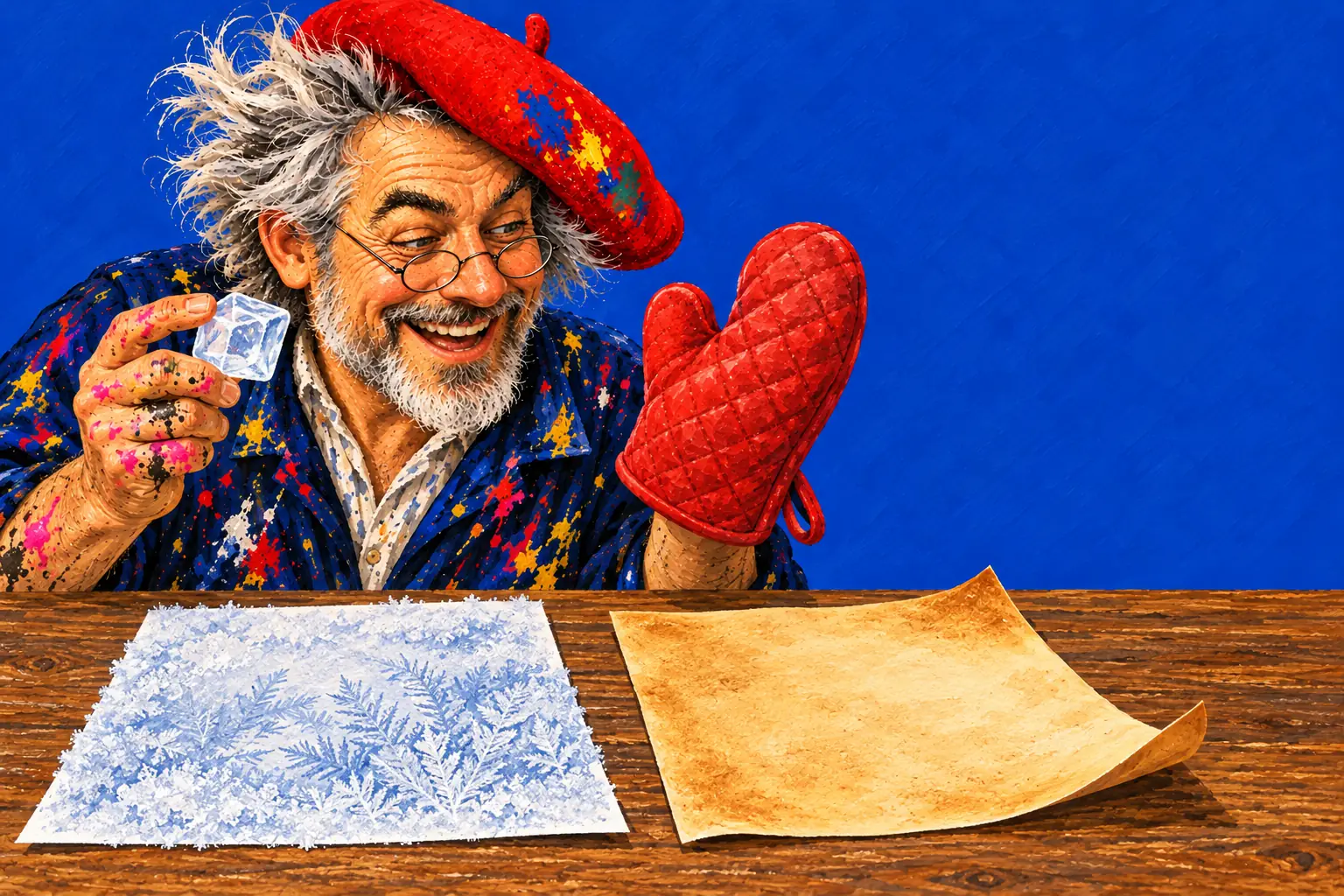
Put in the freezer gives the page three hours in a freezer. Everything with water in it freezes solid: puddles, paint, sauces, and ice cream goes rock hard again. Wax, eggshell and caramel don't freeze, because there's no water in them. Then it thaws back within a minute or so: thin films first, thick lumps last.
Chocolate melts glossy and runny when it's warmed (hold the Iron over it) and sets hard again about 20 seconds after the heat goes.
Bake in the oven gives the page twenty minutes at 180 °C. Egg white sets white with crisp brown edges, honey and ice cream cook down to caramel, and the paper toasts brown at its edges. None of that comes back when it cools.
Fire burns the paper into holes. That one stays on the screen.
One thing to point out: the app has an Undo button, and it will put a baked page back. Real life has no undo button. That's the whole difference between the two kinds of change.
Set up before the lesson: the browser version open on the board, a fresh sheet of paper, and the real materials on a tray per group. Boil one egg beforehand.
5 minutes
Drop an Ice cream scoop on the paper and let the class watch it slump into a puddle (a scoop takes about a minute and a half). Ask: can we get our ice cream back?
5 minutes
Show four things on the board: the melted ice cream, a bar of Chocolate, an Egg and the bare paper. For each, pupils predict in pairs: freezer or oven, and will it go back afterwards? Record the guesses in a two-column table: goes back / doesn't go back.
10 minutes
Tap Put in the freezer: the puddle goes hard, and then thaws again. Melt the chocolate with the Iron, take the iron away and count to twenty: it sets. Then tap Bake in the oven: the egg white turns white, the ice cream becomes caramel, the paper browns. Wait for it to cool. Does anything turn back? Let a pupil press Undo and ask why real life can't.
15 minutes
In groups: put a few squares of chocolate in a zip bag and hold it in a bowl of warm water until it melts, then lay it flat on a cool surface and watch it set. Put an ice cube on a saucer and watch it melt. Then compare a slice of bread with a slice of toast, and a raw egg with the hard-boiled one: can anyone turn them back?
5 minutes
Back to the table of predictions. Which were right? Draw out the rule: melting and freezing change the state and can go back; cooking and burning make a new material that can't. Exit question: is a burnt match reversible?
Key words
reversible change: a change that can be undone
irreversible change: a change that can't be undone, usually because a new material forms
melt / freeze: solid to liquid, liquid to solid
set / solidify: a liquid turning solid as it cools
thaw: frozen things warming and melting
state: solid, liquid or gas
new material: something that wasn't there before, like caramel or ash
A reversible change can be undone, like melting chocolate and letting it set again. An irreversible change makes a new material that can't easily turn back, like cooking an egg or burning paper.
Yes. Melting changes chocolate from solid to liquid, and it sets solid again as it cools. If it's heated too much it can burn, and burning isn't reversible.
No. Heat changes the proteins in the egg white so it turns from clear to white and firm, and cooling it doesn't change it back.
Yes. Ice melts back into water when it warms up, and the water can be frozen again.
No. Open play.extremedrawing.com in the browser; nobody logs in and no data is collected.
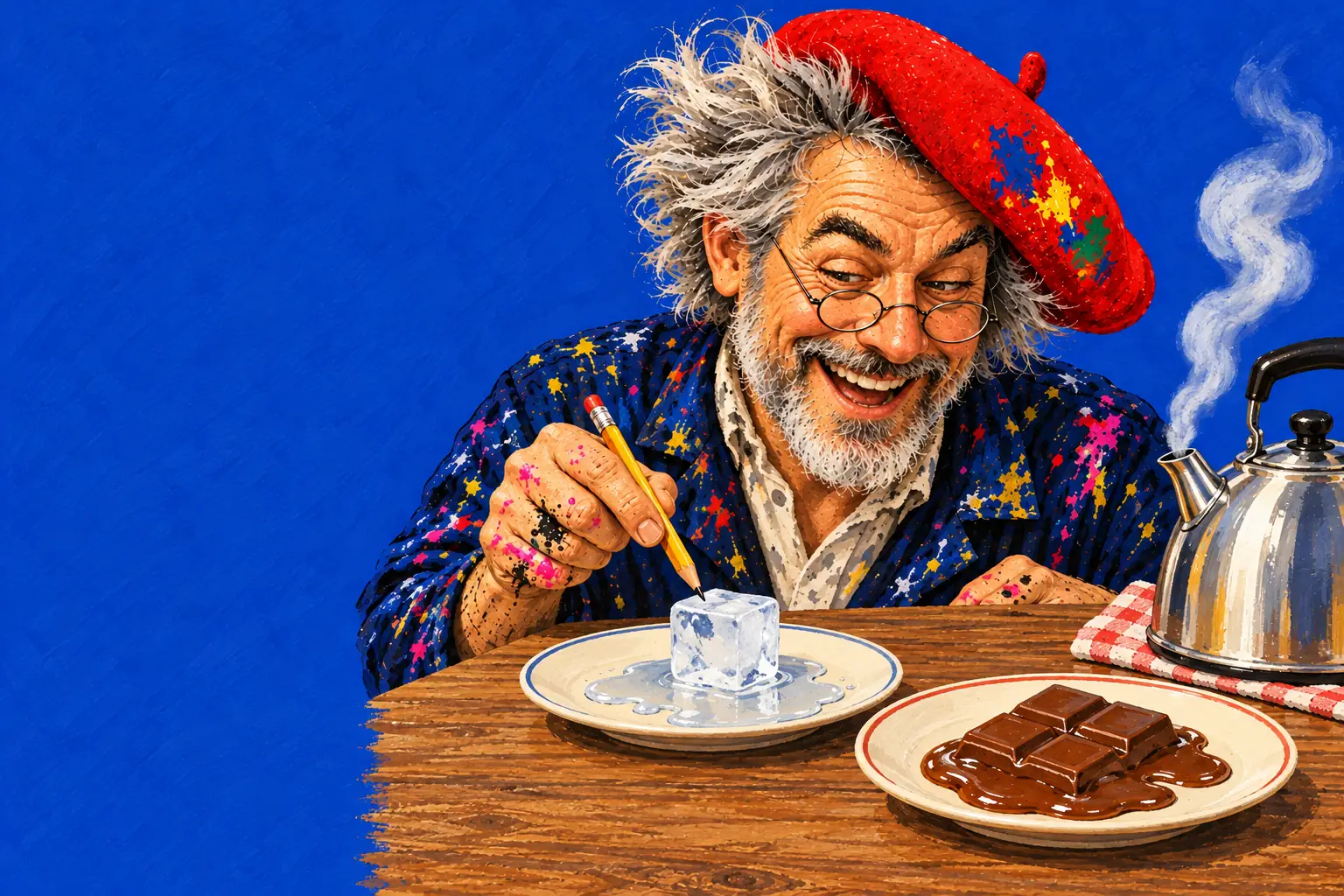
Solids, liquids and gases with ice cream, chocolate and steam.
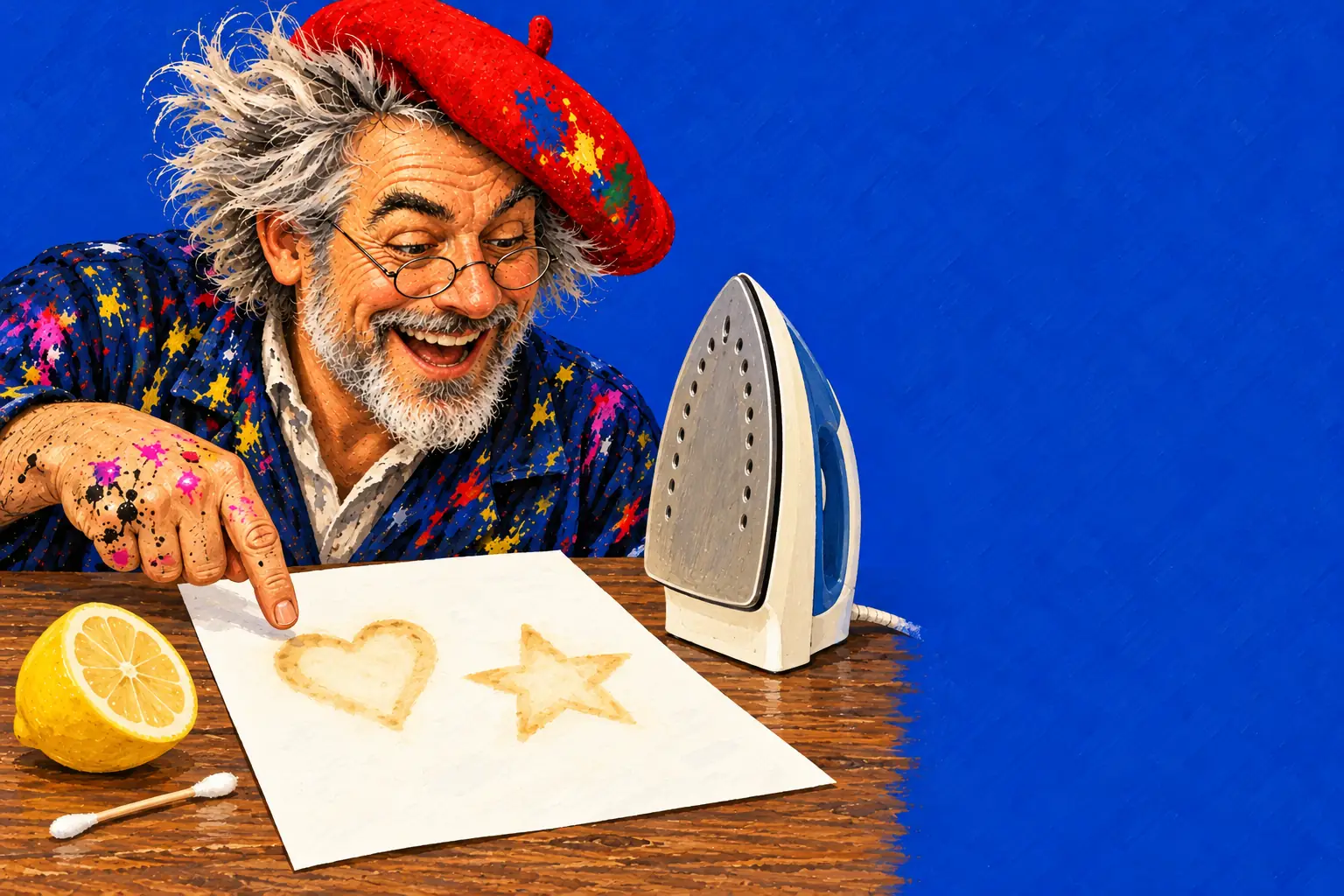
Lemon juice writing that heat turns brown for good: an irreversible change.
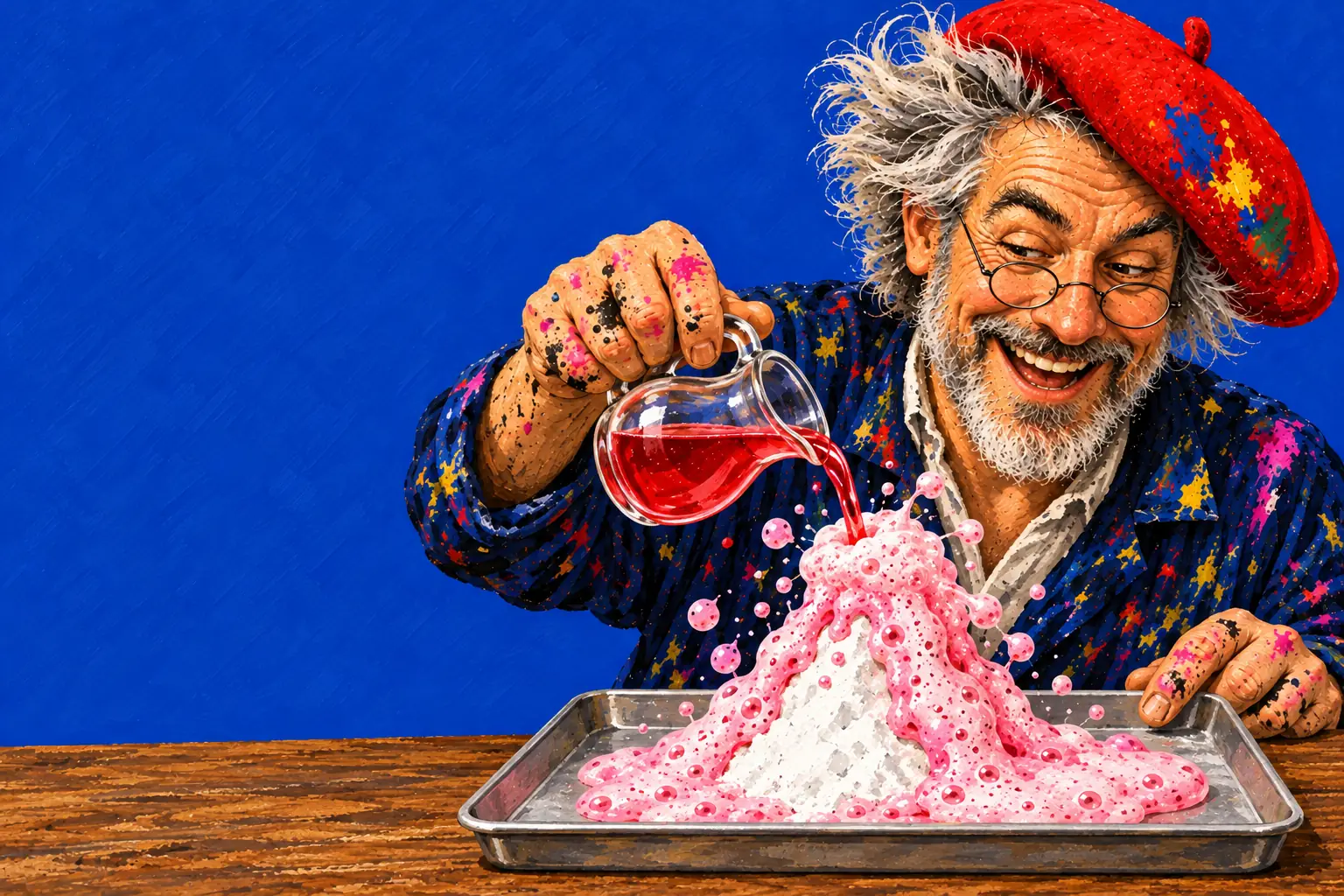
The acid and bicarbonate of soda reaction named in the Year 5 curriculum.