
Support
Sort the board
Pupils come up and point: solid, liquid or gas? Use picture cards for the real versions. Grade 2 pupils can stop at sorting by what they observe.
Game Tailors
Source: States of matter for kids: a melting and freezing lesson
The drawing app where the paper is real. No ads, no accounts, no data collected.
Game Tailors · Schieweg 15Y-40, 2627 AN Delft (NL)
KvK 92437702 · VAT NL866044474B01
info@gametailors.com · +31 6 4227 5919
© 2026 Game Tailors
Lesson plan
Most materials can be a solid, a liquid or a gas, depending on how warm they are. In this 45-minute lesson pupils freeze a painting solid, melt ice cream and chocolate and watch wet paper steam dry on the whiteboard, then race ice cubes for real and measure the temperatures.
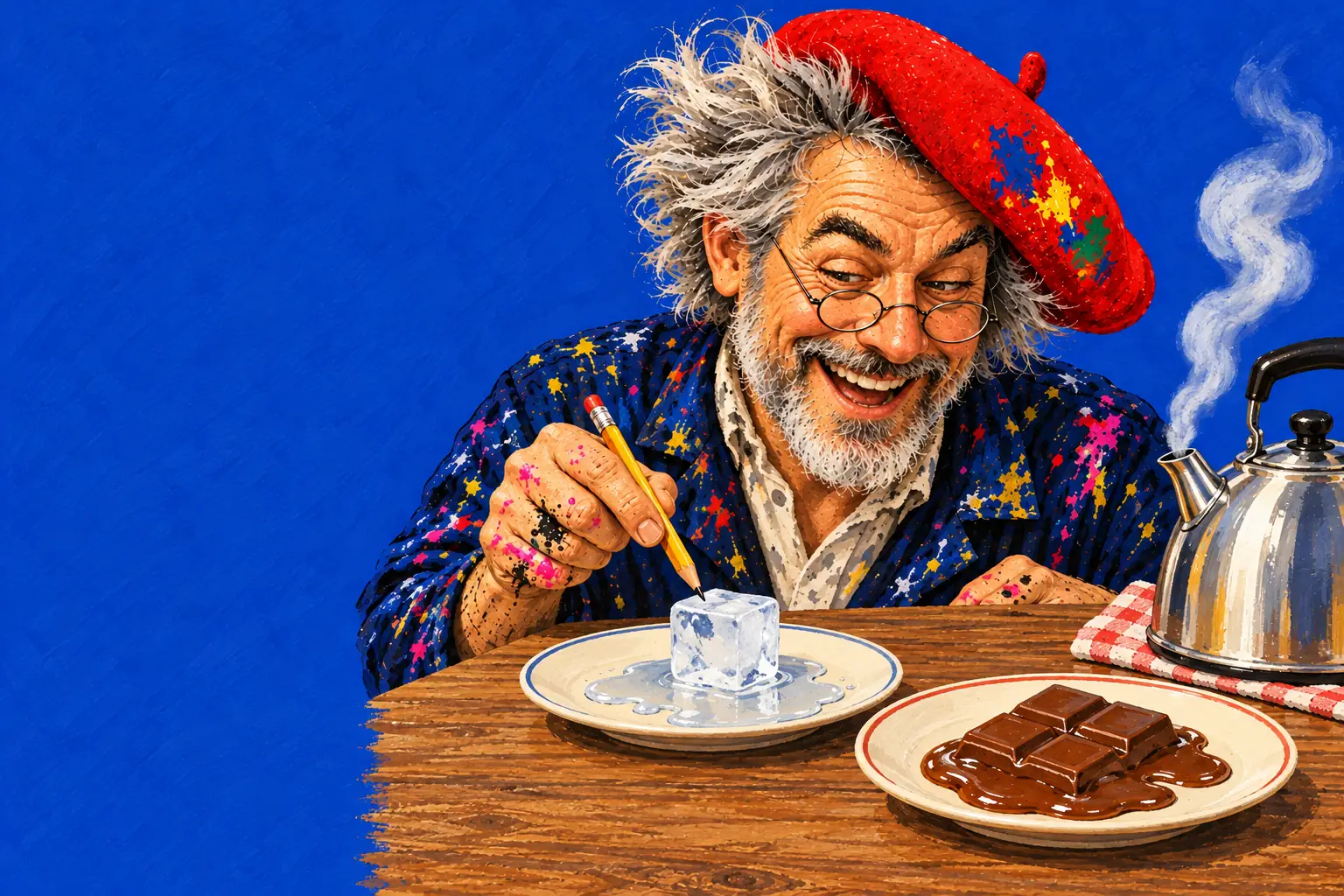
Objective: pupils can sort materials into solids, liquids and gases, and describe how heating or cooling changes a material from one state to another.
Success criteria
I can say whether something is a solid, a liquid or a gas, and why.
I can name melting, freezing and evaporating.
I can measure the temperature where ice melts, and compare places that melt it faster.
England, Year 4, States of matter: compare and group materials as solids, liquids or gases; observe that some materials change state when heated or cooled, and measure or research the temperature in °C; the part evaporation plays, and how its rate depends on temperature.
NGSS 2-PS1-1: classify materials by their observable properties (many kinds of matter can be either solid or liquid, depending on temperature).
NGSS 5-PS1-1: a model of matter made of particles too small to see (evaporation is one of its examples).
Netherlands, kerndoel 42: investigating materials and physical phenomena such as temperature.
Solids: a bar of Chocolate is hard and snaps under the Hammer. After Put in the freezer, every puddle, sauce and patch of wet paint is frozen solid, and frozen paint shatters into icy chips when you hit it.
Liquids: an Ice cream scoop melts at room temperature, edges first (thin parts warm through faster), and runs into a puddle. Chocolate warmed with the Iron goes glossy and runny, then sets again about 20 seconds after the heat goes.
Gases: run the Iron over wet paper and it dries with puffs of steam and a hiss. After Bake in the oven steam rises off the hot food. Vinegar on baking soda fizzes up into a foam full of gas.
Evaporation: wet paper dries slowly on its own and much faster next to heat.
The Ice cube freezes just the spot you hold it on; a warm finger melts a print into the frost.
Set up before the lesson: the browser version open on the board, ice cubes in a cool box, a thermometer and saucer per group, and a glass of iced water on your desk from the start (it needs time to fog up).
5 minutes
Let a pupil paint a big wet blob with Paint and pour a puddle with Pour water. Tap Put in the freezer, then hit the frozen paint with the Hammer. It shatters. Ask: was the paint a solid or a liquid before? And now?
5 minutes
Show an Ice cream scoop, a bar of Chocolate and a patch of wet paper. Pairs predict: which will melt by itself in the room? Which needs heat? What will we see when the iron touches wet paper?
10 minutes
Watch the ice cream melt (about a minute and a half for a whole scoop; the edges go first). Melt the chocolate with the Iron, lift it off and count until it sets. Run the iron over the wet paper: puffs of steam, a hiss, dry paper. Name each change as it happens: melting, setting, evaporating.
15 minutes
Each group puts an ice cube on a saucer in a different place (on the desk, by the window, in a cupped hand on a paper towel, next to a radiator). Measure the temperature at each spot, start the timer and record which melts first. Meanwhile, look at the iced glass on your desk: where did the water on the outside come from?
10 minutes
Pool the results: warmer spots melt faster. Draw the three states on the board with arrows: melting, freezing, evaporating, condensing. Explain that the white cloud above a kettle is tiny water droplets; the water vapour itself is invisible. Exit question: is chocolate a solid or a liquid? (Both, depending on how warm it is.)
Key words
solid: keeps its own shape
liquid: flows and takes the shape of its container
gas: spreads out to fill any space; often invisible
melting / freezing: solid to liquid, liquid to solid
evaporating: liquid to gas, faster when warm
condensing: gas to liquid, on something cold
temperature: how hot or cold something is, measured in °C
Solid, liquid and gas. A solid keeps its shape, a liquid flows and takes the shape of its container, and a gas spreads out to fill whatever space it's in.
Water vapour is a gas, and it's invisible. The white cloud you see above a kettle is tiny drops of water that have condensed again as the vapour cools.
Thin parts warm through faster than the thick middle. You can see it in the app and on a real cone.
An ice-cube race: put ice cubes in different places, measure the temperature at each and time which melts first. It needs only ice, saucers and a thermometer.
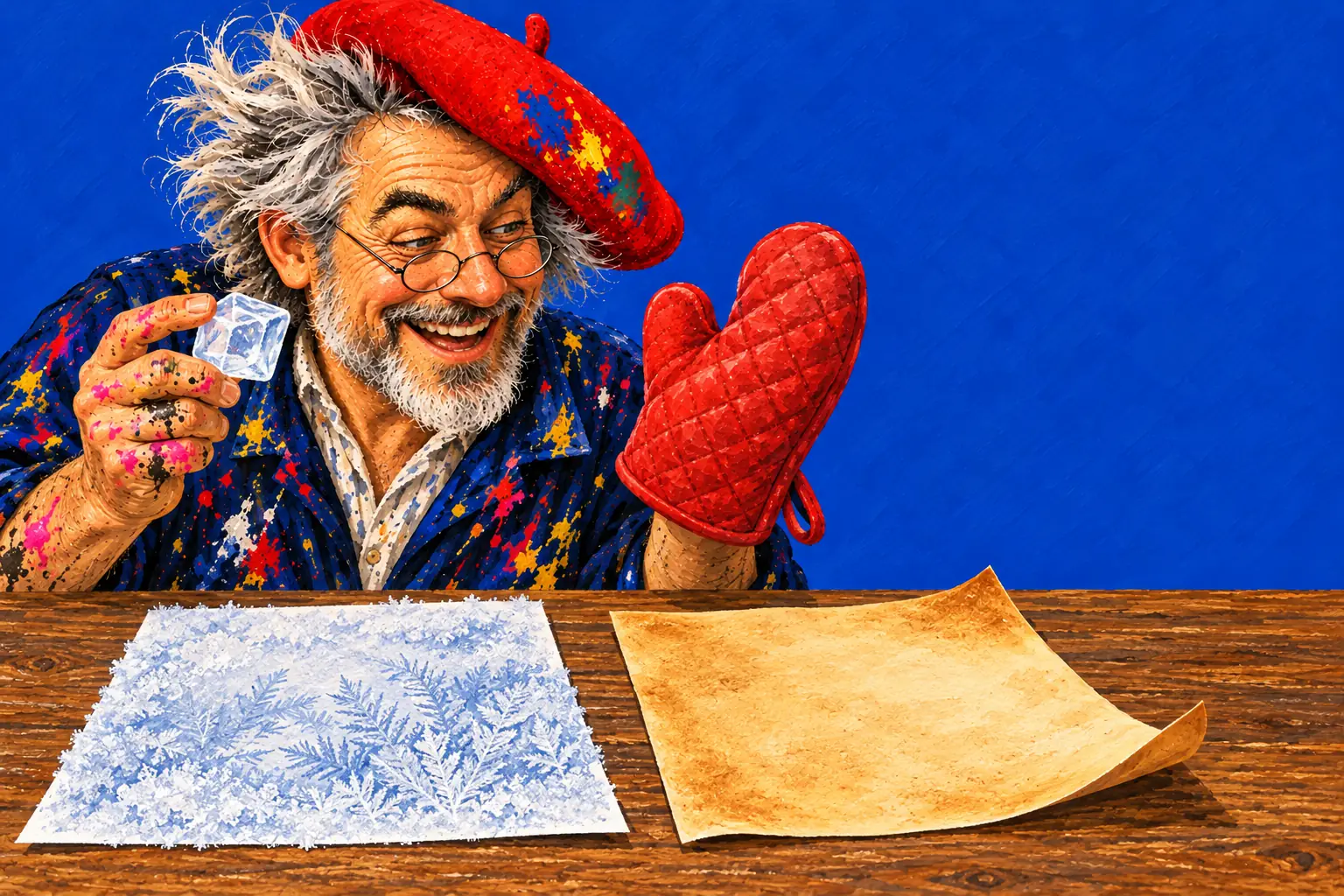
Freezer against oven: which changes can you undo?
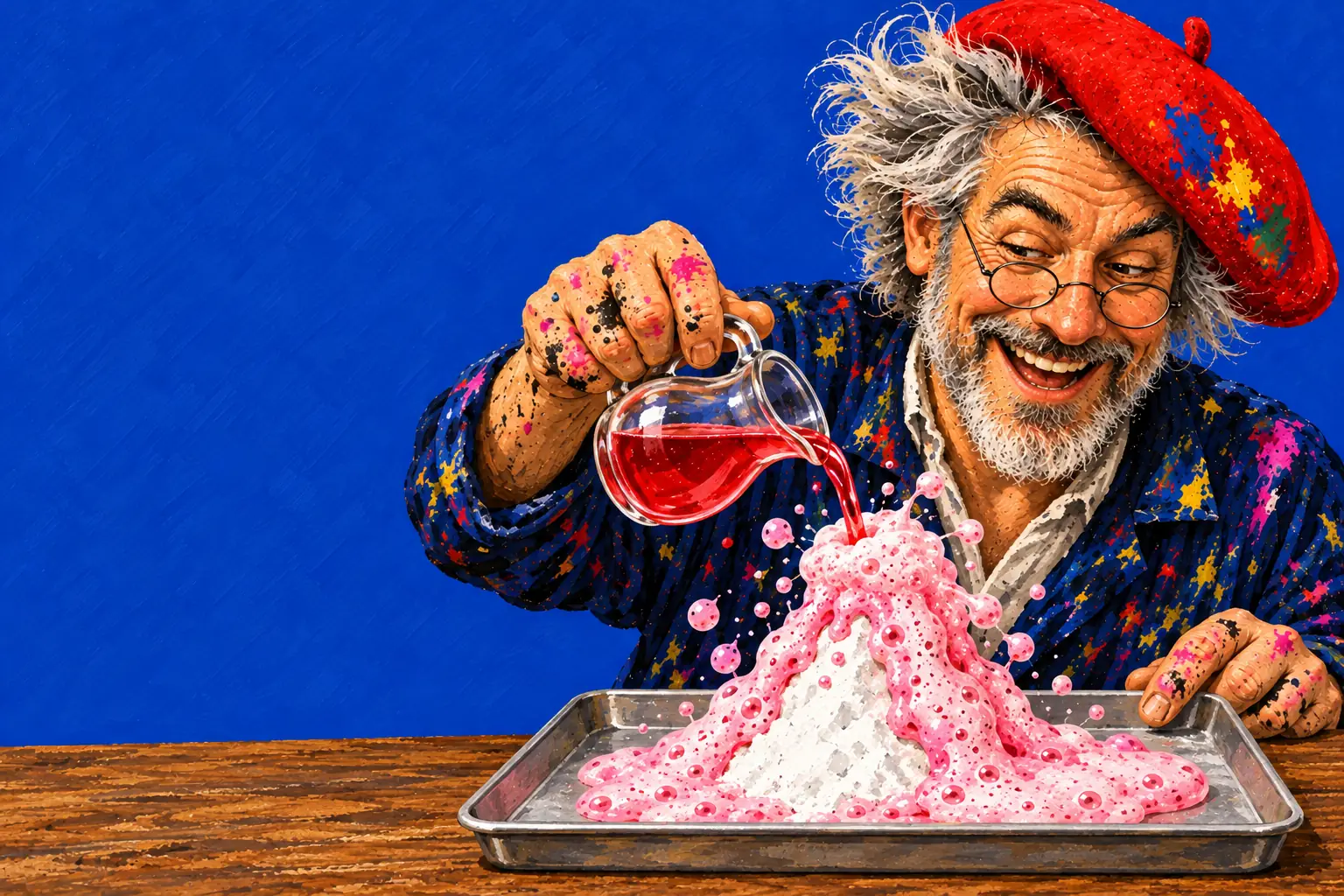
A fizz full of gas: carbon dioxide you can see as foam.
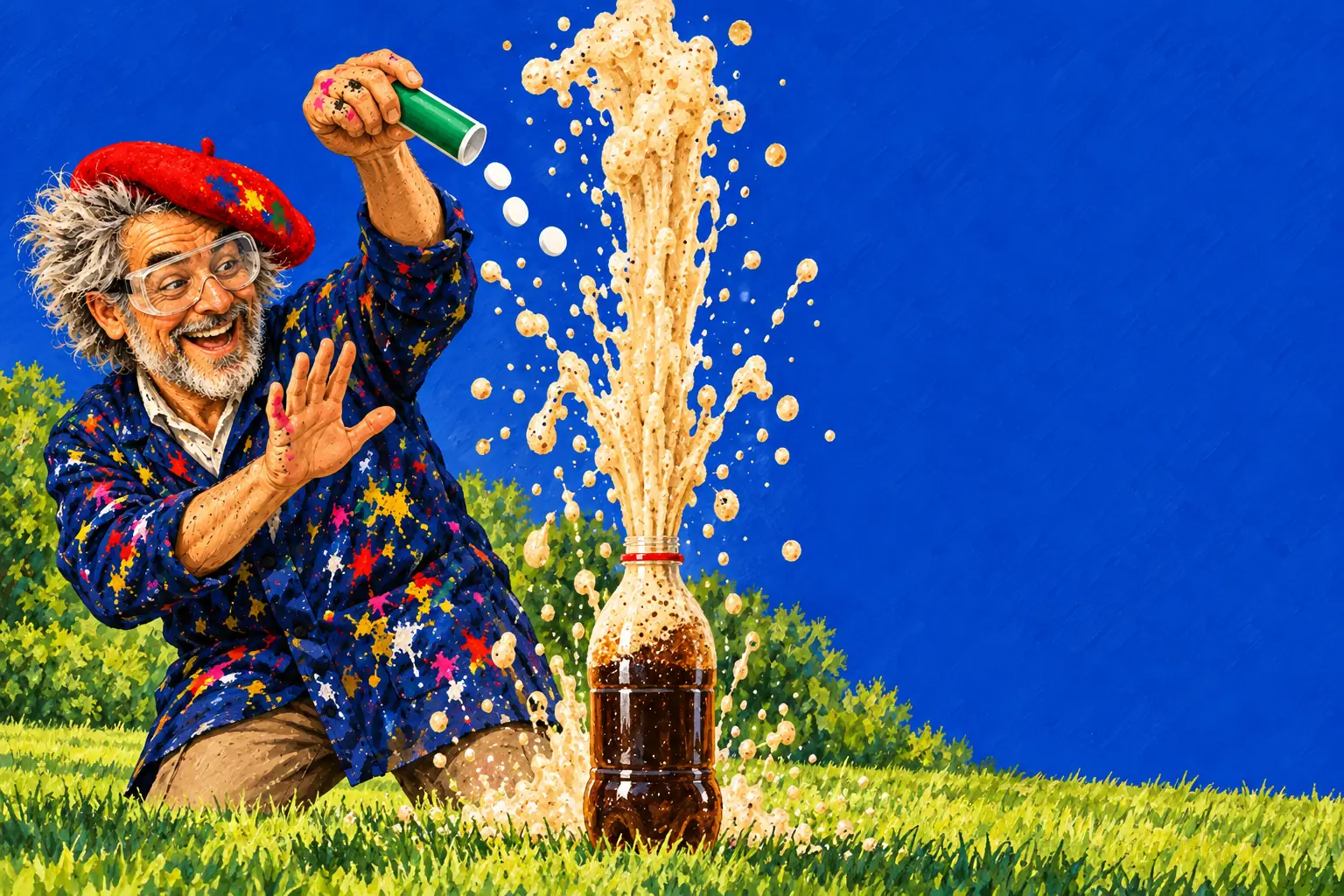
The gas hiding in a drink, all coming out at once.