
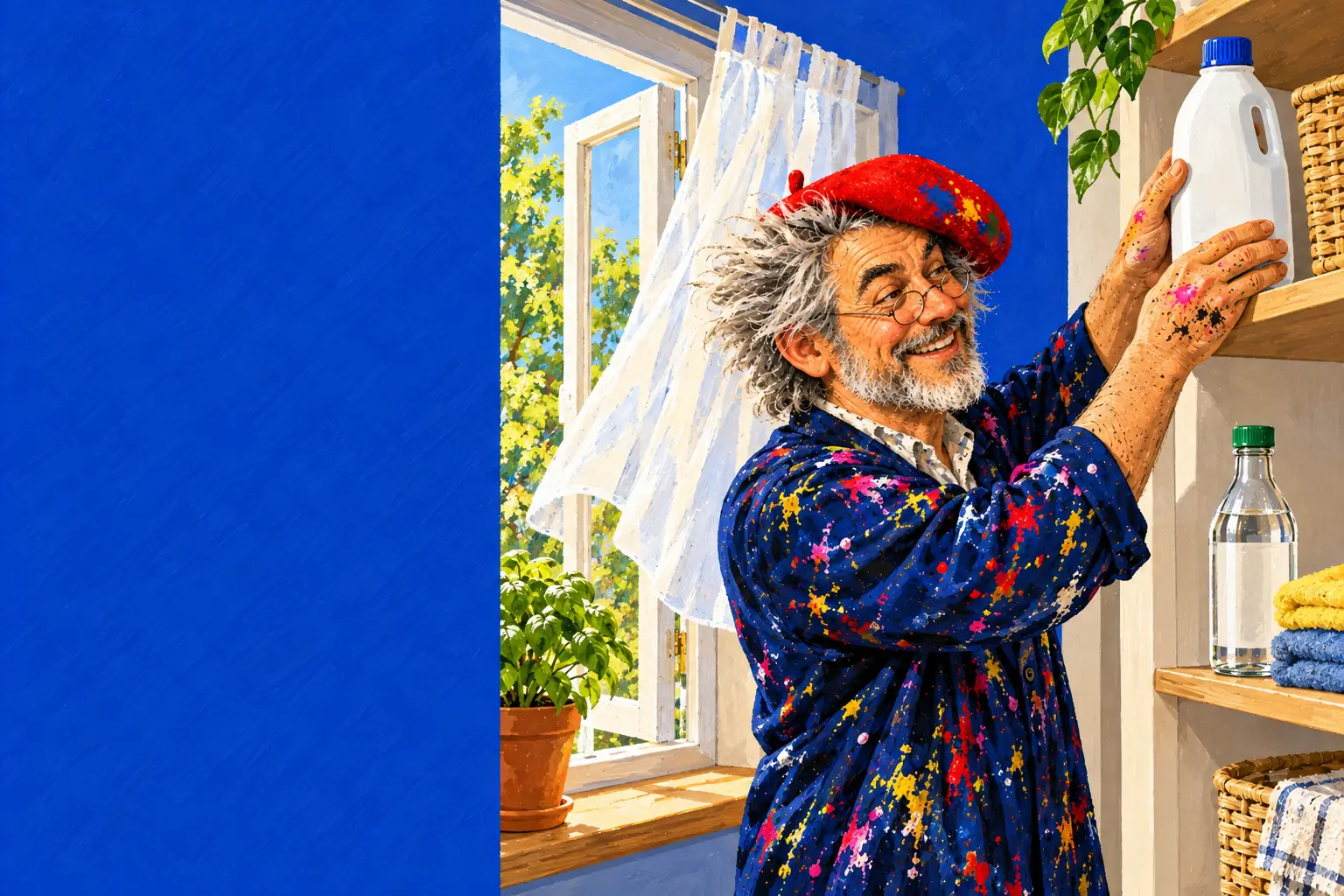

Grease fire: never use water
Why water on burning oil throws it up in flames, and what to do instead.
Game Tailors
Source: What happens if you mix bleach and vinegar? Never do it
The drawing app where the paper is real. No ads, no accounts, no data collected.
Game Tailors · Schieweg 15Y-40, 2627 AN Delft (NL)
KvK 92437702 · VAT NL866044474B01
info@gametailors.com · +31 6 4227 5919
© 2026 Game Tailors
In the game, bleach drops from the Bathroom tab can meet vinegar, lemon juice or a lemon slice on the paper. Where they meet, both are used up and a yellow-green gas puffs off with a hiss. The gas builds up in the room. The first time, the game says: "Bleach and vinegar (or lemon) make chlorine gas: it stings your eyes and lungs! Open the window, or get out into fresh air."
As the gas is breathed in, a yellow-green haze closes in from the edges of the screen, the picture blurs and wobbles, and you hear coughing. Two buttons appear: Open the window, which clears the room quickly, and Gas mask. With the mask on, the game adds: "That is a real gas mask with a filter. An ordinary face mask does not help against chlorine: fresh air is best." Breathe in too much and the game sends you out: "You had to get out into fresh air…", then "Never mix bleach with vinegar, lemon or other acids: together they make poisonous chlorine gas."
Why show it at all? Because "never mix cleaners" is a rule children hear long before they understand it. Here they can see what the rule is about, and the response the game teaches (air the room, get out into fresh air) is the right one. Nothing on screen tells anyone how to make the gas for real, and nothing on this page does either.

Household bleach is sodium hypochlorite dissolved in water. It is alkaline, and that keeps the chlorine locked up in the liquid. An acid (vinegar, lemon juice, and also some toilet cleaners and limescale removers) lowers the pH, and the bleach then releases chlorine gas.
Chlorine is a yellow-green gas with a sharp smell, like a very strong swimming pool. When it touches the moist surfaces of the eyes, nose, throat and lungs, it forms acids there. That causes stinging eyes, coughing and a tight chest, and in larger amounts serious damage to the lungs. It is heavier than air, so it hangs low in a room, where children and pets breathe. A small, closed bathroom fills up fastest.
Bleach is dangerous with other cleaners too. With ammonia (in some glass cleaners) it gives off chloramine gas, which is also toxic. The safe habits are simple:
Use one cleaner at a time, and rinse with water before using another on the same surface.
Keep cleaners in their own bottles, closed, high up or locked away from children.
Open a window when you clean with bleach.
Never pour bleach into a toilet or drain that has just had another cleaner in it.
In the game, red cabbage juice shows the same chemistry from the colour side: bleach turns it yellow, then destroys the dye.
They react and give off chlorine gas. It stings the eyes, nose and throat, makes you cough and can harm the lungs, so get into fresh air straight away.
Even a small amount gives off gas you should not breathe, and in a small room it builds up quickly. Leave the room, air it from outside if you can, and call for advice if anyone has symptoms.
Don't use them one after the other. Leftovers on the surface can still meet. Pick one, or rinse thoroughly with water and air the room in between.
No. Cloth and paper masks don't stop chlorine. Only a proper respirator with the right filter does, and that is for professionals. Fresh air is best.
So children can see why the rule exists without any risk. The game shows the gas, teaches the right response and never gives real instructions.
Why water on burning oil throws it up in flames, and what to do instead.

Which kitchen liquids are acids and which are bases, shown by colour.
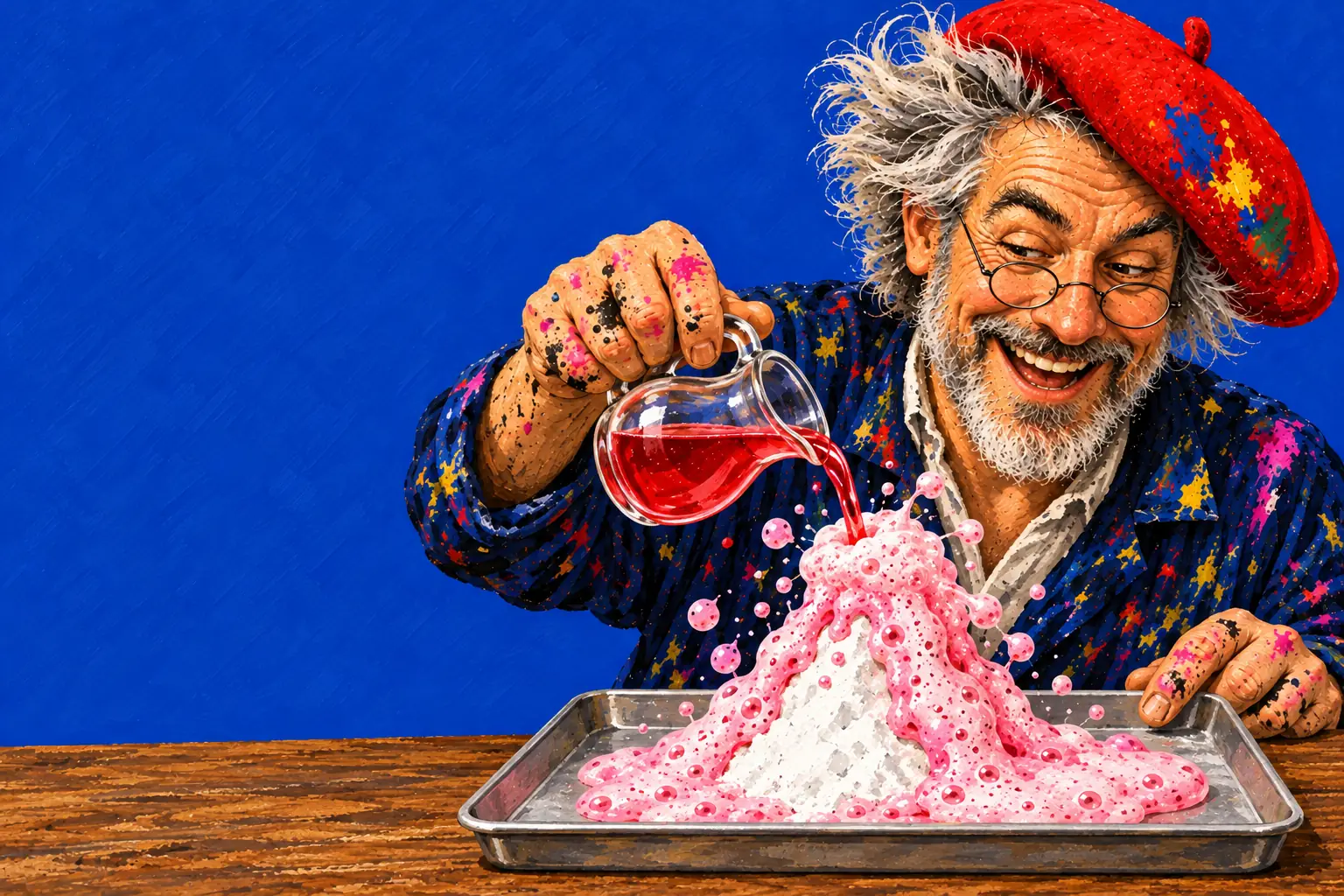
The safe acid reaction: a fizzing volcano to make with an adult.