Never mix bleach and vinegar
Why two cleaners make chlorine gas, and what to do if it happens.
Game Tailors
Source: Grease fire: what to do, and why never to use water
The drawing app where the paper is real. No ads, no accounts, no data collected.
Game Tailors · Schieweg 15Y-40, 2627 AN Delft (NL)
KvK 92437702 · VAT NL866044474B01
info@gametailors.com · +31 6 4227 5919
© 2026 Game Tailors
Safety
Never put water on a grease fire: the water sinks under the burning oil, turns to steam in an instant and throws the burning oil up and out. Instead, a grown-up turns off the heat and covers the pan with a lid. Children get away and shout for help.
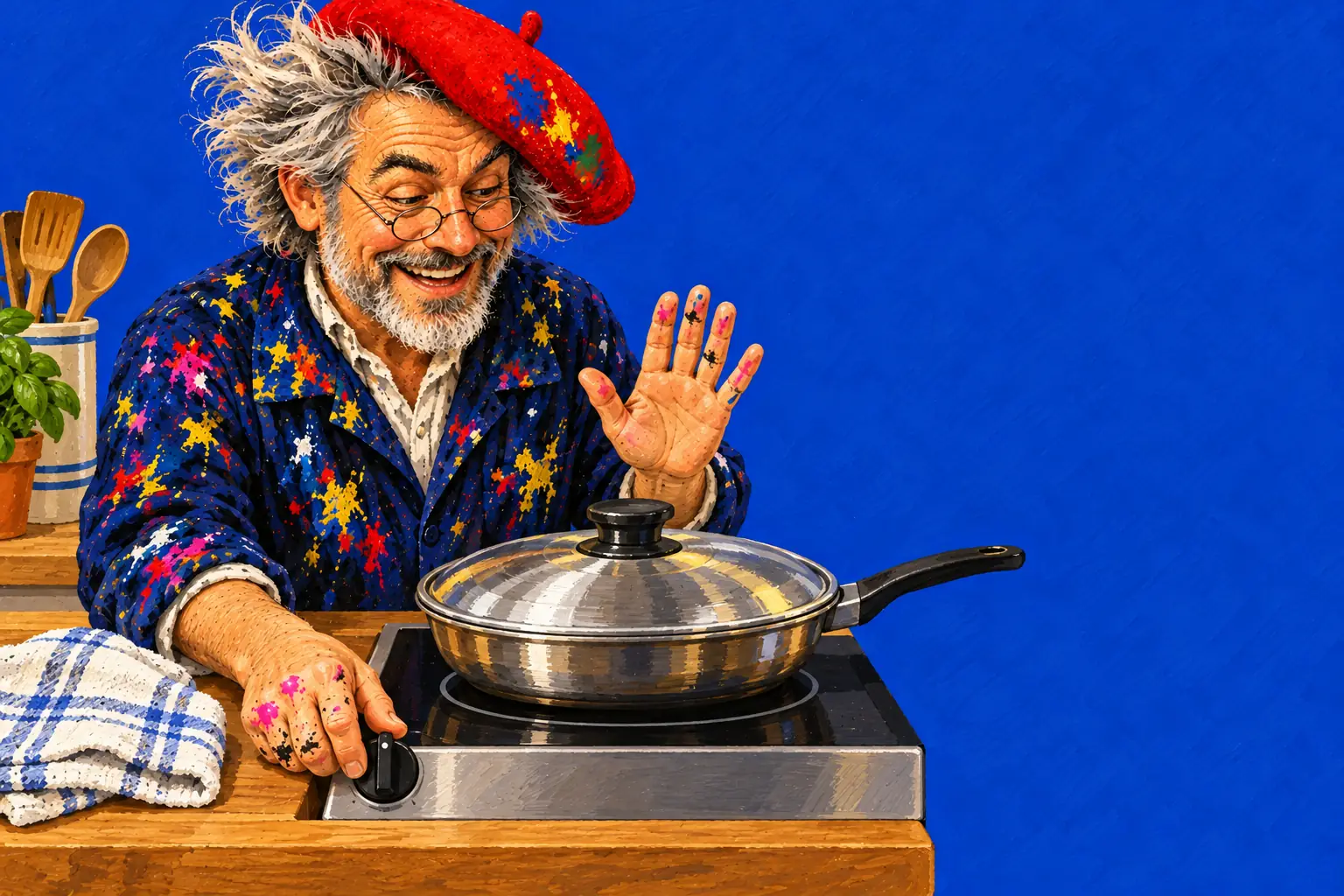
In the game, cooking oil, butter and candle wax burn like the real things. Once they're heated past their fire point they keep a flame going on their own fuel, even on wet paper or floating on water. A pool burns down slowly, as a real pool of oil does.
Drop water on a burning pool and the water sinks under it, flashes to steam and throws the burning oil up and out in a ball of flame. The drops come down still alight, somewhere else on the page. Straight away the game explains, calmly: "Water on burning oil turns to steam at once and throws the burning oil up! If a pan catches fire, call a grown-up: they put a lid on it and turn off the heat. Never use water."
What does put it out on screen is what puts it out for real: something laid flat over the flames that keeps the air off. A damp paper towel smothers it, while a dry one just catches fire too.
Why show it at all? "Never put water on a grease fire" is a rule most people know and few can explain. A real grease fire can't be shown to children safely, but on paper that isn't real they can see why the rule exists. Nothing in the game or on this page tells anyone how to start one.
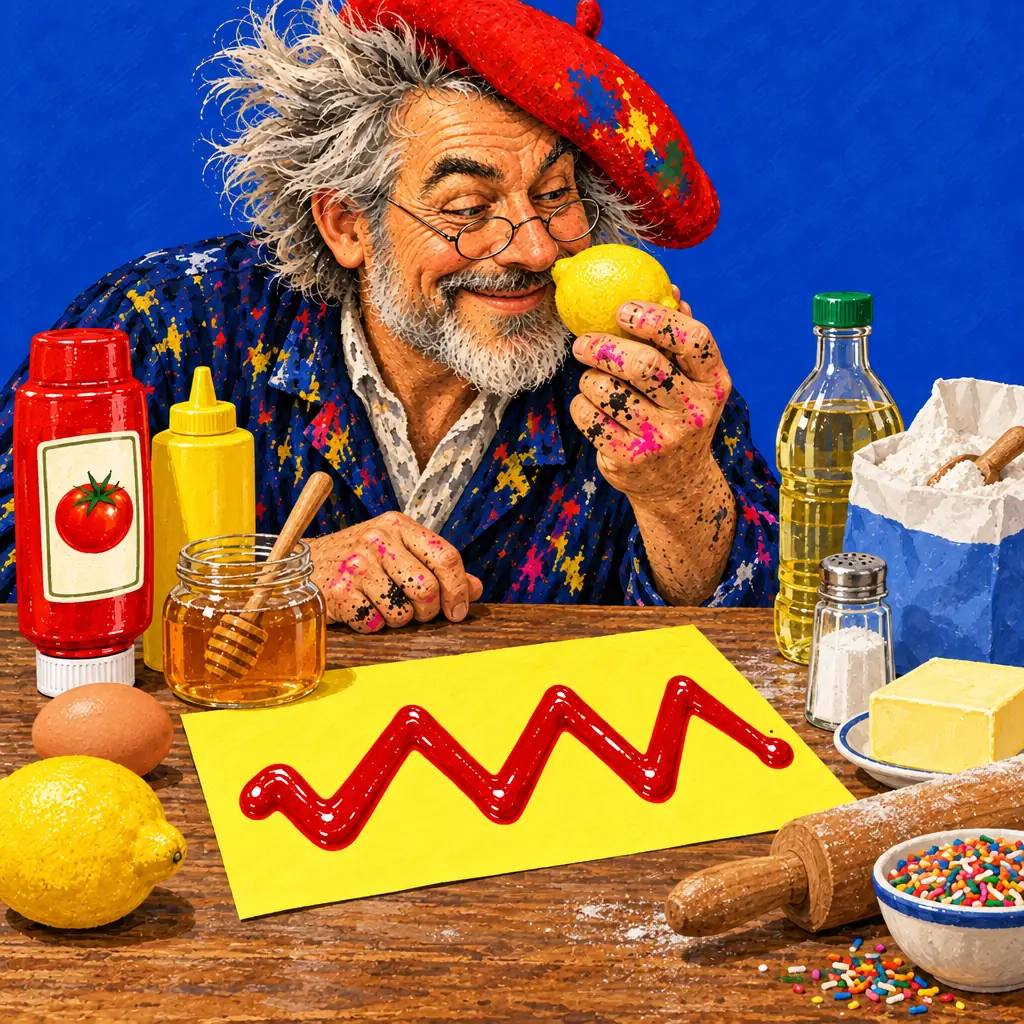
Water boils at 100 °C, but cooking oil can get far hotter than that before it catches fire, and burning oil is hotter still. Water is heavier than oil, so a splash of it sinks straight to the bottom of the pan, under the burning oil. There it boils in a fraction of a second. Water that turns to steam takes up well over a thousand times more space, so the steam bursts upward and carries the burning oil with it as a spray of tiny droplets. Spread out like that, the oil burns all at once: a fireball that can reach the ceiling and anyone standing nearby.
A lid works for the opposite reason. A fire needs fuel, heat and oxygen (the fire triangle). The lid shuts out the oxygen, turning off the hob stops more heat going in, and leaving the lid on gives the oil time to cool below the point where it can light again.
Preventing it is easier than putting it out:
Never leave a pan of oil on the heat unattended.
Keep children away from the hob while you fry, and turn pan handles inward.
Heat oil gently; if it smokes, turn the heat down or off.
Keep a lid that fits the pan within reach, and consider a fire blanket in the kitchen.
Deep-frying is a grown-up job, ideally in a fryer with a thermostat.
For more, see the cooking safety advice from the National Fire Protection Association or your local fire service.
The water sinks under the hot oil and turns to steam instantly. The steam throws the burning oil up and out as a spray, which burns as a ball of fire.
Turning off the heat and covering the pan with a metal lid, a baking tray or a fire blanket. Some fire extinguishers are made for cooking-oil fires (class K in the US, class F in the UK and Europe).
No. Flour can burn and even flare up. Use a lid, a baking tray or a fire blanket instead.
Get away from the cooker and shout for a grown-up. Don't touch the pan. If the room fills with smoke, get out and stay out.
No. Moving it can spill or splash burning oil onto you and the floor. Leave it on the hob, covered, with the heat off.
Why two cleaners make chlorine gas, and what to do if it happens.

The safe, cold experiment: why oil floats and how egg yolk makes it mix.
Short answers to children's own questions, fire and magnifying glass included.