
Dyeing eggs with red cabbage: a natural Easter dye
About this source
Game Tailors
Source: Dyeing eggs with red cabbage: a natural Easter dye
The drawing app where the paper is real. No ads, no accounts, no data collected.
Game Tailors · Schieweg 15Y-40, 2627 AN Delft (NL)
KvK 92437702 · VAT NL866044474B01
info@gametailors.com · +31 6 4227 5919
© 2026 Game Tailors

Age
5 to 10
Time
45 min, plus a few hours or overnight
Mess
Medium: the juice stains
Adult needed
Yes, for the knife and the hot pan
You need
Red cabbage, white eggs, vinegar, baking soda
On screen / for real
The colours on screen; the eggs for real
In Extreme Drawing: the colours first
There are no whole eggs to dye in the app (an egg dropped on the paper cracks open). What it does show is the colour chemistry, on paper.
Tap Dip in red cabbage juice on the Time tab and the whole sheet comes out purple. Draw some egg shapes, then paint inside them with Vinegar or Secret ink (lemon juice) from the Science tab: they turn pink and red. Baking soda or dish soap turn it blue to green. Bleach turns it yellow, then destroys the colour.
Two egg tricks the app does have: crack an egg and paint Red cabbage juice over the egg white, and it turns blue, because egg white is alkaline. Drop vinegar on the bits of shell and they slowly fizz away.
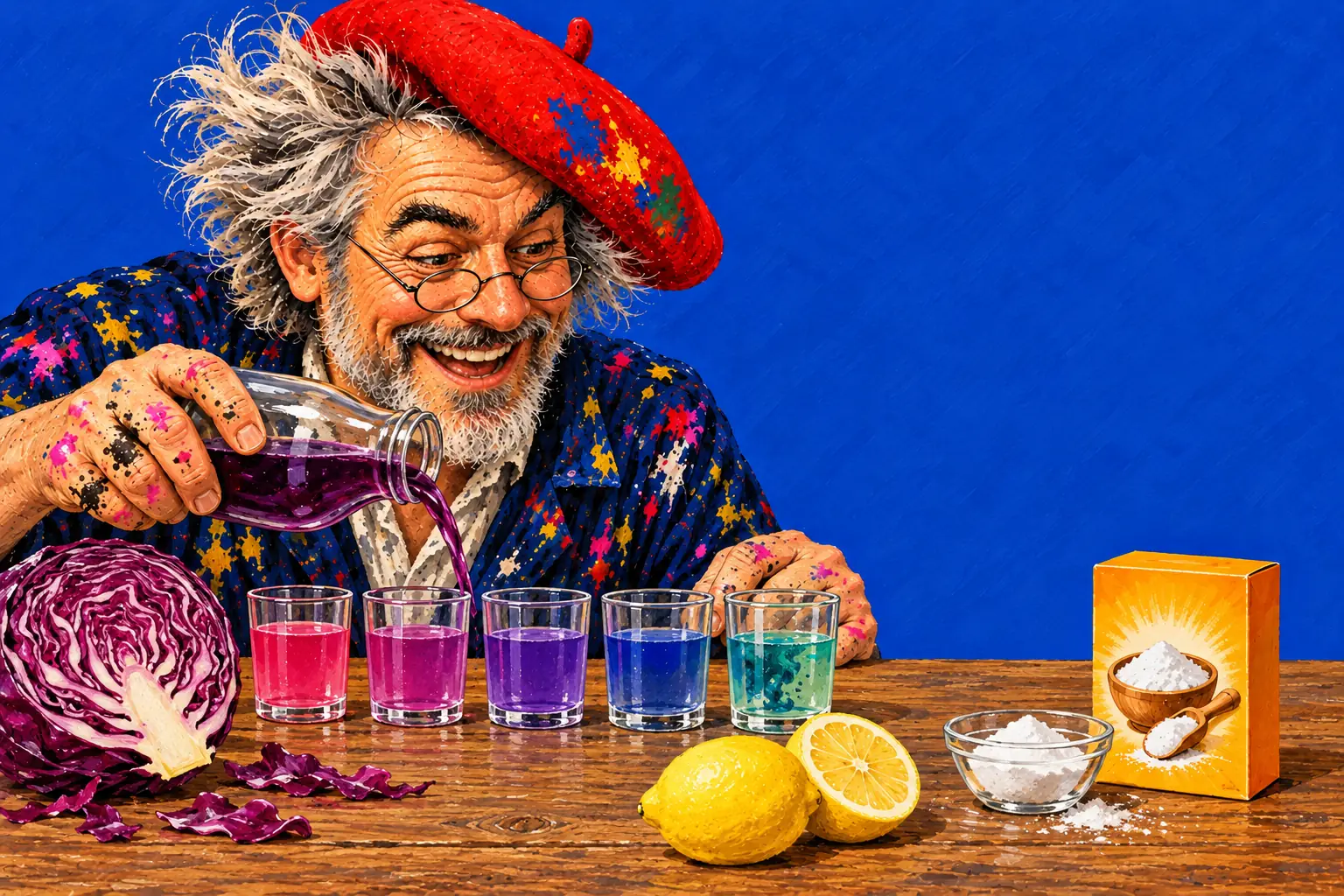
You need (for 6 eggs):
half a red cabbage (about 500 g)
1 litre of water
6 white eggs, hard-boiled and cooled
white vinegar
baking soda (bicarbonate of soda)
3 glass jars or mugs, a sieve, a spoon
cotton buds or a small brush
kitchen paper and an old tray
Make the juice (adult)
An adult chops the cabbage and simmers it in the water for about 20 minutes, until the water is deep purple. Sieve it and let it cool completely.Make three colours
Pour the juice into three jars. Leave one purple. Stir a tablespoon of vinegar into the second (it goes pink). Stir a pinch of baking soda into the third (it goes blue-green).Predict
Before the eggs go in: what colour will each egg be? Write it down.Soak the eggs
Lower two eggs into each jar with a spoon. Put the jars in the fridge for a few hours, or overnight for a deeper colour.Lift and dry
Spoon them out onto kitchen paper and let them dry without rubbing. White eggs usually come out blue, whatever jar they were in.Shift the colour
Dab a little vinegar on part of a dyed egg with a cotton bud, and baking-soda water on another part. Watch the colour shift, then compare with your predictions.

Why it works
For kids: Red cabbage has a purple colour inside that changes when it meets something sour (an acid) or something soapy and bitter (an alkali). Eggshell is made of chalk, which is a bit like baking soda, so the colour turns blue on it.
For grown-ups: The pigment is an anthocyanin, a natural pH indicator: red to pink below about pH 4, purple near neutral, blue around pH 8 and green above about pH 9 (yellow in strong alkali or bleach). Eggshell is calcium carbonate, a base, so where the dye touches the shell its local pH is higher than in the jar, which is why white eggs come out blue even from a slightly acidic bath. Vinegar also dissolves a little of the shell (it fizzes, giving off carbon dioxide), which can help the dye take, but a long soak in strong vinegar softens the shell.
What colour do red cabbage eggs turn?
White eggs usually turn a soft sky blue, deeper the longer they soak. Brown eggs tend to come out greenish.
Do you need vinegar to dye eggs with red cabbage?
No, but many people add a little. It turns the juice pinker and etches the shell slightly, which can help the colour take. The eggs still come out blue.
How long should eggs sit in red cabbage dye?
At least a few hours in the fridge; overnight gives the deepest blue.
Are red cabbage dyed eggs safe to eat?
Yes, if they were hard-boiled, kept in the fridge the whole time and eaten within a few days.
More colour chemistry
Red cabbage pH indicator
The full experiment, with a colour chart.
Baking soda and vinegar
An acid meets a base, and it fizzes.

Christmas
Salt snowflakes, frost and baking.