Whole milk or skimmed?
Use two plates. Which one swirls longer? Try cream or plant milk too.
Game Tailors
Source: Magic milk experiment: why the colours swirl
The drawing app where the paper is real. No ads, no accounts, no data collected.
Game Tailors · Schieweg 15Y-40, 2627 AN Delft (NL)
KvK 92437702 · VAT NL866044474B01
info@gametailors.com · +31 6 4227 5919
© 2026 Game Tailors
Kitchen science experiment
Drop food colouring onto milk, then touch it with a little dish soap: the colours rush away from the soap and keep swirling. The soap weakens the milk's surface tension and grabs onto its fat, and the moving milk carries the colour with it.
Everything you need is in the Science tab, and all of it is free.
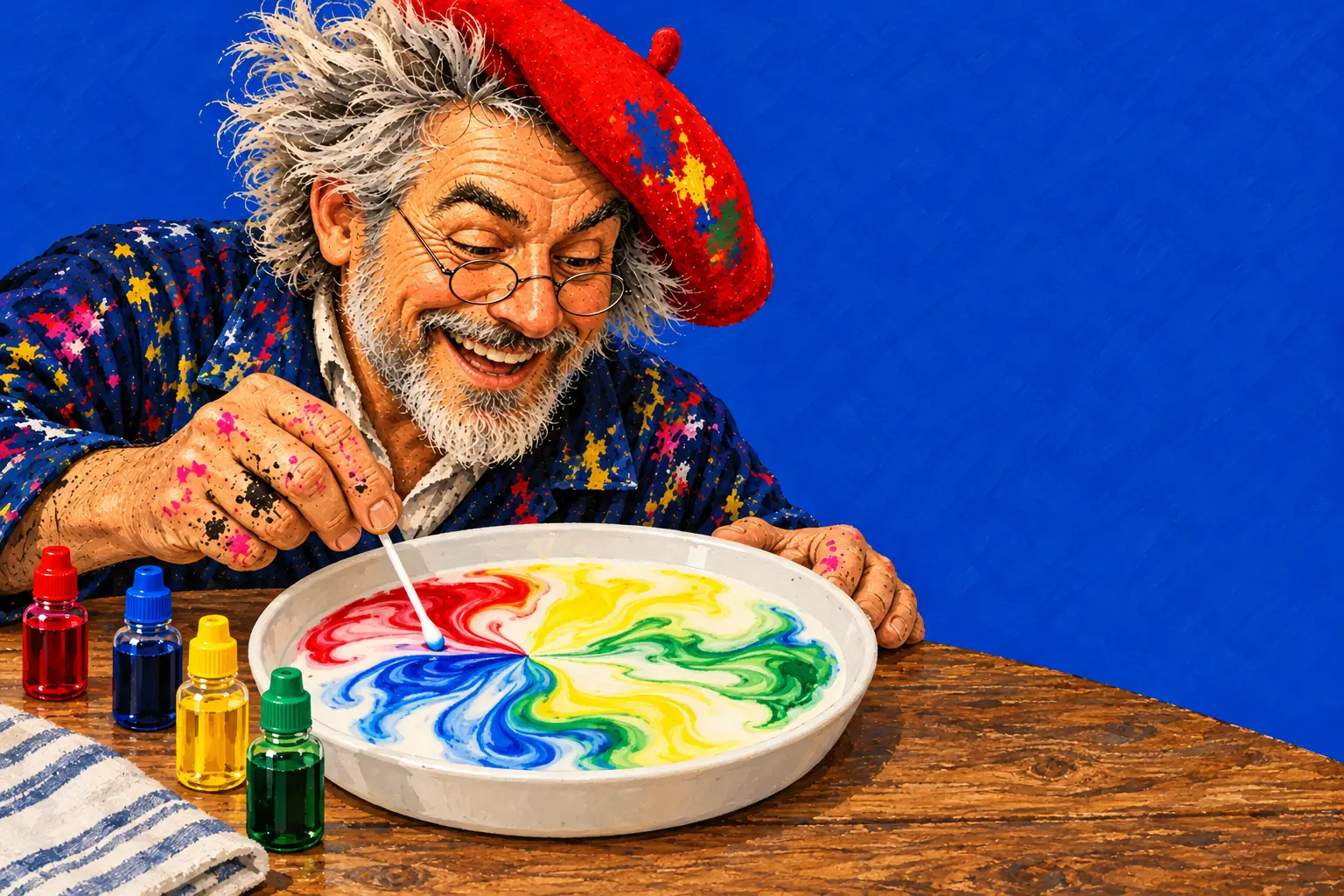
Tap Pour milk and drag to pour a white puddle onto the paper.
Pick Food colouring (red, blue, green or yellow) and drip a few drops into the milk. They sit there as separate blobs of colour, just as they do on a real plate.
Pick Dish soap and touch the milk. In the first second the colours burst away from the soap, then stream outwards in long streaks like comet tails; where two clearings meet, the colour gathers into Y-shaped lines. The motion eases out slowly, over about 20 to 45 seconds.
Every drop of soap on a clean spot of the milk opens a clearing of its own; a drop on a spot that is already soapy does little. It works on wet watercolour paint too: the soap leaves a pale hole ringed with colour. The milk is real food in the game, too: leave it and tap Wait 3 days and mould grows on it, and the ants come for it.
You need
A shallow plate or dish (a white one shows the colours best)
Whole (full-fat) milk, enough to cover the bottom about 1 cm deep
Food colouring in two to four colours
Dish soap (washing-up liquid) in a little cup
Cotton buds
An old tea towel under the plate
In the UK this is often called rainbow milk. It's the same experiment.
Cover the bottom of the plate with milk and let it settle for a moment so the surface is still.
Drip drops of food colouring near the middle, close together but not touching. Notice that they just sit there.
Touch the milk with a plain, dry cotton bud. Nothing much happens. That's your control: it shows the soap is doing the work.
Ask: what will the colours do when soap touches the milk? Will they mix, sink or move away?
Dip a new cotton bud in the dish soap and hold its tip on the milk in the middle for about ten seconds. Watch the colours burst outwards.
Touch other spots, or add a fresh dab of soap when it slows down. Each new dab gives a smaller swirl.
The top of the milk is like a stretchy skin. Soap makes the skin weak where it touches, so the rest of the skin pulls away and drags the colours along for the ride.
For grown-ups. Milk is mostly water, with tiny droplets of fat and protein spread through it. Its surface acts like a stretched skin (surface tension). Dish soap is a surfactant: where it touches, it lowers the surface tension, so the stronger surface further out pulls the milk away from the soap (the Marangoni effect), carrying the floating colour with it. Soap molecules have a water-loving end and a fat-loving end, so they also latch onto the fat droplets, and the milk keeps churning until the soap has spread evenly. That's why the swirl slows and stops, why fresh soap restarts it, and why whole milk, with more fat, usually swirls longer than skimmed. No new substance is made: this is a physical change, not a chemical reaction.
For teachers
Surface tension isn't named in the primary curriculum, so use magic milk as a hook for working scientifically: a control (the plain cotton bud), one variable at a time (whole vs skimmed milk) and careful observation. That fits KS1 and KS2 working scientifically and the NGSS practice of planning and carrying out investigations. On the whiteboard, the app shows the burst without a single plate of milk; then let groups test their own question on a plate.
Soap lowers the surface tension of the milk where it touches, so the surface pulls away from the soap and carries the food colouring with it. The soap also grabs onto the fat in the milk, which keeps it moving until the soap has spread out.
Only a little. On water the colour spreads and sinks, and soap gives it a short push outwards, but you don't get the long, swirling streaks, because water has no fat for the soap to keep working on.
Whole (full-fat) milk usually gives the strongest, longest swirl. Skimmed milk still moves, but it settles sooner, which makes a nice comparison.
Once the soap has spread evenly over the milk, there is no difference left in the surface for it to pull against. Add a fresh dab of soap in a new spot and it starts again.
Yes. Rainbow milk is the name many UK schools use; magic milk is more common in the US. It's the same plate of milk, food colouring and soap.
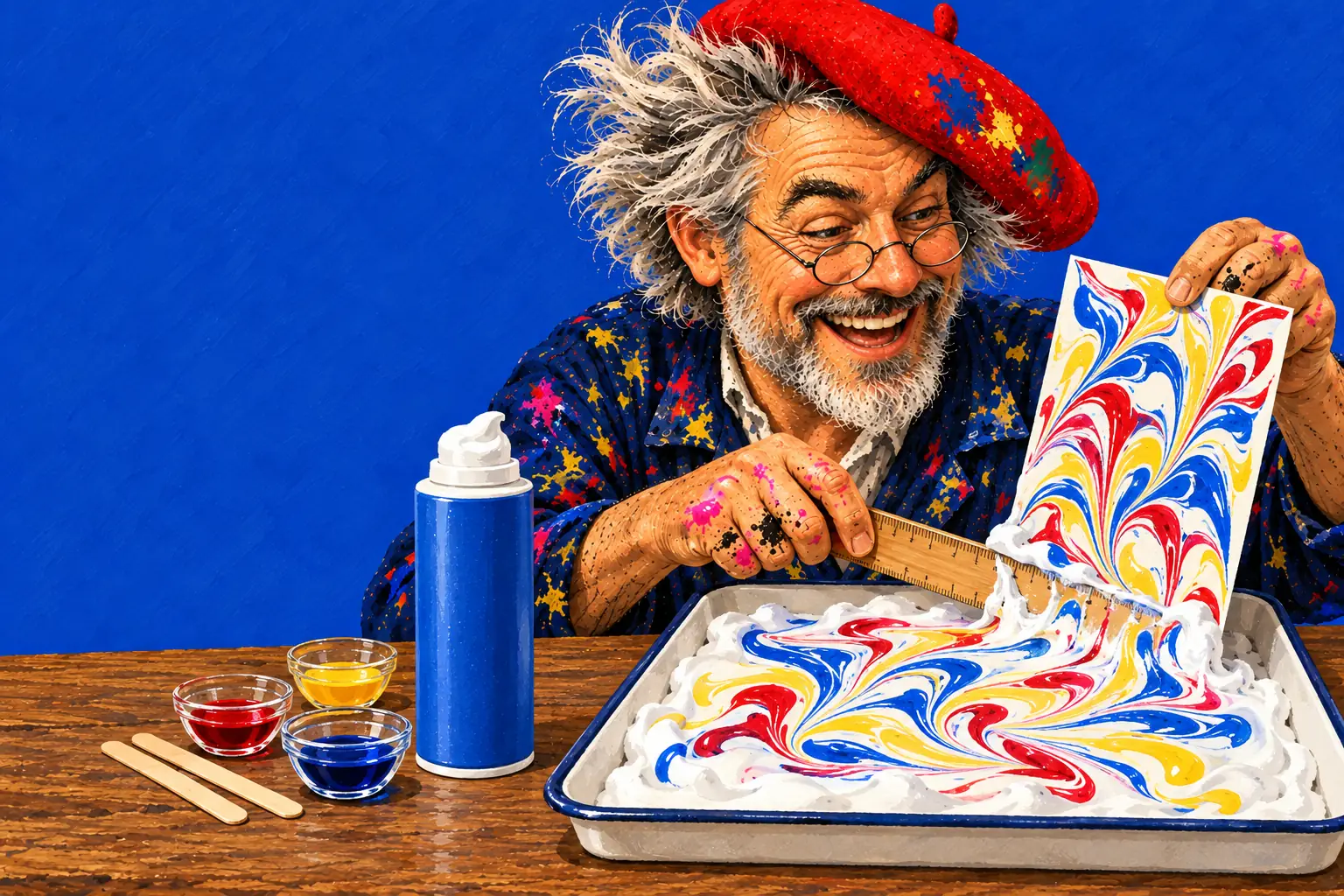
Food colouring stays put on foam: drag it into veins with a toothpick and print it onto paper.
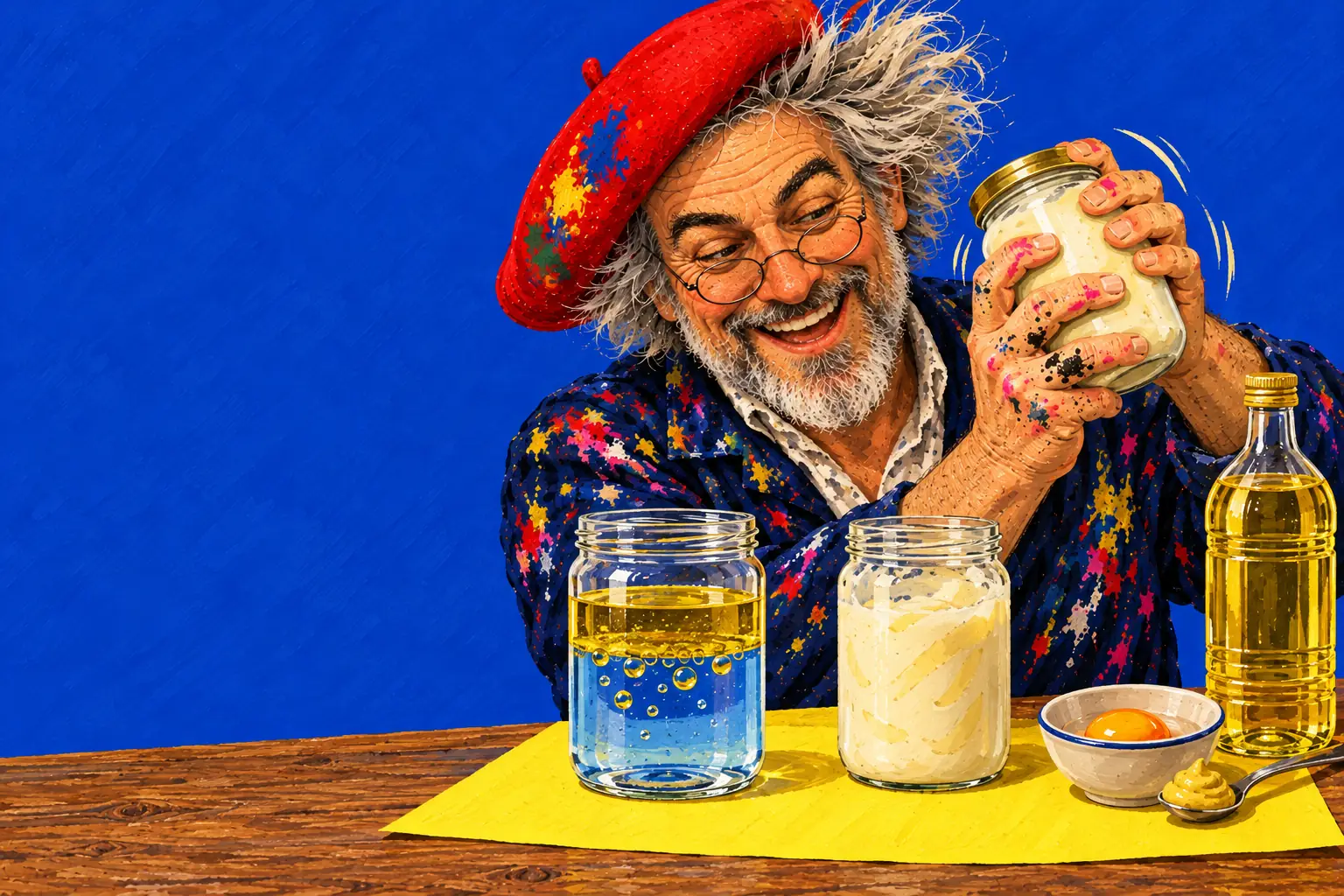
Why oil floats and separates, and how an egg yolk makes them hold together as mayonnaise.
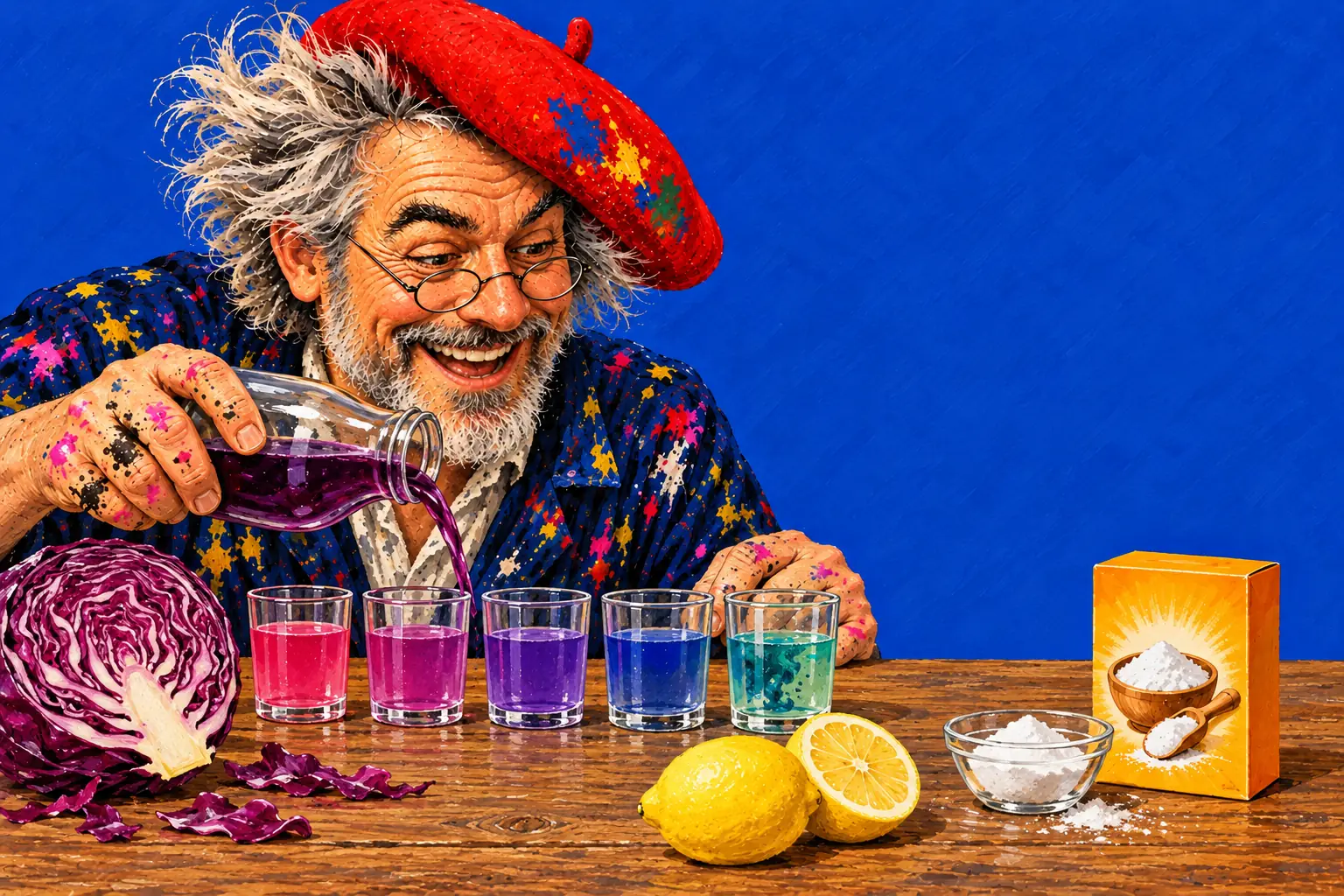
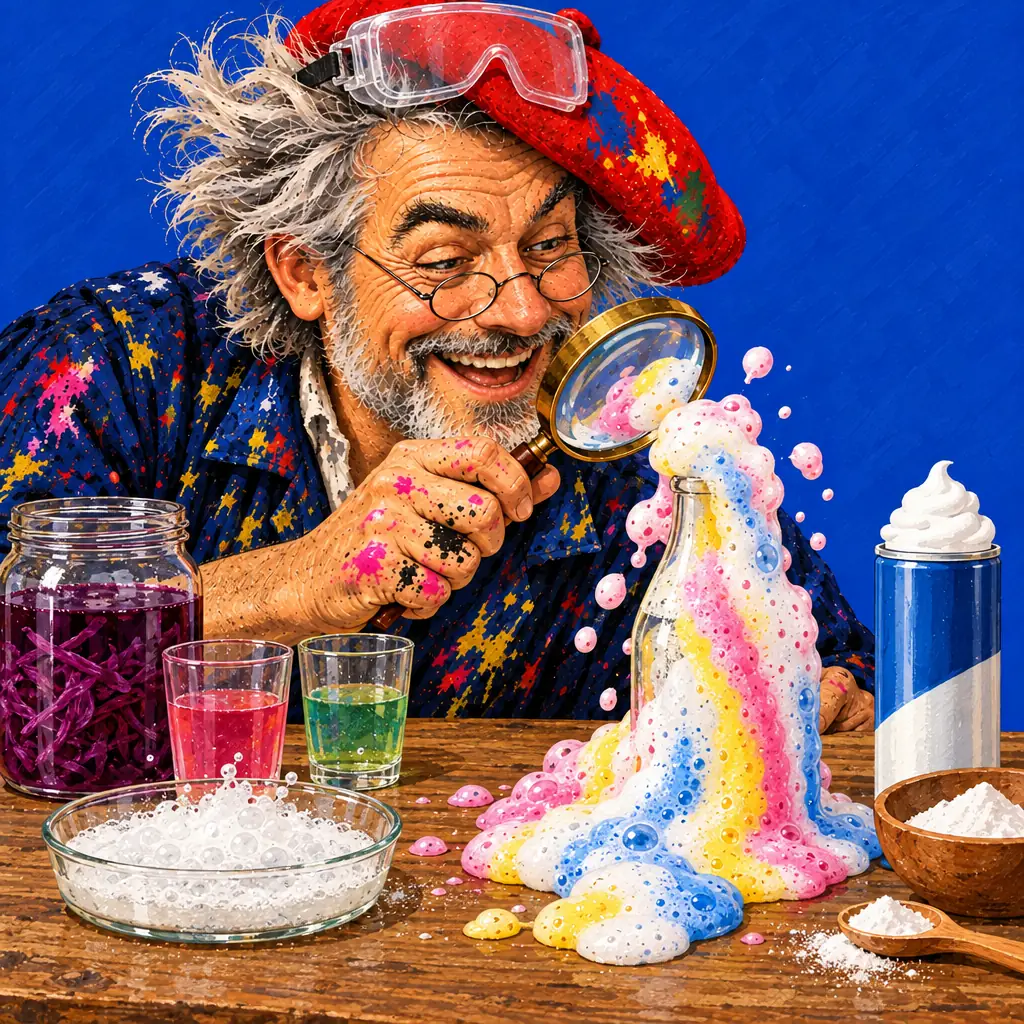
A purple juice that turns pink with vinegar and green with baking soda.